How to layer a living room
A calm, lived-in living room is built in layers — anchor, seating, light, and texture. Here is the order we work in.
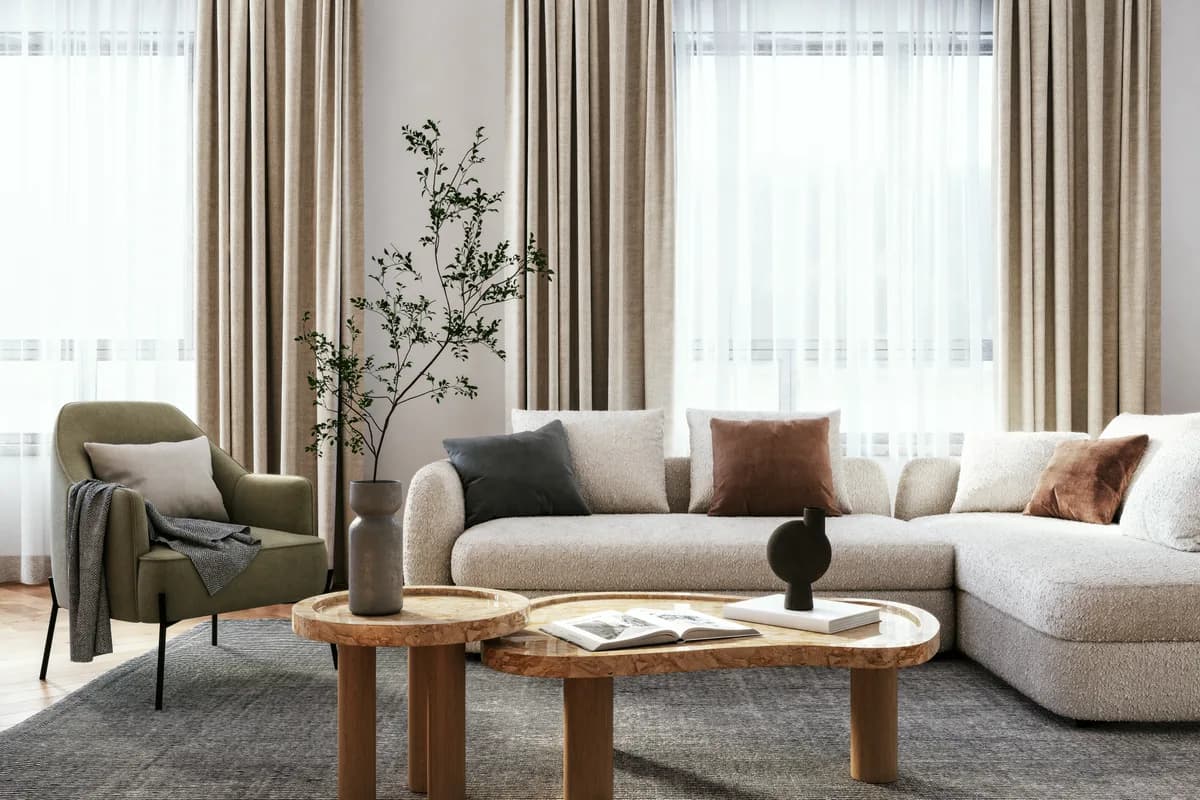
A room that feels good to sit in is rarely the result of buying everything at once. The living rooms we love are layered — built up in stages, with each piece earning its place against the last. When clients ask where to begin, we walk them through the same four-step order every time. It keeps the room coherent and stops it from looking like a showroom.
1. Anchor the room first
Start with the largest horizontal surface you own — usually the rug — and let it define the seating zone. A rug should sit under at least the front legs of every major seat, ideally all four. Too small a rug is the single most common reason a living room feels unsettled; size up rather than down. Once the rug is down, the sofa goes on top of it, not floating beside it.
Your sofa is the anchor everything else negotiates with. Choose it for comfort and frame quality before colour — a solid-wood frame in a quiet, hard-wearing fabric will outlast three rounds of cushions and paint. The Maren Lounge Sofa was designed to be exactly this kind of anchor: low, deep, and neutral enough to build around for a decade.
2. Build the seating conversation
With the sofa placed, add seating that faces it. The goal is a loose circle where people can talk without raising their voices — roughly an arm's length to a metre between facing seats. A single lounge chair set at a slight angle does more for a room than a matched pair pushed flat against the wall. Leave a clear path of at least 75cm for walking through.
- Float the seating off the walls if the room allows — even 20cm of breathing space reads as intentional.
- Mix one upholstered chair with one with exposed wood, so the eye has something firm to land on.
- Keep seat heights within a few centimetres of each other so the group looks level.
3. Get the light right
Overhead light alone flattens a room. Layer in at least two lower sources — a floor lamp beside a reading chair, a table lamp on a side table — and put them on warm bulbs around 2700K. A dimmer, or a lamp with an in-line dimmer like the Brede, lets the same room go from bright and working to low and restful in a moment. Light is what turns a well-arranged room into a calm one.
4. Finish with texture, last
Only once the bones are in place do we add the soft layer: a throw folded over an arm, a couple of cushions in natural linen and wool, a stack of books on the coffee table. Texture is where warmth comes from, so vary it — smooth oak against nubbly bouclé against soft wool. Resist the urge to match everything; a room that is slightly imperfect reads as lived-in, which is the whole point.
Work in this order and you can stop at any stage with a room that still feels finished. That is the quiet advantage of layering: nothing depends on the piece you have not bought yet.