Amp matching: impedance & sensitivity
Why a 300 Ω HD800S needs different power than a 32 Ω planar — the two numbers that tell you whether an amp can drive your headphones.
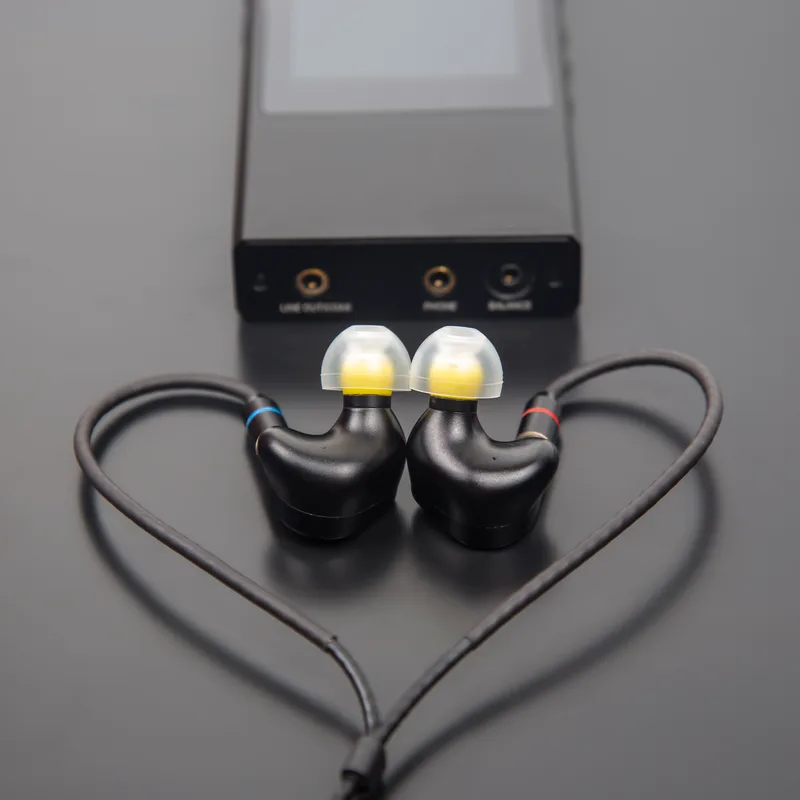
"Will this amp drive my headphones?" is the most common question we get, and the answer lives in two numbers printed on every headphone box: impedance and sensitivity. Once you can read them together, you can predict whether any amp has the goods — no guesswork, no snobbery.
Impedance: how hard the load pushes back
Impedance, in ohms, is the electrical resistance the headphone presents to the amp. High-impedance designs like the 300 Ω Sennheiser HD800S need more voltage to reach a given volume but draw little current. Low-impedance designs like a 32 Ω planar need less voltage but can demand a lot of current — and current is where weak amps and phone jacks fall down.
This is why a phone might play a 300 Ω headphone quietly but cleanly, while choking on a hungry planar despite it being 'easier' on paper.
Sensitivity: how loud per unit of power
Sensitivity tells you how many decibels a headphone produces per milliwatt (or per volt). A 94 dB/mW headphone needs roughly ten times the power of a 104 dB/mW one to hit the same loudness. Low sensitivity plus low impedance — common in planars — is the genuinely demanding combination that needs a real amplifier with current to spare.
Putting it together
Look at the amp's rated output power at the impedance closest to your headphone's. A reference amp like the Topping A90D quotes 8.7 W into 32 Ω, which is far more than any headphone needs — that's headroom, and headroom is what keeps dynamics effortless on loud passages.
Aim for an amp that delivers comfortably more power than you'll ever use, with low output impedance (under ~1 Ω) so it doesn't alter the frequency response of low-impedance loads. Get those two things right and almost any headphone will perform to its potential. When in doubt, send us your headphone model and we'll tell you what it wants.
