Technology and our lab
Good technology doesn't replace judgment. It lets a specialist see your bone, nerves and sinuses before surgery, plan every implant on screen, and make your teeth a few steps from the chair.
- 1. Your jawbone, seen in 3D
- 2. Planned implant positions
- 3. The nerve canal, kept at a safe distance
- 4. Measurements in millimeters
Illustration of one slice of a 3D CT scan, seen from above. Not a patient.
Where every plan starts
3D CBCT scanner
A cone beam CT scanner takes a 3D picture of your jaw in about 20 seconds while you stand still.
We see bone height and width, the nerve in the lower jaw and the sinuses above the upper teeth before anyone touches you. A dental CBCT uses far less radiation than a medical CT of the head. You see your own scan at the consult.
Book a CT scan consult02
Digital planning and surgical guides
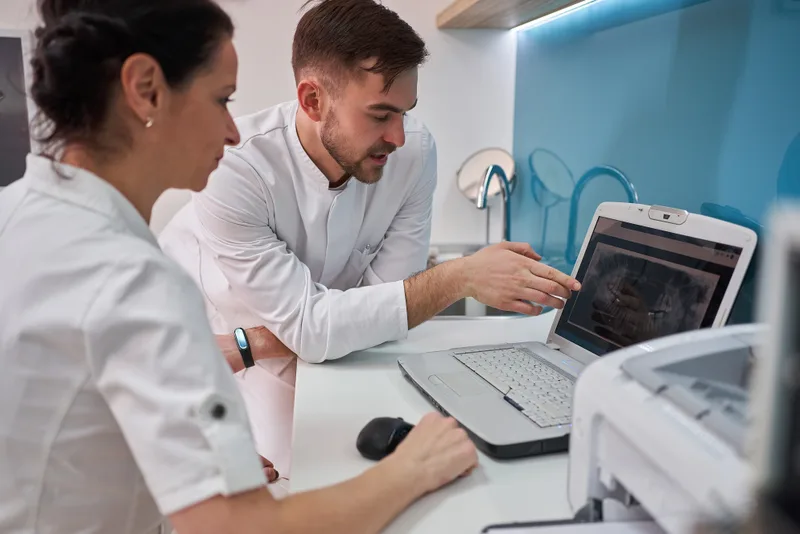
Every implant is placed on screen first, in your scan, with your new teeth shown on top.
From that plan we 3D-print a surgical guide that fits over your teeth or gums and directs each implant to the planned spot and angle. It means smaller openings, shorter surgery and fewer surprises.
03
Intraoral scanner
A small wand takes a digital model of your teeth in a few minutes.
In most cases it replaces trays of putty. The models go straight to our lab and into your plan, and you can see them on the screen as we scan.
04
Our in-house lab
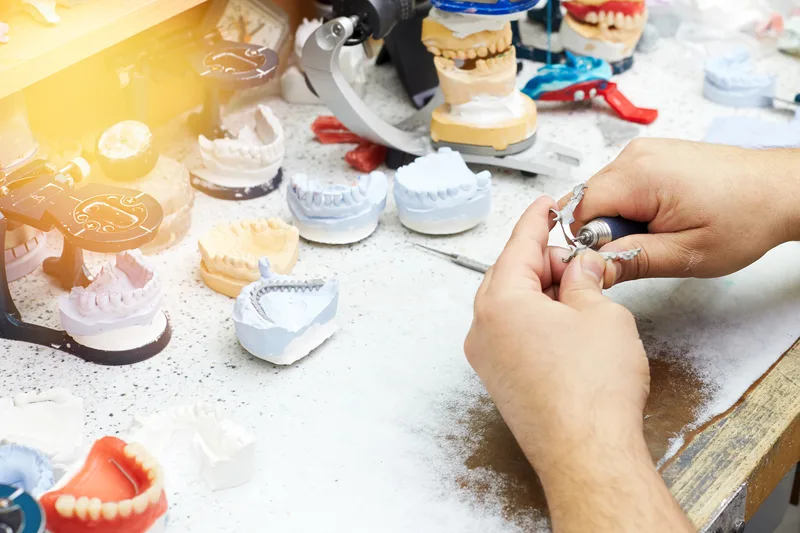
Three technicians, led by Wes Hartigan, work down the hall from the treatment rooms.
They mill zirconia, press porcelain, 3D-print temporary teeth and finish everything by hand. When a front tooth needs matching, the technician comes to the chair. Repairs to temporaries often happen the same day.
05
Sedation and monitoring
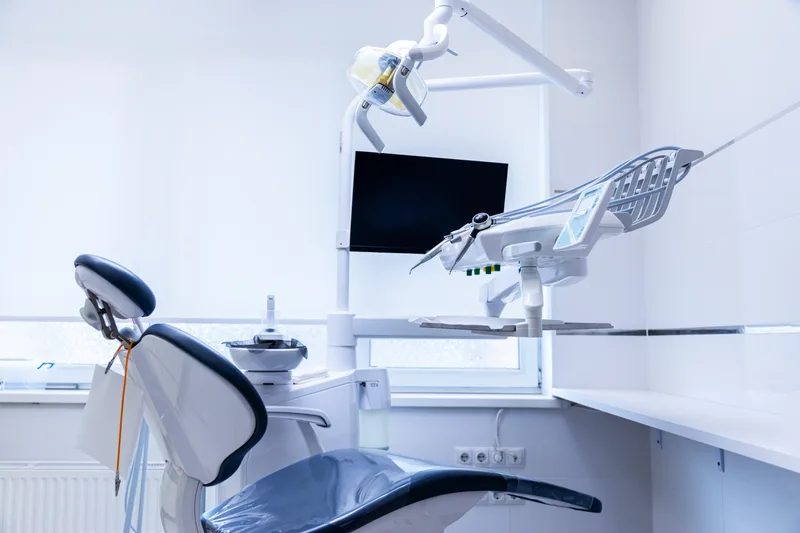
Numbing, a calming pill, or IV sedation, with a nurse watching your vital signs throughout.
IV sedation is given by Dr. Sokolov, who trained in medicine and surgery. You'll have a recovery area, a call the same evening, and a 24/7 number for the first week.
06
Sterilization you can ask about
Single-use items where possible, and every instrument pack sterilized and tracked.
Each pack carries a label tying it to the sterilizer cycle that cleaned it. Ask to see our sterilization room at your consult and we'll show you.
Resources
Things you can do next
-
Book a CT scan consult
See your own scan on the big screen, with a specialist explaining it.
-
Meet the doctors
Who reads your scan and who places the implants.
-
Questions and glossary
CBCT, surgical guide, osseointegration: every word explained.
Not sure you're a candidate? The scan will tell us.
A CT scan consult takes 75 to 90 minutes. You'll see your own scan, hear every option with example prices, and go home with a plan. No pressure to decide that day.