01 / R
Roof
Walked where safe; pole-camera or drone where it isn't.
- Covering material — shingles, membrane or metal — and remaining service life indicators
- Flashing at chimneys, walls, valleys and penetrations
- Gutters, downspouts and where they discharge
- Vents, skylights and other roof penetrations
- Chimney exterior — crown, cap and mortar joints
- Visible roof structure and sheathing from the attic side
- Evidence of past leaks, patches or layered re-roofing
Outside scope ·
We don't walk roofs that are unsafe, too steep or too wet — those get the pole camera or drone, and the report says which method we used.
02 / EX
Exterior & grading
Everything weather touches first.
- Siding, trim, soffits and fascia on every elevation
- Grading and drainage — where water goes when it leaves the roof
- Driveways, walkways, steps and handrails
- Decks, porches and balconies — ledger attachment, guards and footings
- Windows and doors from the outside — flashing, sills, sealant
- Vegetation, retaining walls and clearances that affect the structure
- Hose bibs and exterior electrical fixtures
Outside scope ·
Fences, sheds, pools and irrigation systems are outside the standard scope — we'll note obvious issues we happen to see, without inspecting them.
03 / ST
Structure & foundation
Basement, crawl space and every accessible framing member.
- Foundation walls — cracking pattern, displacement and moisture evidence
- Floor framing: joists, beams, posts and sill plates
- Crawl space entered whenever access and clearance allow
- Vapor barriers, ventilation and signs of standing water
- Columns, piers and visible footings
- Sagging, notching, or amateur framing modifications
- Evidence of past repair — piers, sister joists, epoxy injection
Outside scope ·
We describe what the structure is doing and how serious it looks; sizing an engineered fix is a structural engineer's job, and the report says so when one is warranted.
04 / E
Electrical
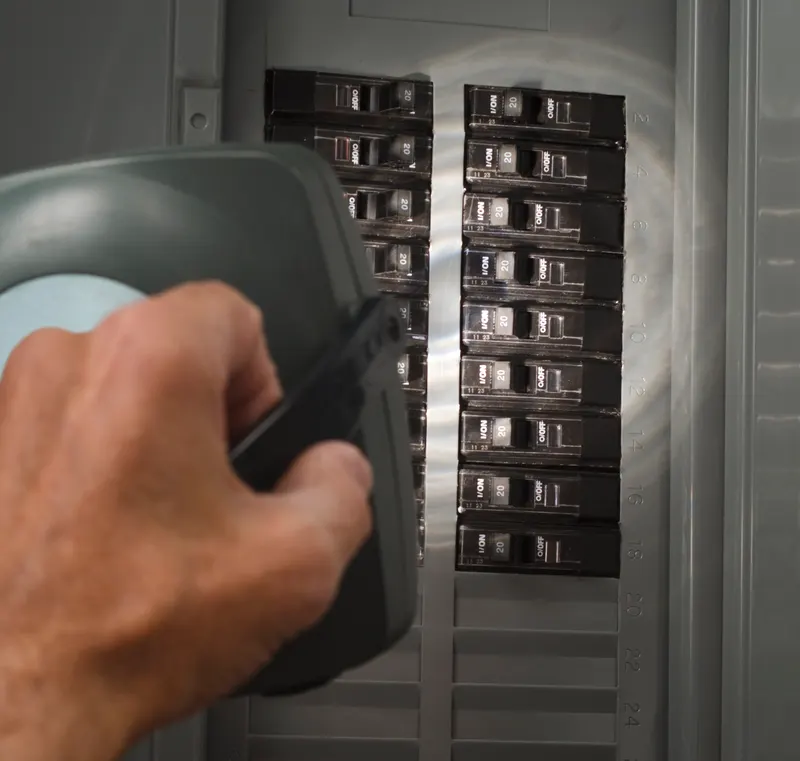
Panel opened, breakers mapped, receptacles sampled room by room.
- Service entrance, meter and grounding electrode connections
- Panel interior — breaker sizing, double-taps, scorching, workmanship
- Branch wiring type and condition where visible
- GFCI and AFCI protection tested at required locations
- Representative receptacles and switches in every room
- Smoke and CO alarm placement (presence, age where readable)
- Visible junction boxes, splices and DIY wiring in attic and basement
Outside scope ·
Low-voltage systems (alarm, network, landscape lighting) and solar arrays are outside scope; we note their presence and any obvious red flags.
05 / P
Plumbing
Every fixture run, every visible pipe traced.
- Supply piping material — copper, PEX, CPVC, or legacy galvanized/polybutylene
- Drain, waste and vent piping where visible
- Water heater — age, capacity, venting, TPR valve and discharge pipe
- Every sink, tub and shower run; every toilet flushed
- Functional water flow while multiple fixtures run together
- Main shutoff located and photographed for your report
- Sump pump and float operation, where present
Outside scope ·
What's inside the walls and under the slab can't be seen — that's exactly what the sewer-scope add-on exists for on older homes.
06 / H
Heating & cooling
Operated in normal mode, temperature splits measured.
- Furnace — age, flame pattern, venting and visible heat-exchanger areas
- AC condenser and coil — age, temperature split, fin and line condition
- Thermostat operation and staging
- Distribution: ducts, registers and airflow room by room
- Condensate handling and safety switches
- Gas piping, shutoffs and flexible connectors
- Fuel-burning appliance combustion air and clearances
Outside scope ·
We don't dismantle equipment or run AC below 65°F outdoor temperature (it damages the compressor) — when weather blocks a test, the report says so plainly.
07 / I
Interior, doors & windows
Every room, ceiling and operable window sampled.
- Walls and ceilings — stains, cracking patterns, past patching
- Floors — slope, soft spots and covering condition
- A representative sample of windows operated in every room
- Interior and exterior doors — fit, hardware, egress
- Stairs, railings and guard spacing
- Countertops, cabinets and built-ins (operation, not cosmetics)
- Moisture readings at any suspect stain
Outside scope ·
Cosmetic wear — paint, carpet, scuffs — is noted only when it hides or indicates something worse.
08 / A
Attic, insulation & ventilation
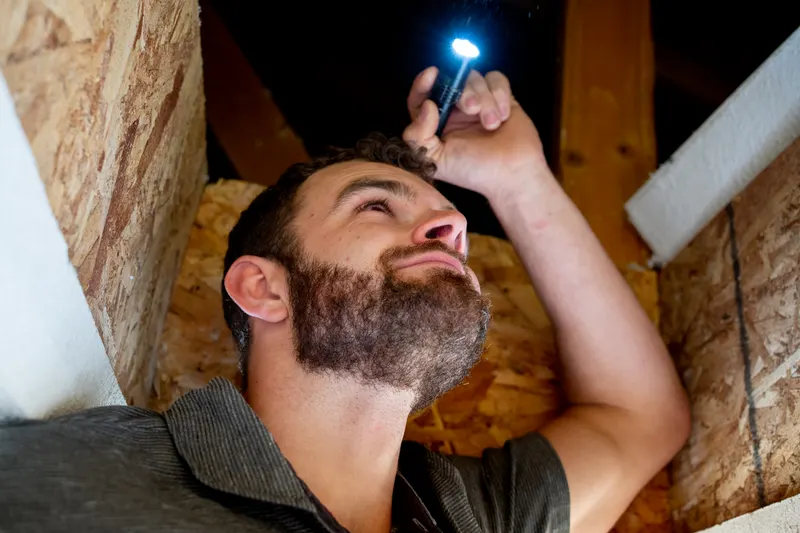
Entered whenever there's safe access and clearance.
- Insulation type and average depth (with an R-value estimate)
- Ventilation path — soffit, ridge, gable and baffles
- Bathroom and kitchen exhaust terminations (a classic hidden defect)
- Roof sheathing from below — staining, delamination, daylight
- Visible framing, truss modifications and sagging
- Chimney and flue clearances through the attic
- Evidence of pests, past leaks or mold-like staining
Outside scope ·
We don't disturb insulation beyond what inspection requires, and we don't walk unfloored truss bays — the report notes any area we couldn't reach.
09 / F
Fireplace & chimney
Firebox, damper and what the flashlight can reach.
- Firebox condition and hearth clearances
- Damper operation
- Visible flue lining from the firebox and, where possible, the crown
- Combustible clearances and mantel attachment
- Gas log sets operated where pilot is lit
- Exterior chimney structure, cap and crown
Outside scope ·
A full flue evaluation requires a Level 2 camera sweep by a chimney specialist — we recommend one for any wood-burning fireplace that will actually be used.
10 / G
Garage
The most commonly DIY-modified room in the house.
- Vehicle door operation, springs and hardware
- Auto-reverse and photo-eye safety tests on the opener
- Fire separation between garage and living space
- Garage slab, walls and framing
- Receptacles (GFCI) and any added wiring
- Self-closing door hardware to the house, where required
Outside scope ·
Car lifts and other owner-installed equipment are noted, not evaluated.
11 / AP
Built-in appliances
Run through a normal cycle, not a lab test.
- Range, oven and cooktop burners operated
- Dishwasher run on a short cycle and checked for leaks
- Garbage disposal, range hood and downdraft operation
- Built-in microwave operated
- Anti-tip bracket on the range (a two-dollar part that saves lives)
- Age and recall-lookup data recorded for major units
Outside scope ·
Washers, dryers and refrigerators convey with the sale in most contracts but aren't part of the standard — we test them on request, free, when they're staying.
And the honest fine print, up front
A home inspection is not invasive and not exhaustive: we don't open walls, move stored
belongings or furniture, or dismantle equipment. Septic systems, wells, pools, fences and
code-compliance reviews are outside the standard scope everywhere — not just here. What we
promise instead is complete honesty about coverage: every report ends with an access log
listing anything we couldn't reach and the reason.
More in the FAQ.