Buying guide · 7-minute read
IEMs vs. over-ears: which fits your listening life
The honest trade-offs between in-ear monitors and full-size headphones — comfort, isolation, imaging, and the commute test.
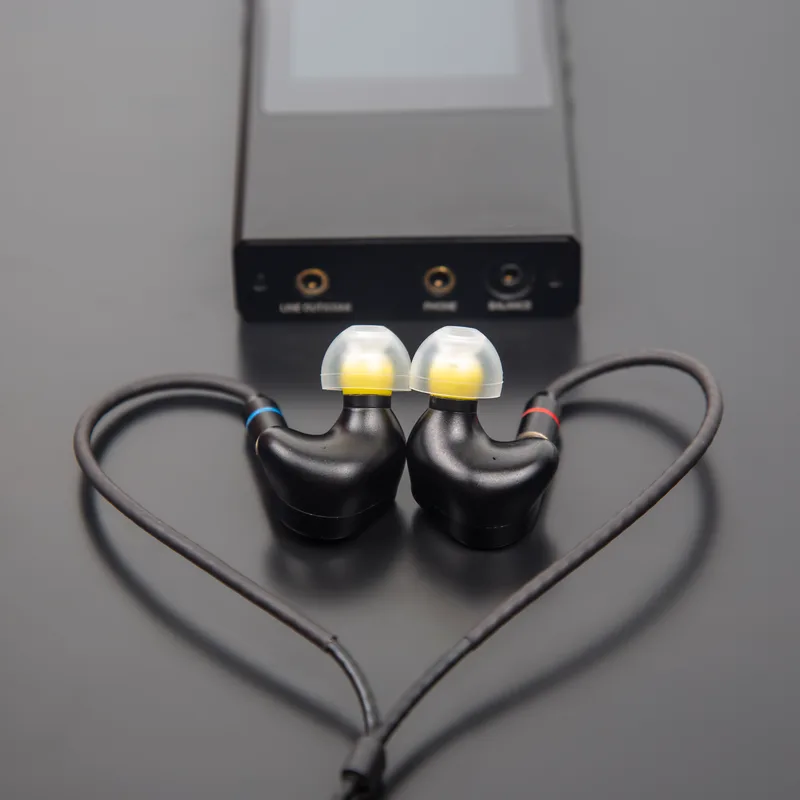
Isolation is the killer feature
A well-fitted IEM like the W4 blocks 25+ dB of the world passively — more than most active noise cancelling, with zero processing artifacts. On a train or plane, that means listening at safe volumes while hearing everything in the mix. No over-ear, ANC or not, matches a deep seal.
The cost is the seal itself: some ears take days to find the right tips, and a bad seal guts the bass entirely. If an IEM ever sounds thin to you, fix the fit before judging the tuning.
Where over-ears still win
Soundstage. Physics gives a 50 mm driver two inches from your ear a sense of space that in-ears approximate but rarely equal. For long home sessions, over-ears also spread their weight across a headband instead of resting in your ear canal — comfort compounds over hours.
Our rule: the pair you'll actually have with you beats the pair at home. Most regulars here end up with one of each — an over-ear for the desk or den, an IEM for everywhere else.
The commute test
Ask one question: how much of your listening happens in transit? Over half, and an IEM plus a pocketable source (Sparrow + Flint to start, W4 + Wayfarer at full strength) should be your first rig, not your second. Mostly at home? Start over-ear and add in-ears later.
Mentioned in this guide
Wrenfield
Wrenfield W4
Hybrid in-ear monitors
Wrenfield
Wrenfield Sparrow
In-ear monitors
Halvorsen
Halvorsen Sable
Closed-back headphones
Low stock
Voltbridge Labs
Voltbridge Wayfarer
Hi-res audio player
Pre-order