Case type 04
Defective products
Household and consumer products that hurt someone during normal use.
Section 1 · Identification
- Claim is against
- The maker, and sometimes the importer, distributor or seller
- Key evidence
- The product itself, untouched, plus photos and packaging
- Usual form
- Usually an individual case, sometimes part of a larger group
Section 01: Overview
What a product case is.
When a product injures you during normal use, you may have a claim against the company that designed, made or sold it. Many people blame themselves or the store and never think of the maker.
In these cases the product itself is usually the most important evidence. The single most useful thing you can do right now is keep it, unchanged.
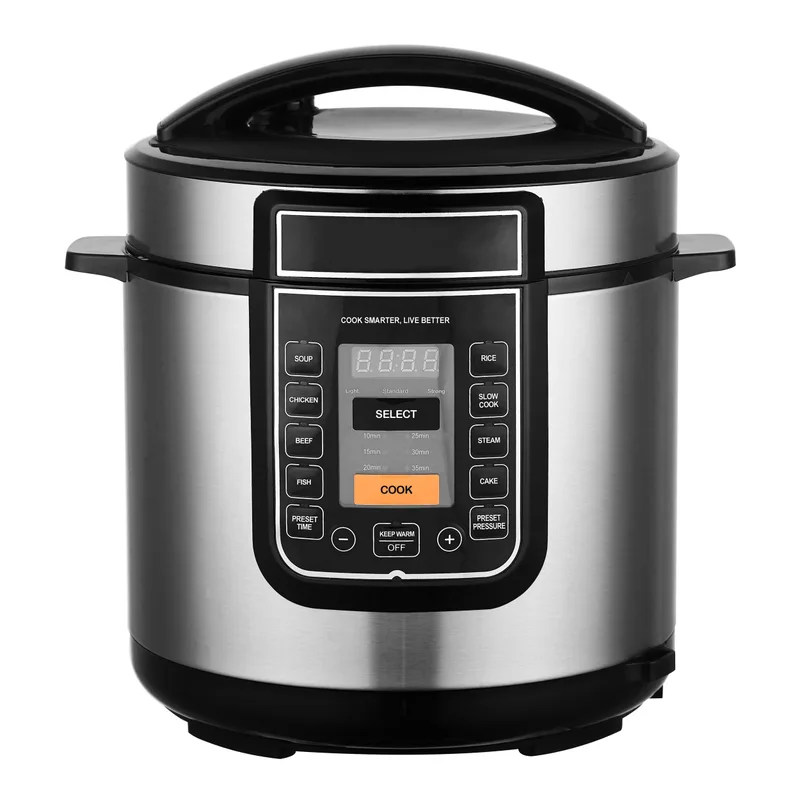
Examples of what we review
- A countertop pressure cooker whose lid opened under pressure (example)
- A space heater that overheated with no tip-over shutoff (example)
- A power tool whose blade guard failed (example)
- A rechargeable battery pack that caught fire while charging (example)
- A child's product with a strangulation or choking hazard (example)
Generic examples on a demo site. No real product, company or lawsuit is named.
Section 02: What we look for
Most cases that move forward have these.
Missing one is not always the end. Some facts can be found in records you have forgotten about. We will tell you which ones matter for you.
Usually a fit
- Fit: The product was used the normal way, or a way the maker should have expected
- Fit: The injury needed medical care
- Fit: You still have the product, or clear photos of it
- Fit: The product was not heavily modified or repaired with non-original parts
Usually not a fit
- Not a fit: The product was changed, or used in a way no maker could expect
- Not a fit: A minor injury with no medical treatment
- Not a fit: The product is gone and nothing records what it was (still call: sometimes other evidence fills the gap)
Section 03: Records that help
What to gather, and how to get it.
You do not need any of this before you call. With your written permission, we can request most of it for you.
-
01 The product
Unplug it, stop using it, and store it dry. Do not repair it, return it, or throw it away.
-
02 Packaging, manual and receipt
These show the model, the warnings that came with it and when you bought it.
-
03 Photos and video
All sides, the serial or model label, and the place where it happened, taken as soon as you can.
-
04 Medical records
Emergency room and follow-up records that describe the injury.
Section 04: Your filing window
Watch for two clocks.
Section 05: How these cases run
What to expect, honestly.
Most product cases are individual cases. Our engineers examine the product under a written testing plan, often with the maker's experts present. When a defect turns out to affect many people, a single case can become part of a larger group.
Section 06: Three kinds of defect
What can be wrong with a product.
- 01 Design defect Every unit has the problem, because of how it was designed. A heater sold with no tip-over shutoff (example).
- 02 Manufacturing defect Some units came out wrong, even though the design was fine. A lid lock that was not fully machined on one production run (example).
- 03 Failure to warn The product needed a warning or instructions that it did not have. No warning that the lid can open while there is still pressure inside (example).
Section 07: Questions
Questions about product cases.
The company offered a refund if I send the product back. Should I?
Please do not send it until you have talked to a lawyer. Once the product leaves your hands, it may never be examined by anyone working for you. Keep it and keep their letter.
I bought it used. Can I still bring a claim?
Sometimes. The question is whether the defect was there when it left the maker. Repairs and changes by earlier owners make it harder, so we look closely.
Does the product have to be recalled?
No. A recall can help, but many defect cases involve products that were never recalled.
Free case review
Talk to someone who reads the file.
A free review takes about ten minutes. You get a plain answer: yes, not yet, or no, with the reason. Contacting us does not make you a client and costs nothing.
Mon to Fri 8 to 6 · Sat 9 to 1 · No fee unless money is recovered