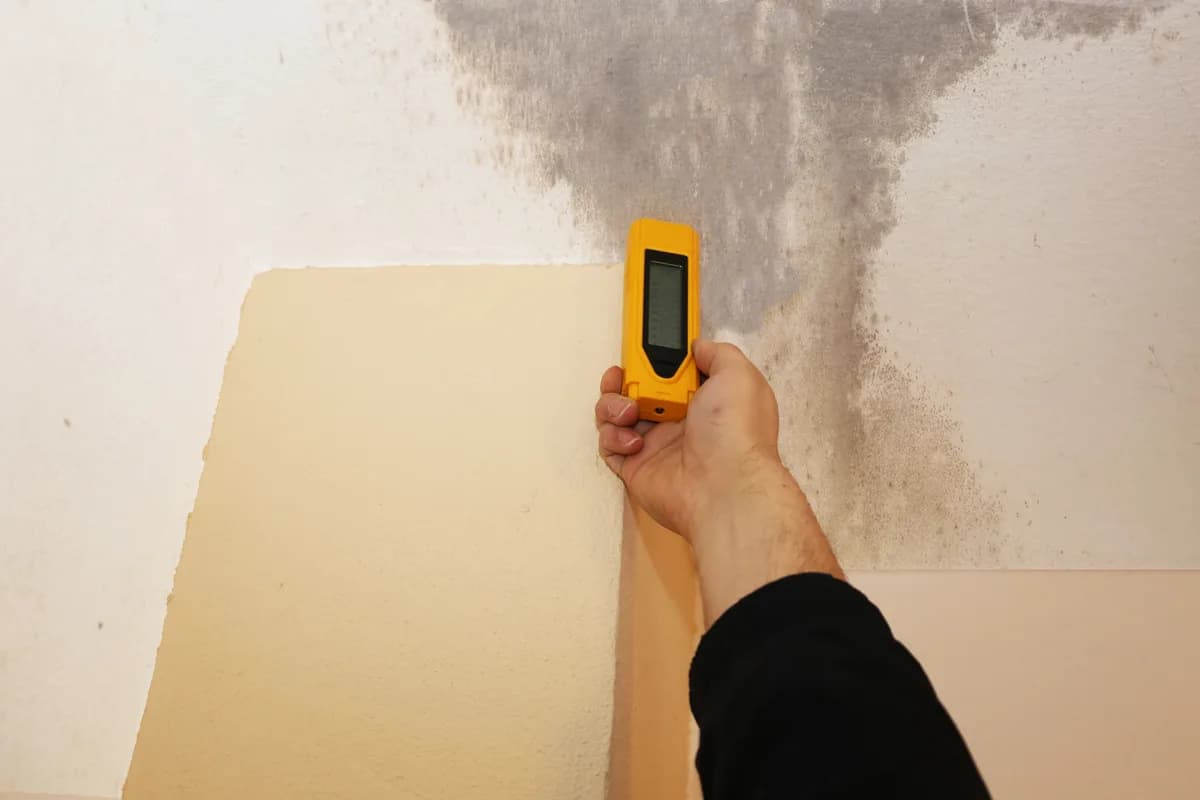
How a mold remediation company actually books work in 2026: where crisis searches start, the channels in order, speed-to-lead, and the numbers that prove it pays.
Marketing is a system, not a pile of tactics
Most mold remediation companies don't have a marketing problem. They have a stack of disconnected tactics that never talk to each other. A boosted post here, a directory listing there, a website built three years ago that nobody touches, and a phone that goes quiet between big jobs. Each piece might be fine on its own, but nothing carries a panicked homeowner from "I see black spots on the drywall" to "crew booked and the claim started." That gap is where the high-ticket work leaks out.
Think of it instead as one funnel with four jobs: get found at the moment someone discovers mold, give them a fast and obvious way to call, capture the contact before they dial the next company, and follow up until the inspection is scheduled and the job closes. Every channel you run should serve one of those four jobs. If you can't say which job a tactic does, it's probably the line item quietly draining your budget.
This matters more for remediation than for ordinary local services because the buying window is brutally short and emotional. Mold gets found during a basement flood, after a roof leak, when an inspector flags it before a sale, or when a family member starts coughing. The homeowner is stressed, often dealing with an insurer, and ready to hire whoever feels competent and answers first. If any link in your chain is broken — they can't find you, the page is slow, the form goes nowhere, nobody calls back — you never see the job, and these are the jobs worth several thousand dollars each.
The rest of this post walks the system stage by stage: how homeowners and adjusters find a remediation company now, the channels that actually book work, the speed-to-lead reality that decides who wins the 2 a.m. call, and the handful of numbers that tell you whether any of it is paying.
How homeowners and adjusters actually find you now
Discovery for mold remediation splits across a few surfaces, and you need to show up on all of them because a homeowner in a crisis checks more than one. The first and most important is the Google local pack and Maps. "Mold removal near me," "black mold remediation," and "water damage cleanup" are mobile, urgent, location-driven searches that resolve right in the map. Your Google Business Profile — accurate service categories, real photos of containment and air scrubbers on real jobs, and a steady stream of recent reviews — is doing more for you here than your website is.
The second surface is classic organic search, and for remediation it leans toward the worried-research queries: "is black mold dangerous," "how much does mold removal cost," "does insurance cover mold." These people aren't ready to buy yet, but they're sizing up who sounds trustworthy. Pages that answer plainly — what the inspection involves, how containment works, when mold is and isn't a covered claim, honest cost ranges — earn the eventual call far better than thin service pages full of stock phrases. The easy, low-effort informational traffic increasingly gets absorbed before the click, so your pages have to be specific enough to be worth the visit.
The third surface is AI search — ChatGPT, Perplexity, Gemini, Google's AI Mode. A homeowner now asks an assistant "who should I call for mold in my basement" or "is this mold or just mildew" and gets a steer. Local trades still see a smaller slice of traffic from these tools than tech or finance do, but the people who arrive this way tend to be further along — they've already described their problem and been pointed toward someone. You earn a spot on that shortlist the same way you earn it anywhere: clear, structured, genuinely helpful content and a strong, recent review profile that signals you're real and competent.
The paid channels that pay, and the order to add them
For a mold remediation company, paid acquisition isn't optional once you've decided to grow on a timeline. Organic and reviews compound slowly; ads put you in front of a flooded basement today. But the order you add channels matters as much as the channels themselves.
Start with the highest-intent inventory. If your market and category qualify, Google's Local Services Ads — the pay-per-lead units that sit above the map with the badge — are usually the first dollar to spend. The format only charges when a genuine lead contacts you, the badge carries trust for a service where homeowners are nervous about scams, and the people clicking are actively trying to hire. Not every remediation company qualifies, but if yours does, it tends to be your most efficient channel.
Layer standard Search ads next, on the terms that signal hiring intent rather than idle research: "emergency mold removal," "water damage restoration [city]," "mold remediation near me," "flooded basement cleanup." Bid for the crisis, not the curiosity. Cost per lead in this trade varies widely by market and season, so don't anchor to a number you read somewhere — track your own and judge it against the value of a booked job, which for remediation is high enough that a fairly expensive lead can still be a bargain.
Only after search is converting reliably should you add the awareness layers — Performance Max, retargeting, local social — to keep the top of the funnel full and stay top-of-mind with the realtors, plumbers, and property managers who refer the big jobs. Run channels in the wrong order and you'll pay to introduce yourself to people with no leak yet, then blame "ads" when the real problem was sequence. Underneath all of it sits the website: every ad dollar lands on a page, and a slow, vague, or hard-to-call page wastes the click you just bought. Treat the site as your conversion engine, not a brochure.
Speed-to-lead: the cheapest win in a crisis trade
This is the most under-priced lever in the whole system, and it costs nothing in ad spend: how fast you respond when a lead comes in. In remediation it's decisive, because the buyer is standing in a wet basement and will call the next company on the list the moment your line goes to voicemail. Whoever picks up — or calls back within minutes — usually wins the job, and these are high-ticket jobs to lose.
The implication is blunt: you can be outspent on ads and still win, simply by being the one who answers first. Every after-hours call that hits voicemail, every form fill that sits until lunch, every "contact us" that nobody works is a several-thousand-dollar job you paid to generate and then handed to a competitor. For a trade where so much of the demand arrives nights, weekends, and during storms, your response process is your real competitive edge.
The fix is mechanical, not heroic. Route every lead — form, call, click-to-text, web chat — into one place so nothing is scattered across inboxes and a personal cell. Trigger an instant acknowledgment the moment a form comes in, so the homeowner knows a real company has them. Then make sure a human answers live during open hours, and that after-hours calls reach an answering service or a well-built responder that can dispatch true emergencies instead of dumping them to voicemail. Set an internal response standard and actually measure against it, because "call them back fast" only happens reliably when someone owns the number.
If you do nothing else from this post, instrument your lead response time first. It's the rare improvement that raises booking without raising spend.
Follow-up and reviews: the compounding back half
Generating the lead is the expensive part. Not booking the inspection, and not turning a finished job into the next one, is where most of the margin disappears. The back half of the system — follow-up and reputation — is what makes the front half affordable.
Follow-up first. Not every mold lead books on the first call. Some are mid-claim and waiting on an adjuster, some are getting a second opinion, some called before they were sure it was mold at all. A simple, human sequence — a same-day text confirming you can inspect, a follow-up that answers the obvious next question ("will my insurance cover this?"), a check-in if they go quiet — recovers jobs that would otherwise drift to whoever followed up. You don't need elaborate automation; you need a few well-timed messages that sound like a person and respect that a stressed homeowner is comparing options. Owned channels like text and email cost nothing per message, which makes recovered work close to pure margin.
Reviews are the compounding asset, and in remediation they carry unusual weight because the buyer is anxious and can't easily judge quality themselves. They lean on what other homeowners say — that your crew showed up fast, contained the spread, explained the moisture readings, handled the insurance paperwork, and left the place dry. So build review generation into the job itself: ask at the moment of relief, when the equipment comes out and the home feels normal again, make it one tap, and respond to every review in your own voice. Reviews feed your map ranking, your ad credibility, and increasingly which companies AI assistants name. The loop reinforces itself — recent reviews lift visibility, visibility brings calls, calls handled fast become jobs, and satisfied jobs become the next reviews.
The four numbers that tell you if it's working
You can drown in dashboards. For a mold remediation company, four numbers decide everything, and the rest is supporting detail.
First, cost per qualified lead — not raw clicks, but homeowners (or adjusters and referral partners) who actually have a mold or water problem you can service. Track it by channel so you can move budget toward what books and cut what doesn't. A flood of cheap clicks that never turn into inspections is worse than a handful of expensive ones that do.
Second, booking rate — of those qualified leads, how many turn into scheduled inspections and then signed jobs. This is where speed-to-lead and follow-up show up. A strong lead source with a weak booking rate is an operations problem — slow callbacks, no after-hours coverage — not a marketing one, and no amount of cheaper clicks fixes it.
Third, average job value, and where it applies, the value of the referral relationships a job opens up (the plumber, the agent, the property manager who sends the next three). Remediation jobs vary enormously — a small bathroom remediation versus a full basement water-and-mold job that runs into five figures — so you can't judge a lead's cost without knowing what a booked job is worth. The same cost per lead is a steal for a large insurance job and a loss for a tiny one.
Fourth, and the one that ties it together: cost to acquire a paying job, and the ratio between that and what the job is worth. If a job is worth many multiples of what it costs to win, you should be spending more, not less. If the ratio is thin, the fix is usually booking rate or job mix, not just cheaper clicks. What makes these numbers trustworthy is tracking you actually own — call tracking and form tracking flowing into accounts in your name, not buried inside a vendor's login. When the data is yours and the attribution is honest, marketing stops being a guess and becomes a set of decisions you can defend. SearchPod's model is built around exactly that: one team running the whole funnel, accounts the company keeps, and reporting that ties spend back to booked jobs rather than vanity clicks.
Putting the system together without breaking what works
You don't build this all at once, and you shouldn't. Trying to launch ads, rebuild the site, fix local SEO, stand up follow-up, and overhaul reviews in the same month is how a busy remediation company burns cash and loses track of what actually moved. Sequence it.
Start with the foundation that makes every later dollar work harder: a fast, mobile-first site that makes calling you unmissable, states plainly that you handle emergencies and bill insurance, and shows real proof — photos of containment and drying equipment on real jobs, technician credentials, recent reviews. Pair it with a fully built-out Google Business Profile and an active review engine. These cost the least and lift everything downstream; ads, organic, and AI discovery all lean on them.
Next, instrument lead response so nothing you generate gets dropped — one place for every call and form, instant acknowledgment, real after-hours coverage. This is the free booking lift, and in a trade this time-sensitive it often matters more than the ad budget. Only then turn on paid acquisition, starting with the highest-intent inventory your category supports and expanding as the numbers prove out. Finally, add the compounding layers: content that earns organic and AI visibility for the questions worried homeowners ask, and follow-up that recovers the leads who were mid-claim or undecided.
The mistake to avoid is treating any single piece as the whole answer. "We tried Google Ads and it didn't work" almost always means the ads ran fine but landed on a weak page, or generated 2 a.m. calls nobody answered, or chased small jobs that cost more than they were worth. The system fails at the seams, not the channels. Whether you run it in-house or bring in a partner, hold it to the same standard: every channel does one of the four jobs, every lead is tracked and answered fast, and every month you can point to the four numbers that say whether it's paying. Do that, and marketing stops being a gamble and becomes the most predictable way a mold remediation company fills its schedule.
Want help implementing this?
Get a free proposal for your content marketing setup. We’ll show you exactly where the opportunities are.
Get Free ProposalRelated Articles