Technology
Instruments measure. Surgeons decide.
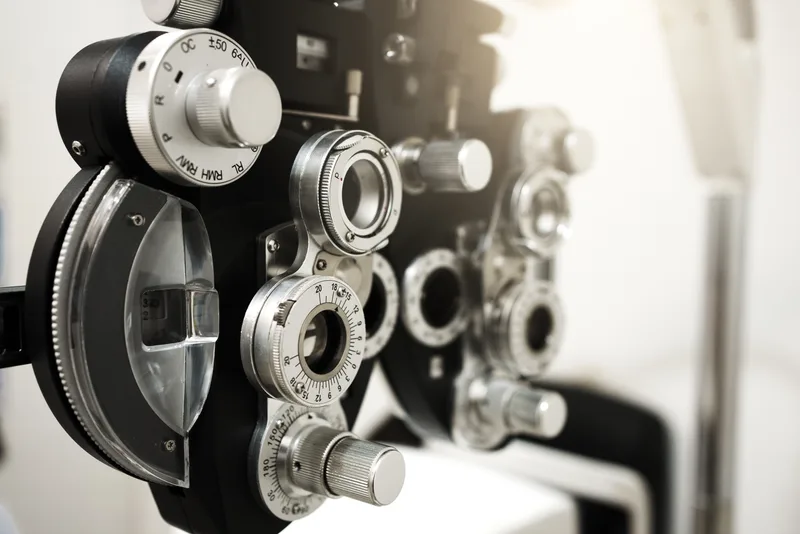
Good equipment makes planning more precise. It does not replace judgment, and it cannot promise a result. Here is what each instrument does for you, and where its limits are.
-
01
Corneal tomography
- What it does
- The front and back shape of the cornea and its thickness across its whole surface.
- Why it matters to you
- Spots thin or irregular corneas, including early keratoconus, before any laser plan is made.
- What it cannot do
- A map is a snapshot. We repeat it if contacts may have changed your cornea's shape.
-
02
Wavefront aberrometry
- What it does
- How light bends through your whole eye, beyond a simple glasses number.
- Why it matters to you
- Lets the laser plan address small distortions that can blur night vision.
- What it cannot do
- Not every eye benefits from a wavefront-guided plan. Your surgeon decides.
-
03
Femtosecond laser
- What it does
- Makes precise cuts with tiny pulses of light, used for LASIK flaps and SMILE.
- Why it matters to you
- No blade. Flap thickness is planned to the micron.
- What it cannot do
- It is a tool. Planning and judgment still decide the outcome.
-
04
Eye-tracking excimer laser
- What it does
- Reshapes the cornea while following small movements of your eye.
- Why it matters to you
- Keeps treatment centered if your eye drifts.
- What it cannot do
- You still need to look at the light. We coach you before you lie down.
-
05
OCT imaging
- What it does
- Cross-section scans of the retina, optic nerve and cornea.
- Why it matters to you
- Checks eye health before surgery and tracks glaucoma over time.
- What it cannot do
- Scans are read by a doctor alongside your other tests, never alone.
-
06
Optical biometry
- What it does
- The length and curves of your eye for choosing lens implant power.
- Why it matters to you
- Accurate measurements reduce the chance of needing glasses after lens surgery.
- What it cannot do
- Very long or short eyes, or past laser surgery, make lens math harder. We tell you.
-
07
Meibography and tear testing
- What it does
- Images of the oil glands in your eyelids and the stability of your tears.
- Why it matters to you
- Finds dry eye that would affect your surgery or comfort.
- What it cannot do
- Dry eye symptoms and test results do not always match. We treat both.
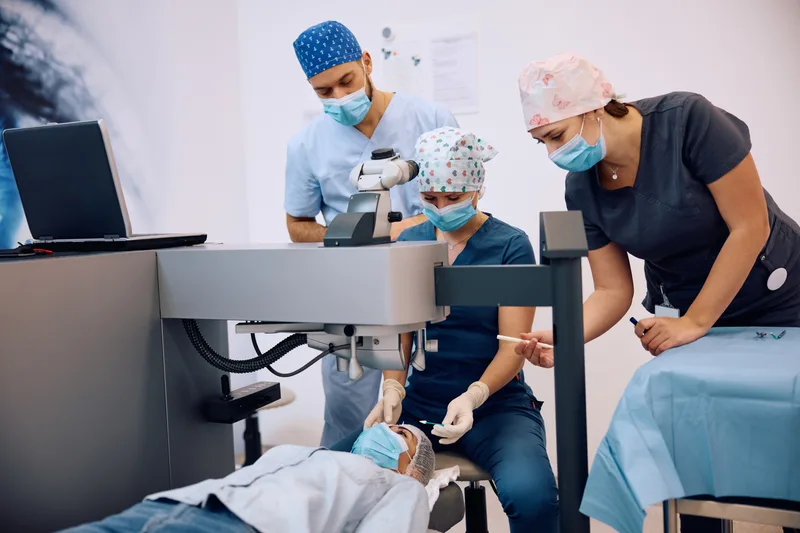
Inside the laser suite
About fifteen minutes, and someone explains every sound
The suite is kept cool and dry for the lasers. Jada talks you through each step: the pressure of the flap laser, the clicking of the excimer, and when to keep looking at the light. The lasers check their own calibration every surgery day before the first patient.
We do not list device brands on this site. Ask us at your screening and we will tell you exactly which instruments we use, and why.
Free screening
See your own corneal map.
Every instrument on this page is part of the free screening. You see your measurements, and a surgeon explains what they mean for your options.