Our methods
Positive reinforcement, start to finish
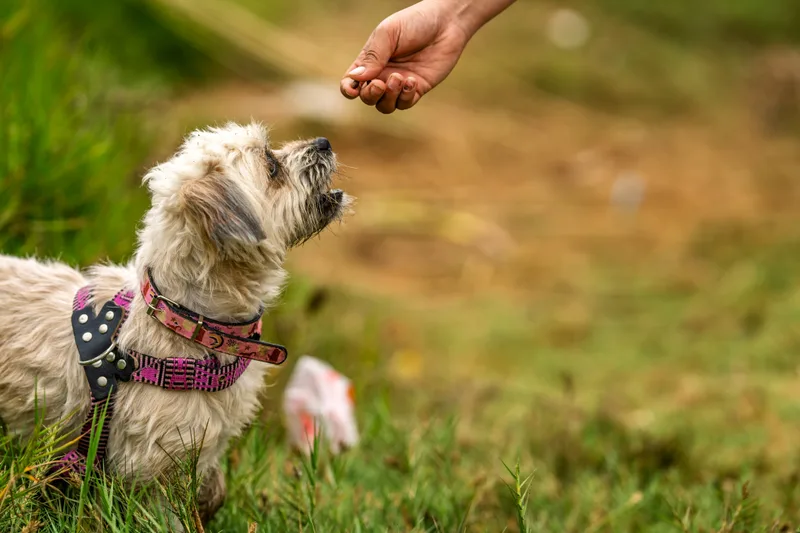
We reward the choices we want to see, so your dog wants to make them again. It is kind, it is clear, and it works for puppies, teen dogs, rescues and seniors alike.
Three simple ideas
-
1
Reward what you like
Dogs repeat what pays off. We mark the moment your dog gets it right and pay with something they love: food, a toy, a sniff, a game.
-
2
Set your dog up to win
We make the right choice easy. Leashes, gates, distance and timing stop mistakes before they happen, so there is nothing to punish.
-
3
Go at your dog's pace
Small steps, lots of wins. When a dog struggles, we make it easier for a moment, not louder. Confidence grows, and so does focus.
Tools we use and tools we never use
What we use
- Soft, tasty treats
- Toys and tug games
- Praise and play
- Clickers and marker words
- Flat collars and harnesses
- Long lines for recall
- Mats for settle work
- Muzzles your dog learns to love, for safety
What we never use
- Prong or pinch collars
- Choke chains
- Shock or e-collars
- Leash pops and jerks
- Alpha rolls or pinning
- Spray bottles or shaker cans
- Yelling or scare tactics
- Withholding food as pressure
We do say no. We interrupt, redirect and show your dog what to do instead. We just never hurt or frighten them to do it.
What a session looks like
Every lesson, group or private, follows the same calm rhythm. Your dog always knows what is coming, and so do you.
- 1 Warm up A few easy wins to switch your dog's brain on: name game, hand touch, a sit.
- 2 Learn one new thing We show it, you try it, we coach your timing. Short reps, lots of rewards.
- 3 Make it real We add a little distance, distraction or duration, only as fast as your dog can handle.
- 4 Rest and recap A sniff break for your dog, and three homework games for you.
Why it works
Dogs do what works for them. When sitting gets them a treat, a walk or a game, they sit more. That is the whole science in one line.
Fear and pain make learning harder. A worried dog cannot think clearly, and harsh tools can make barking, lunging and biting worse over time. Veterinary behaviour experts recommend reward-based training for exactly this reason.
Training also builds trust. You become the best thing in your dog's world, which is the real secret to a dog who comes when called.
Common questions about our methods
What training methods do you use?
Positive reinforcement. We reward the choices we want to see with food, toys, play and praise. We never use prong, choke or shock collars, and we never use force.
Will my dog only listen when I have treats?
No. Treats help your dog learn fast at the start. Then we teach you how to fade them and use everyday rewards like walks, play and sniff breaks.
Do you guarantee results?
No honest trainer can guarantee how a living animal will behave. We do promise a clear plan, real coaching and support between sessions. Most families see clear progress within a few weeks of steady practice.
My dog does not care about treats outside. Now what?
That usually means the world is more exciting than the reward, or your dog is a little stressed. We lower the distraction, upgrade the treat and use what your dog wants right then, like a sniff or a chance to chase a toy, as the reward.
See kind training in action
Every program uses these methods. Find the one that fits your dog, or come watch a group class before you sign up. Just ask.