How bakeries win in 2026: the two revenue engines, the channels that drive each, the metrics that matter, and the seasonal economics behind it.
A bakery runs on two revenue engines, not one
Most bakery marketing advice treats a bakery like a single business. It isn't. You run two businesses under one roof, and they need different machines pointed at them.
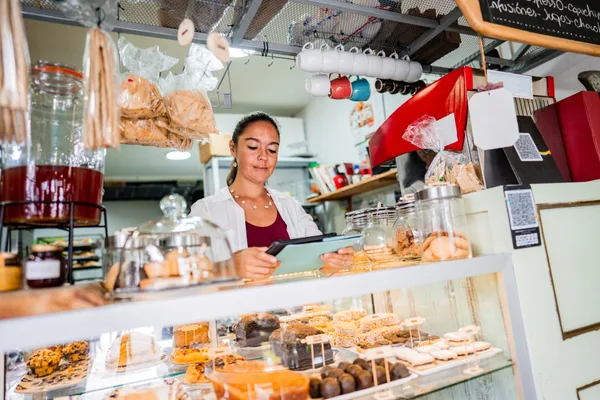
The first engine is the counter: bread, pastries, coffee, grab-and-go. It's high-volume, low-ticket, and almost entirely impulse and habit. People decide to walk in within minutes of getting hungry, and they decide on what's close, what looks good, and what other people say. This is craving-driven local demand — someone searches on a phone, scans a map, and acts fast, often visiting that same day. The counter is won or lost in the few seconds someone spends looking at a map and a photo.
The second engine is custom orders: birthday cakes, wedding cakes, catering, holiday pre-orders. This is where the margin lives. A single custom cake or a tiered wedding cake carries a far higher ticket than a dozen pastries, and the more elaborate the work — sculpted, fondant, multi-tier — the higher it climbs, before delivery and setup. These high-ticket orders are a smaller share of how many transactions you ring up, but they punch well above their weight in profit. That's the asymmetry the whole system is built around: most of your traffic comes from the counter, but a disproportionate share of your profit comes from the order book.
If your marketing only feeds one engine — a beautiful Instagram with no way to capture a cake inquiry, or a cake order form nobody can find when they search at 8 a.m. — you're leaving the more profitable half of the business on the table. A real system runs both at once.
The discovery layer: your Google Business Profile is the storefront now
Before a new customer tastes anything, they see your Google Business Profile. For a bakery, that listing is the single highest-leverage asset you own, and it's the foundation everything else sits on.
Here's the order of operations a customer actually follows. They search "bakery near me" or "custom cakes near me." Google shows the map pack — a short stack of local listings with photos, ratings, hours, and direction buttons. They scan it for a few seconds. They tap the one that looks freshest, is open now, and has the most convincing reviews. Often they never reach a website. The decision is made inside Google.
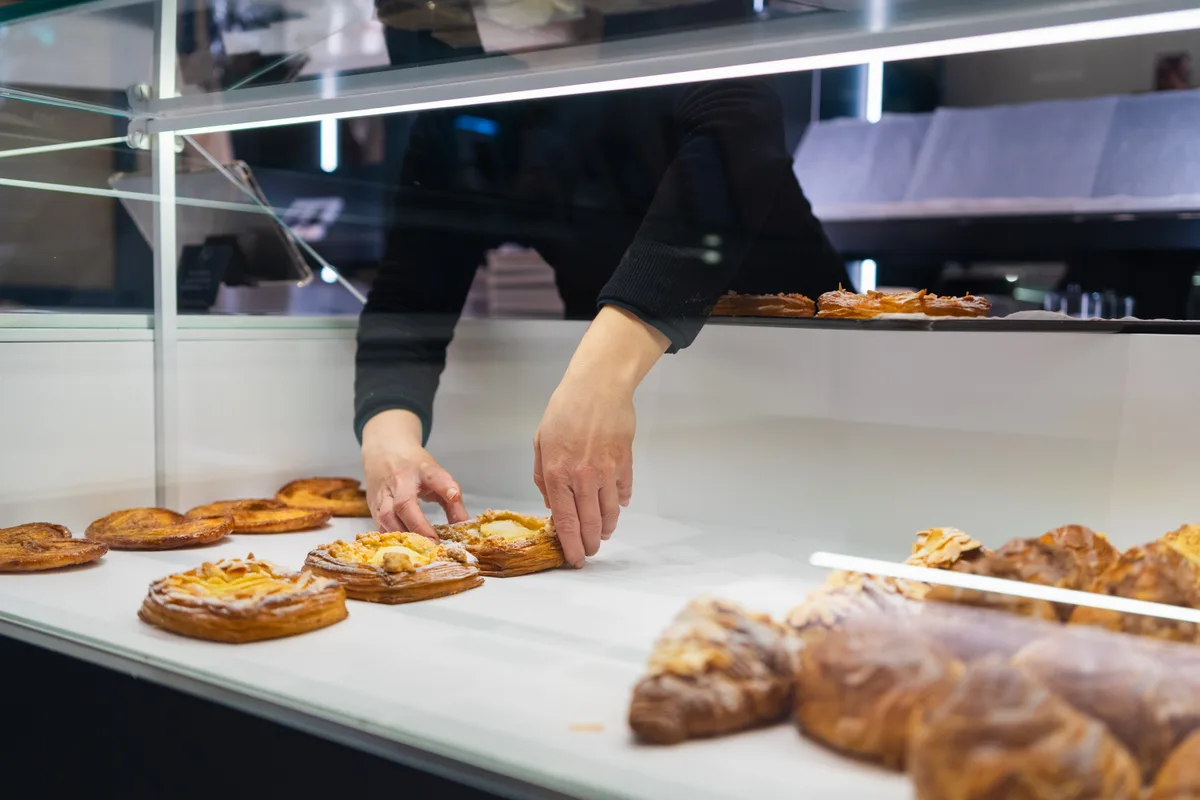
That means the work that wins the counter is not your homepage — it's the listing. Categories set correctly. Hours accurate to the minute, including holiday hours. Products loaded. A steady stream of photos that make people hungry, because a stale gallery of three blurry cupcakes loses to the bakery posting fresh croissants every week. And the proximity and relevance signals that get you into the map pack for your neighborhood in the first place — which is what local SEO actually is for a food business.
The discovery layer has also widened recently. Since 2025, Instagram posts from business accounts can surface directly in Google results, alongside listings and websites. For a craving-driven business, that's a direct line: the photo that makes someone hungry and the search where they're deciding can be the same moment. The takeaway isn't "post more." It's that your visual content and your local listing are no longer separate channels — they're one discovery surface, and they need to be managed together.
Mapping the funnel: each stage needs a different channel
Once you accept the two-engine model, the funnel stops being abstract. Each stage has a job, and a specific channel does that job best.
Demand capture — people who already want what you sell. This is Google Search, paid and organic. Someone typing "wedding cakes near me" or "gluten free bakery near me" is not browsing; they're shopping. The map pack and a well-run Google Ads campaign both intercept that intent. Ads buy you the top spot today while organic rankings and reviews compound underneath; running them together is steadier than either alone. This is the stage where high-intent custom-order searches matter most, because that's where the margin is.
Demand creation — people who weren't actively looking but get a craving. This is social and the photo-in-search surface above. It doesn't capture a ready buyer; it plants one. You measure it by saved posts, profile visits, and direction taps, not by direct sales.
Conversion — turning a click or a craving into an actual order. For the counter, conversion is a direction request or a walk-in. For custom orders, it's a form submission, an online order, or a phone call. This is where most bakeries leak. A cake inquiry that requires a phone call during the morning rush gets lost; the customer calls the next bakery. An order form buried three menus deep gets abandoned. The fix is making the inquiry frictionless and routing it somewhere that gets answered.
Retention — turning a first visit into a regular, and a one-time cake buyer into an annual one. This is email and reviews. It's the cheapest growth you have, and for bakeries it's also the most seasonal — which is the next piece.
Bakery economics are seasonal, and the calendar is the plan
Most local businesses have a fairly flat year. Bakeries don't. Your revenue spikes hard and predictably around a handful of dates, and the marketing system either anticipates those spikes or scrambles after them.
The big peaks are Valentine's Day, Easter, Mother's Day, Thanksgiving, and Christmas, with wedding season layered across the warmer months. For custom-order bakeries especially, the back half of the year — weddings and the holiday stretch — can carry a large share of annual custom-order revenue. These aren't surprises. They're on the calendar a year in advance, which makes them the easiest revenue to plan for and the most expensive to miss.
Two facts about peak periods change how you market into them. First, capacity is finite — you can only decorate so many cakes the week before Christmas, so the goal isn't maximum volume, it's filling your slots early with the most profitable orders and then closing pre-orders before you're underwater. Second, customers procrastinate. Holiday and Valentine's shoppers tend to wait until the last several days, which means demand shows up in a compressed window right when you have the least slack. A system handles this by opening pre-orders early to your existing customers — the people on your email list who already trust you — so your high-margin slots fill before the public rush starts.
That's why email isn't an afterthought for a bakery; it's the engine that monetizes the calendar. A seasonal pre-order announcement to past customers is one of the highest-return messages most bakeries can send, because it reaches people who've already bought, at the moment they're about to buy again, before a competitor reminds them first.
Reviews and AI search: the proof layer that decides the click
In a category sold on craving and trust, reviews aren't a vanity metric — they're often the deciding factor between two listings that both look fine. And in 2026 they do double duty, because they also feed the AI assistants people increasingly ask for recommendations.
How people choose a local food business is blunt: most read reviews before a first visit, they weigh the rating and how many reviews back it up, and they quietly discount a place whose reviews all stopped two years ago. Recency carries real weight. For a bakery sitting next to a few competitors in the map pack, your review count, your rating, and how fresh your reviews are can matter more than anything on your website.
The practical implication is that reviews can't be passive. The bakeries that win have a system: a friendly, well-timed request goes to happy customers after a visit or a completed cake order, so fresh five-star reviews arrive steadily instead of in random bursts. Steady beats a one-time push, because both Google and customers reward a place that clearly still has fans this month.
The newer reason this compounds is AI search. When someone asks ChatGPT, Gemini, Perplexity, or Google's AI Overviews "where's the best bakery near me" or "recommend a custom cake shop in my city," those systems lean on your structured local presence and review signals to decide who to name. The same listing hygiene and review velocity that win the map pack are what get you surfaced by an assistant. You don't optimize for AI separately — you earn it by being the obviously well-reviewed, well-described local choice.
The metrics that actually tell you it's working
Bakery marketing fails quietly when nobody knows which channel produced which customer. With two revenue engines and a handful of channels, you need attribution, not impressions.
Start with the discovery metrics on your Google Business Profile, because that's where the counter is won: profile views, the searches that surfaced you, photo views, and especially direction requests and calls. A rising direction-request count is one of the cleanest proxies for foot traffic you can get, and it tells you your local presence is actually pulling people toward the door rather than just looking pretty.
For the order book, track inquiries by source and by type. A custom-cake form submission from a Google Ads click is a different animal from a catering email off your website, and you want to know your true cost to win each. Separate the order types — daily counter, custom cakes, catering — because they have wildly different ticket sizes and margins, and the channel that drives cheap counter traffic may be useless for high-margin weddings, or vice versa. Lumping them together hides where your profit really comes from.
Don't skip call tracking. Plenty of custom-cake and catering customers still pick up the phone, and a missed call during the morning rush is a lost order you'll never see in a dashboard unless you're recording it. Recording and scoring inbound calls — and triggering an automatic text-back when one goes unanswered — recovers orders that would otherwise walk down the street.
The number that ties it together is cost per new customer, segmented by order type and watched over time. If you can answer "what did it cost to win a custom-cake order this month, and is that going up or down," you can invest with confidence instead of guessing. Everything else is in service of that one honest figure.
Why the parts have to run as one system
The reason this is a system and not a list of tactics is that the pieces only pay off when they reinforce each other — and the most common failure is running them as disconnected vendors who never talk.
Walk the loop. Ads and SEO drive a high-intent searcher to your listing. The listing's photos and reviews convince them, so they walk in or submit a cake inquiry. The website or order form captures it cleanly and it lands somewhere that gets answered. After the order, the review request fires, producing fresh proof that lifts your map-pack ranking and your AI-search visibility — which lowers the cost of the next ad click and wins the next organic searcher. Then email pulls that customer back for the next birthday or the next holiday pre-order, at near-zero cost. Each channel feeds the next. Break one link and the whole loop leaks: great ads into a weak listing waste spend; a strong listing with no follow-up forgets every first-timer; a full order book with no review engine slowly slides down the rankings.
This is also where the bakery's seasonal nature raises the stakes. The loop has to be primed before the peaks, not patched together during them. The reviews you collect in spring are what win the map pack in December. The email list you grow all year is what fills your Christmas pre-order slots in a week.
That's the case for one team owning the website, ads, local SEO, AI-search visibility, reviews, and email together, measured in one place — which is how SearchPod approaches it. Not because more channels is better, but because the channels are a system, and a system can't be assembled from five vendors who each see only their own slice. Built as one loop, pointed at both your counter and your order book, it turns marketing from a monthly expense into the thing that keeps both engines running.