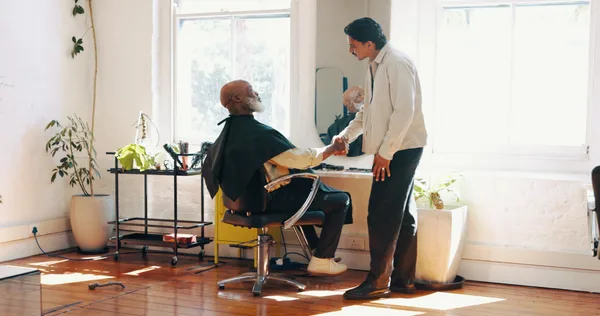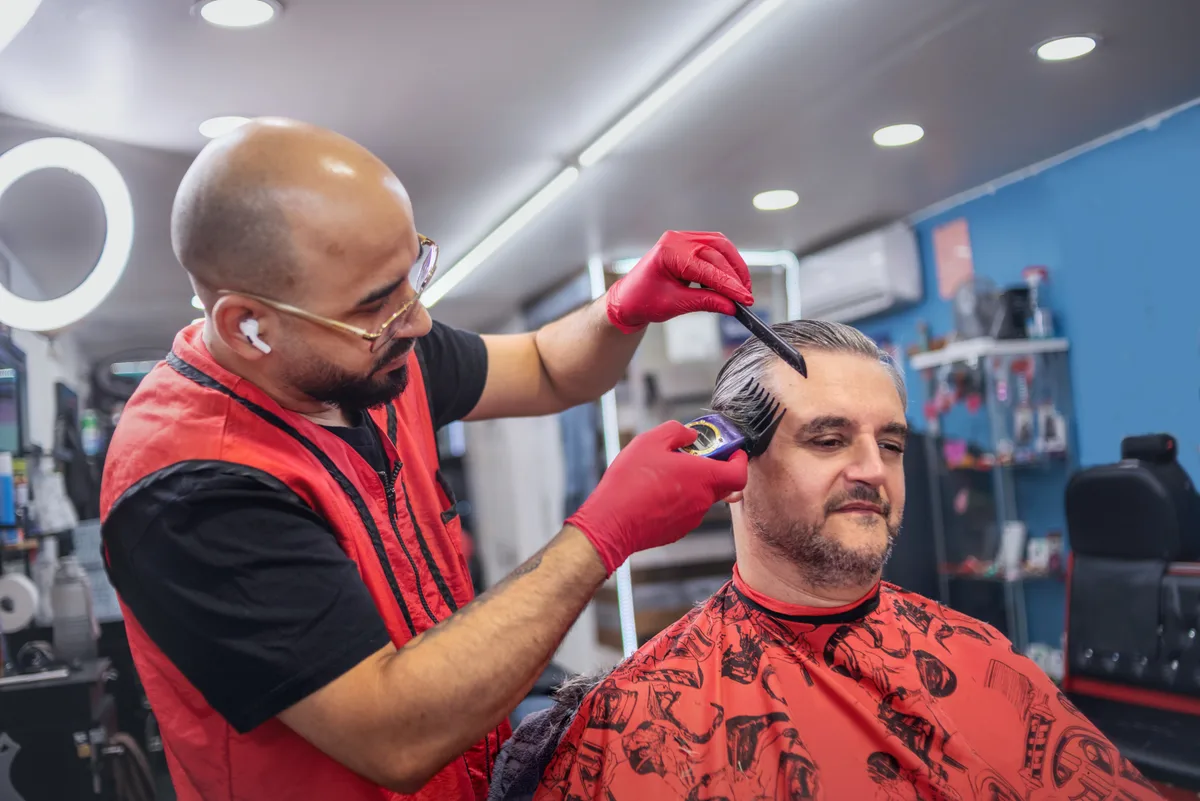
The system a modern barbershop uses to win and keep clients in 2026: the channels, the funnel, the retention loop, and the metrics that fill chairs.
Start with the economics, not the tactics
Most barbershop marketing advice skips the one thing that should shape every decision: a barbershop runs on frequency, not on first visits. A regular comes back every two to four weeks for a cut, a fade, a beard trim, or a hot-towel shave. That cadence is the whole business. A loyal client who sits in your chair twice a month for years is worth far more than the single cut a walk-in pays for today — and the gap between those two numbers is exactly what your marketing either captures or leaks.
That changes how you think about spend. If a new client is worth one cut, you can't afford to pay much to win them. If they're worth dozens of cuts over several years, you can afford real money up front — but only if you have a system that turns the first visit into a standing appointment. The shops that grow steadily don't do it by constantly replacing the regulars they lose. They do it by holding on to the clients they already have and giving them more reasons to come back.
So the system has two jobs, and they are not equal. Job one is winning new clients from local search. Job two — the one that compounds — is making sure those clients rebook. A shop with great acquisition and weak retention is a leaky bucket that gets more expensive every month. Decide how you'll keep a chair full before you spend a dollar filling it. Everything below assumes you're building a calendar you intend to keep, not buying one-time walk-ins.
The customer journey, stage by stage
A new client moves through four stages, and each one needs a different asset. Skip a stage and the whole thing leaks.
Stage one is the search. Someone types "barber near me," "fade haircut near me," or "best barber" plus their city. They are ready right now — this is the highest-intent moment you will ever get. What they see is the Google map pack, the three local listings at the top, and increasingly an AI Overview or a ChatGPT answer naming a few shops. If you're not in those, the journey ends before it starts.
Stage two is the decision. They tap a listing and size you up in seconds on three things: your star rating and review count, your photos, and whether they can book without friction. Reviews carry most of the weight, and recency matters as much as the average — a steady stream of recent reviews reads as a busy, current shop in a way an old pile of five stars does not.
Stage three is the booking. Most barbershop appointments now happen online rather than by phone or walk-in. If your only path is a phone number, you are losing ready clients to shops that let them book in two taps from the lock screen. The booking has to be one tap from wherever they found you — Booksy, Square, Vagaro, whatever you run — not buried behind a contact form.
Stage four is the rebook, and it's where the money is. A first-time client who doesn't get back on the calendar is a cost you paid once, not an asset. The journey isn't a line; it's a loop, and the loop is the point.
The acquisition channels that actually work locally
For a barbershop, acquisition is almost entirely local and search-driven. Three channels do the heavy lifting, and they work best stacked.
Google Business Profile and local SEO are the foundation. Your profile is the single most valuable thing you own here: a complete listing with correct categories, hours and services, plus a steady drip of real cut photos and fresh posts, is what feeds the map pack for "barbershop near me." Dormant listings get buried; active ones surface. This is free traffic from people ready to book today, and it does more than any clever campaign. Pair it with service and neighbourhood pages on your own site so you also turn up for "skin fade near me" and "beard trim" plus your city.
Google Ads buys the top of the page while SEO compounds underneath it. The advantage of paid search for a barbershop is speed and intent: you can be live above the map pack within days for "barber near me" and the specific services that keep chairs full. Because the searcher is high-intent and local, a tight set of keywords pointed at a page built to book — not your homepage — tends to convert. Track every call and booking back to the keyword so you know your true cost per booked client, not just your cost per click.
AI search is the new front door. People now ask ChatGPT, Gemini and Perplexity "who's the best barber near me?" and act on the answer. Those assistants lean on the same signals — Google Business Profile, reviews, clear structured content — so the work that wins the map pack increasingly wins the AI recommendation too. Instagram still matters for proof and personality, but treat it as a portfolio that supports search, not the engine itself. A pipeline that lives entirely in one barber's following can't scale and can't be sold.
The retention engine: where barbershops actually make money
This is the half most shops never build, and it's the half with the best return. The principle is well established across service businesses: a small lift in how many clients come back has an outsized effect on profit, because every retained regular saves you the cost of winning a replacement. Acquisition gets the attention; retention quietly does the earning.
The engine has three moving parts. First, rebook at the chair. The most reliable retention lever is asking the client to book their next cut before they stand up. Your front desk and your booking software should make that the default close to every appointment, not an afterthought you remember on a slow day — booking platforms built for barbers exist precisely because the in-chair rebook is so much stickier than hoping someone comes back on their own.
Second, the timed reminder. The barbershop sweet spot is roughly three weeks after the last cut — a message around the 21-day mark, "time to freshen up that fade," lands right as the client starts to feel shaggy. Send it too early and it's noise; send it too late and they've already booked somewhere else or grown it out. SMS and email reminders together are what turn a one-time cut into a standing habit.
Third, win-back. Clients drift — they get busy, they try the shop they walked past. A simple automated sequence to anyone who hasn't booked in six weeks pulls a meaningful share back before they become someone else's regular. The same automation earns its keep on no-shows: reminders the day or two before an appointment cut the empty-chair problem that otherwise eats into a fully booked week. Once it's set up, none of this needs your team to lift a finger — which is the whole difference between an engine and a to-do list.
The metrics that tell you it's working
Vanity numbers — followers, impressions, website visits — tell you almost nothing about whether your chairs are full. A barbershop should watch a short, honest list instead.
Cost per booked client. Not cost per click or cost per lead — cost per actual booking. This number only exists if you set up call tracking, form tracking and conversion tracking from day one. Tie ad spend, calls and online bookings together and you'll know what it really costs to win a client, and whether that figure is trending up or down. Without it, you're guessing.
Rebooking rate. Of the clients who came in this month, what share already have their next appointment on the calendar? This is your retention pulse and the number with the most leverage on profit. Track it per barber — books fill unevenly, and a chair with a low rebooking rate is a coaching conversation, not a marketing one.
Chair utilization. Empty chairs and gaps between appointments are revenue you can never get back. Watching booked hours against available hours tells you whether the real problem is too few clients or a calendar full of holes that a better reminder system would close.
Review velocity. Not just your lifetime total — how many fresh reviews you earn each month. Recency drives both map-pack rankings and AI recommendations, so a steady flow matters more than a big static number. And keep an eye on your no-show rate: if it starts drifting up, that's a sign your reminder and deposit settings need attention before it costs you a season. Five numbers, reviewed monthly, will tell you more than any dashboard full of impressions.
Why the channels have to run as one system
The reason most barbershop marketing underperforms isn't a bad channel — it's disconnected channels. The website company doesn't talk to whoever runs the ads, who doesn't know the reviews have gone stale, who has no idea the booking link is broken on mobile. Each piece works in isolation and the client still slips out between them.
The stages are physically linked, so the tools should be too. Ads and SEO send people to the booking page; that page has to load fast and book in two taps or the ad spend is wasted. Reviews feed both the map-pack ranking and the AI recommendation, so the review engine isn't a side project — it's fuel for acquisition. The reminder system that drives rebookings is the same system that recovers no-shows and wins back lapsed clients. Pull one thread and the others move.
That's the case for one team owning the whole loop instead of five vendors each owning a slice. When the same group runs the site, the ads, the SEO, the AI-search visibility, the email and the reviews, your cost-per-booked-client actually means something — you can trace a booked cut from the first search to the chair and back to the rebook. SearchPod is built around exactly that: a full-funnel team, plain-English reporting, and accounts you own outright. But the principle holds no matter who does the work — a barbershop's growth is a single connected loop, and it only performs when it's run as one.
One practical note for Canadian shops: keep booking through Booksy, Square or Vagaro as you already do, keep your Google Business Profile current for your specific city, and make sure whoever runs your marketing hands you the accounts and the data. You own the relationship with every client in that chair. Your marketing should be built so you own it too.