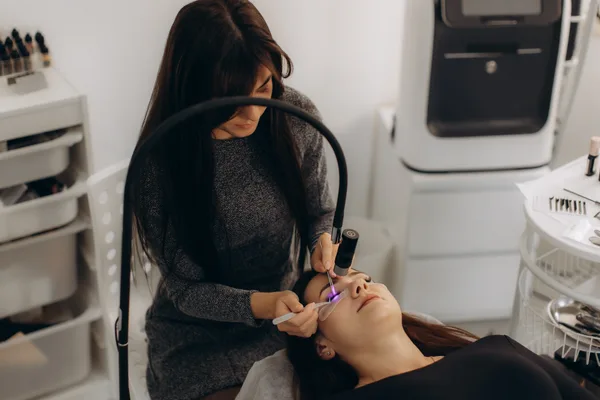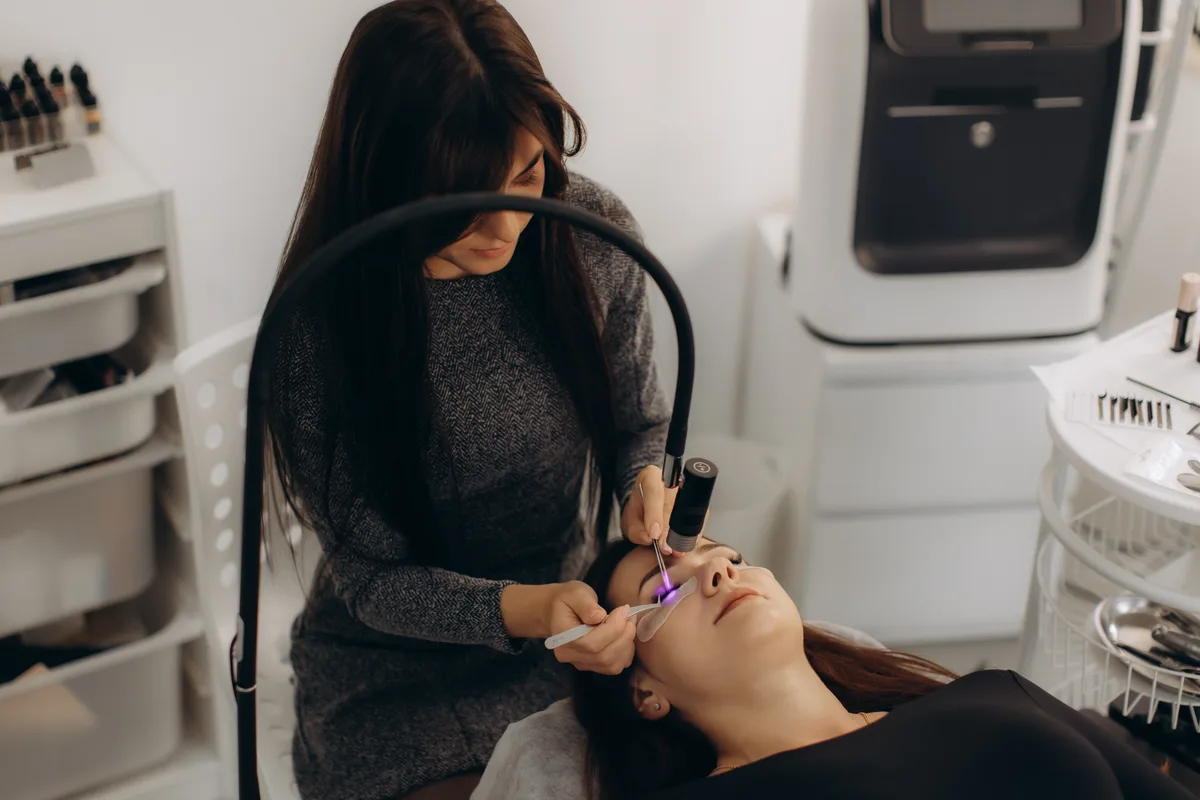
The marketing system that fills a lash & brow studio in 2026: the channels, funnel stages, fill economics, and metrics that turn first sets into recurring clients.
Your real product isn't a full set — it's the fill cadence
Before any channel or tactic, understand what you're actually selling, because it changes everything downstream. A lash & brow studio doesn't make most of its money on the first full set. It makes its money on the fill — the touch-up roughly every two to three weeks that keeps extensions looking fresh as natural lashes shed. A loyal client who holds that cadence comes back to your chair many times across a year. One who books a full set, loves it, and never returns is worth a single visit. The gap between those two outcomes is what decides whether the studio grows or stalls.
That single fact reorganizes your marketing priorities. Most owners pour budget into the top of the funnel — ads, offers, new faces — and treat the back end as an afterthought. But the math runs the other way. If your average new client books a full set and disappears, you're on a treadmill: you have to buy a brand-new client every time just to stay flat. If instead a meaningful share of first-timers convert into recurring fill clients, every new client you win compounds, and your acquisition spend gets cheaper per dollar of revenue every month they stay.
The same logic applies to brow services, on a slower clock. Brow lamination and tints fade over several weeks; microblading needs periodic touch-ups, often around once a year. They're recurring too, just on a longer loop. So the system you build has two jobs that most studios collapse into one: win the first appointment, and then engineer the rebooking. Treat them as separate stages with separate tactics and you'll stop leaking the clients you worked hardest to get.
How a lash client actually finds you in 2026
The discovery path for lash and brow services is short, visual, and almost entirely local — and it now has an AI layer on top. A prospective client rarely researches for weeks. She decides she wants lashes, pulls out her phone, and searches 'eyelash extensions near me' or 'lash lift near me.' Within a minute or two she's looking at a Google map pack, a row of star ratings, and a few Instagram grids. The studio that shows up, looks credible, and is easy to book usually wins. The one that's invisible or hard to reach loses a client it never knew it had.
Three surfaces decide that moment. First, the Google map pack and Business Profile — for 'near me' beauty searches, ranking in the top few local results is often the difference between a full chair and an empty one. Second, paid search above the map, where a tightly written ad for your exact service can intercept a ready-to-book searcher before they scroll. Third, and increasingly, AI answers. When someone asks ChatGPT, Gemini, or Google's AI Overview where the best place for lashes near them is, those tools synthesize from your reviews, your profile, and the web. Studios with deep, fresh, well-structured signals tend to get named; the rest get skipped.
Instagram still matters, but its role is specific: for most paying clients it's the credibility check, not the discovery engine. People find you through search, then verify you through your grid and reviews before they book. Build for that order. A beautiful Instagram with no map-pack presence and no booking link is a portfolio, not a pipeline.
Reviews are infrastructure, not a nice-to-have
For a lash & brow studio, reviews aren't reputation management — they're a load-bearing part of the whole funnel, and they should be generated systematically rather than hoped for. Most people read online reviews before choosing a local business, Google is usually the first platform they check, and many will quietly skip anything with a thin or low rating. For a high-trust, face-and-eyes service performed by a stranger applying adhesive near your eye, that scrutiny runs even sharper. A thin or stale review profile doesn't just look bad; it can disqualify you before a prospect ever sees your work.
Reviews also feed the two newer channels at once. Google uses review volume, recency, and rating as ranking signals for the map pack, so a steady stream of fresh reviews buys you visibility you'd otherwise pay for with ads. And AI search tools lean heavily on review text to decide which businesses to recommend and how to describe them — a studio with, say, two hundred detailed five-star reviews mentioning 'natural lashes,' 'great retention,' and a specific neighborhood is the kind of result an assistant names.
The practical move is to make review generation automatic, not manual. The best moment to ask is right after a great appointment, while the client is still admiring the result — a well-timed text or email with a one-tap link converts far better than a card by the till. A studio doing a few dozen sets and fills a week, asking every satisfied client, builds an advantage over months that a discount-driven competitor can't simply buy. That steady drip is what keeps your rankings, your AI mentions, and your booking rate compounding.
What the website actually has to do
Your website has essentially one job in this funnel: turn a curious searcher into a booked appointment with as little friction as possible. Everything else is secondary. Most lash studio sites fail at this not because they're ugly, but because they make the visitor work — pricing is buried or absent, the booking link opens a clunky third-party page, and there's no clear answer to the two questions every first-timer is silently asking: will this look natural on me, and how much is it and how do I book?
Answer both above the fold. Lead with real before-and-after work (your own, not stock), a clear service menu with fill pricing shown rather than hidden behind a phone call, and a booking button that's always one tap away. Hiding prices to 'get them to call' tends to cost more bookings than it captures; a client comparing three studios on her phone will simply book the one that respects her time. Speed matters too: these visits come overwhelmingly from mobile, so a site that loads slowly on a phone over cell data is leaking clients invisibly.
The second, less obvious job is to set up the rebooking from the very first visit. The site should make it effortless to book the next fill — ideally prompting it at checkout or in the confirmation flow — and it should connect cleanly to whatever booking system you run, whether that's Vagaro, GlossGenius, or something similar. A site that only thinks about the first appointment is built for half the business. The one that's wired for fills from day one is built for the half that actually pays the bills.
The rebooking engine: where the profit actually lives
This is the stage almost every studio underbuilds, and it's the one with the highest return: the system that converts a first set into a recurring fill client. Because the fill clock is so predictable — natural lashes shed on a known cycle — you can engineer rebooking around it instead of leaving it to chance. The mechanics are simple and mostly automatic: a confirmation flow that nudges the next appointment, a fill reminder timed to land in the window before lashes grow out and the client starts noticing gaps, and a win-back sequence for anyone who lapses past their usual cadence.
Timing is the whole craft. A reminder that arrives a few days before a client would naturally feel her lashes thinning catches her at the exact moment she's deciding whether to rebook with you or book the next studio's ad she sees on Instagram. Miss that window and you don't just lose one fill — you often lose the future stream of fills, because once she's grown them out she has to commit to a fresh full set somewhere, and that 'somewhere' is up for grabs again. Email and SMS together, on autopilot, close that gap.
The win-back loop matters just as much. Clients lapse for ordinary reasons — a busy month, a vacation, a forgotten booking — not because they were unhappy. A friendly 'we've missed you, here's an easy way back on the books,' sent at the right interval, reactivates a meaningful share of them at very low cost. Reactivating a lapsed regular is far cheaper than acquiring a stranger, which is why this engine tends to outperform much of your ad spend on a return basis.
Working the calendar: seasonality you can plan around
Lash and brow demand isn't flat across the year, and a system that ignores the calendar leaves easy money on the table. The patterns are consistent enough to plan around months in advance. January is reliably strong — the new-year reset pulls in fresh clients and reactivates lapsed ones, so it rewards studios that have a reactivation campaign loaded and ready rather than scrambling in the first week. Spring stacks events on top of each other: Mother's Day in May, graduations in late spring, and the long tail of wedding season.
Weddings and proms are their own demand curve because they have hard deadlines and high willingness to pay. Brides and bridal parties plan ahead, and the studios that capture them start marketing bridal lashes a month or two before the spring and summer rush, not during it. Prom drives a sharp, age-specific spike where group bookings — the 'pre-prom party' — can fill a calendar fast once word spreads. The holiday stretch from late November through New Year's Eve brings party-glam demand that's worth a dedicated offer.
The practical implication for your system: your ad budget, your email campaigns, and your offers should ramp ahead of these windows, not react to them. Lift paid-search spend before wedding and grad season, when 'lash extensions near me' volume climbs and intent is highest. Send your win-back and new-year campaigns in the last week of December so they land for the January reset. A studio that runs the same flat plan in February and May is overpaying in the quiet months and under-capturing in the busy ones.
The metrics that actually tell you if it's working
Vanity metrics will mislead you in this business. Followers, impressions, and even raw lead counts don't pay rent — booked appointments and rebookings do. So measure the system at the points where money actually changes hands, and tie everything back to a real client in the chair. Four numbers matter most.
First, cost per booked appointment by channel and service — not cost per click or per lead, but per actual booking, with calls and form fills tracked back to the campaign that produced them. Many first-time clients still phone before they book, so a missed or fumbled call is a lost appointment; tracking and recovering those calls is part of the measurement, not separate from it. Second, rebooking rate: of clients who came in for a first full set, what share booked a fill within their natural window? This single number is the clearest read on whether your back-end engine is working, and small improvements here move revenue more than almost anything at the top of the funnel.
Third, client lifetime value, tracked over real cadences — what a client is worth across all her fills, not just her first visit — because that's the number that justifies your acquisition spend. A studio that knows a retained client is worth many times a single set can confidently spend more to win one. Fourth, review velocity: new five-star reviews per month, since that's a leading indicator for both map-pack rankings and AI-search mentions down the line. When these four move in the right direction together, the system is healthy. SearchPod's approach is to wire this tracking in from day one and run the website, ads, SEO, AI search, email, and reviews as one connected team — because when the channels feed the same calendar and the same dashboard, you can finally see which dollar produced which booked, and rebooked, client.