The marketing system that fills a tint shop's bays in 2026: the channels, funnel stages, seasonal math, and per-job economics that book ceramic and PPF.
Why a tint shop needs a system, not a tactic
Most tint shops don't have a marketing problem. They have a connection problem. The Instagram feed brings in DMs, a friend refers a friend, the cheap-tint special on a sign pulls a few cars. Each of those is a tactic, and each one works a little. But none of them talk to each other, none of them get measured, and none of them know whether the driver they brought in wanted a basic dyed job or a full-car paint protection film wrap. That's the difference between a shop that's slammed in July and dead in January, and a shop that books steadily all year.
A system is the opposite of a pile of tactics. It's a defined path: a driver searches, lands somewhere built to convert, becomes a tracked lead, gets followed up with automatically, books, and then comes back. Every stage has a job and a number attached to it. When something underperforms, you can see exactly where the leak is instead of guessing whether to 'post more.'
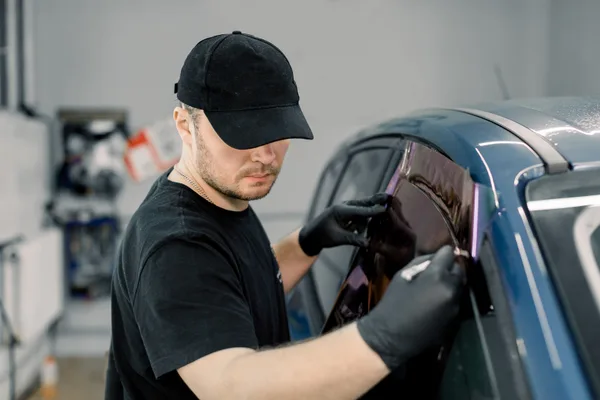
The reason this matters more for tint than for, say, a restaurant is the spread in your ticket. A basic dyed tint on a sedan is a small, commodity job. A quality ceramic full-car install is several times that. And paint protection film — a front-end clear bra or a full-vehicle wrap — can run into the thousands, dwarfing both. The same two clicks can be worth pocket change in margin or the best job of your month. A system's entire purpose is to make sure the high-ticket clicks don't get treated like the cheap ones — and that you can prove which is which.
The tint customer journey, mapped honestly
The journey for a tint job is short and intent-heavy, which is both a gift and a trap. A driver rarely shops tint for weeks. Something triggers it — they bought a car, summer hit, the dealership tint is peeling, a friend's ceramic looks great — and within a day or two they search 'window tint near me,' look at three shops, and book one. The window to win them is small.
That compresses the funnel into four moves. First, discovery: they find you on Google's map pack, a paid result, or increasingly an AI assistant answering 'best ceramic tint installer near me.' Second, evaluation: they judge you in under a minute on reviews, install photos, and whether your site even explains the difference between dyed, carbon, and ceramic film. Third, contact: a call, a form, or an online booking. Fourth, the close — which for tint is often a quote conversation, not an instant purchase, especially on premium work.
The trap is that the high-margin work has a longer evaluation phase. Nobody puts PPF on a new EV off a roadside sign. They want to see your previous PPF jobs, your warranty paperwork, your certifications, and reviews that mention the exact work they're considering. So your system actually has to run two journeys at once: a fast lane for commodity auto tint, and a slower, proof-heavy lane for ceramic and PPF. Treating them identically is why shops either drown in cheap-tint price shoppers or never break into the premium work they're capable of.
The four channels — and what each one is actually for
There are only four channels that reliably book tint jobs, and the mistake is running them in isolation. Each one owns a different part of the journey.
Google Ads owns the now. When someone searches 'ceramic tint near me' at 2pm, they're booking this week. Paid search puts you at the top of that moment, and it's the only channel that can produce booked appointments in the first few weeks. The discipline is bidding for the work you want — ceramic, IR film, PPF — not just the cheapest 'window tint' term that floods you with bargain shoppers. Tightly themed ad groups and a landing page that matches the search (a PPF ad goes to a PPF page, not the homepage) is what separates a campaign that prints jobs from one that burns money.
Local SEO and your Google Business Profile own the free, repeatable demand. The map pack is where most 'near me' searches resolve, and ranking there means you stop paying per click for the same drivers. This compounds over months — it's slower than ads, but it's the asset you keep.
AI search is the new front door. Drivers now ask ChatGPT, Gemini, and Google's AI Overviews 'who's the best tint shop near me?' The answer is assembled from your reviews, your site content, and how clearly you describe your services. The shops that get named are the ones with structured, specific content and a strong review profile — the same inputs that win classic SEO, pointed at a new surface.
Reviews and follow-up are the connective tissue. They feed the other three channels — rankings, AI recommendations, ad-landing-page trust — and they're what closes the quote that didn't book on the first reply. Run as one system, each channel makes the others stronger.
The metrics that actually matter (and the ones that lie)
Likes, followers, and impressions tell you nothing about whether your bays are full. For a tint shop, four numbers run the business, and most shops track none of them.
Cost per booked job is the headline. Not cost per click, not cost per lead — cost per actual appointment on the calendar. You get there by tracking calls (with call recording, since most tint buyers still phone before booking), form fills, and online bookings, then tying each back to the channel that produced it. When you know what it costs to book an auto tint versus a PPF consult, you can decide where to push spend with real confidence instead of vibes.
Service-level attribution is the one that changes the business. Track auto tint, ceramic, and PPF separately. A campaign that looks expensive on cost-per-lead might be your most profitable one because it books the big PPF jobs. Without splitting it out, you'll cut the wrong campaign.
Lead-to-booking rate exposes the leak between 'they contacted us' and 'they're on the calendar.' This is where most shops bleed — quote requests that get a slow reply and quietly go to whoever answered first. If a hundred people call and only thirty book, the fix usually isn't more marketing; it's faster, automated follow-up.
Review velocity — new five-star reviews per month — is your leading indicator for everything organic. It feeds rankings, AI recommendations, and the trust that closes premium work. A shop adding fresh reviews every week is compounding; a shop coasting on great reviews from two years ago is decaying. Track the rate, not just the total.
Building for the season — so winter doesn't kill you
Tint demand is brutally seasonal, and pretending otherwise is how shops end up cash-strapped by February. Demand spikes in hot weather as drivers think about heat rejection and UV, then drops sharply once winter sets in. The film market overall keeps growing year over year, but that long-term trend doesn't smooth out your calendar — your July and your January look like two different businesses.
The shops that survive the swing don't market harder in summer. They market consistently year-round so that when the spring surge hits, the first searches go to them. SEO rankings and reviews built in the slow months are what capture the rush — you can't rank from a standing start in May. The winter spend is an investment in summer position.
Then you use the calendar deliberately. The off-season is when you push the work that isn't weather-dependent: PPF and ceramic coatings protect paint through road-salt winters, residential and commercial tint has nothing to do with car-buying season, and gift cards or pre-booked spring slots smooth cash flow. Email earns its keep here — a quiet January is the right time to nudge last summer's auto-tint customers toward a second vehicle, a windshield strip, or the PPF they passed on.
There's also a Canadian wrinkle worth building into your messaging. Front-window and windshield tint is tightly restricted in much of the country — in Ontario, for example, aftermarket windshield tint is effectively off the table on newer vehicles, front side windows have to let most light through, and getting it wrong can mean fines and a remove-the-tint order. Smart shops lead with what's legal and high-value — rear glass, ceramic heat rejection, PPF — instead of advertising darkness they can't legally install. It builds trust and pre-screens out the arguments at the counter.
The website's real job: sorting and converting
Your website isn't a brochure. In this system it has one job: take a high-intent click and turn it into a booked appointment, while sorting commodity buyers from premium ones. A pretty site that doesn't do that is decoration.
Three things make a tint site convert. First, a portfolio that does the selling. Tint and PPF are visual, trust-based purchases — real install photos of cars like the visitor's, with the film type labeled, do more than any paragraph of copy. The premium buyer especially is looking for proof you've done their exact job before. Second, service clarity. Most drivers genuinely don't know the difference between dyed, carbon, and ceramic, or what PPF even is. A site that explains it plainly positions you as the expert and quietly justifies the higher price — you're not the cheap shop, you're the one that knows film. Third, frictionless contact: online booking for the standard jobs, an easy quote path for the premium ones, and a phone number that's one tap on mobile, because a lot of tint buyers still call.
The sorting matters as much as the converting. Your PPF and ceramic pages should look and read differently from your basic-tint page — more proof, more detail, warranty information up front — so the high-ticket buyer self-selects into the slower, consultative path while the auto-tint buyer books in two clicks. When the site does this well, your front counter spends less time educating price shoppers and more time closing the jobs that actually move the needle.
This is the part SearchPod tends to obsess over: the website, ads, SEO, AI search, email, and reviews are built as one connected system by one team, so a click from a PPF ad lands on a page built to close PPF — not a generic homepage hoping for the best.
Putting it together: one connected loop
A working tint-shop system isn't six separate efforts — it's one loop where each part feeds the next. Ads and SEO bring the driver in. The website converts and sorts them. Tracking tells you what each click cost and which service it booked. Follow-up rescues the quotes that didn't close on the first reply. Reviews from finished jobs feed back into rankings and AI recommendations, lowering the cost of the next driver. Then email brings that customer back for a second car, a windshield strip, or the PPF they weren't ready for the first time. The loop tightens every month it runs.
The practical sequence for a shop starting from scratch: get tracking in place first — call tracking, form tracking, conversion tracking — so you're never flying blind. Fix the website's conversion path so you're not pouring traffic into a leaky bucket. Turn on Google Ads for fast, measurable bookings while SEO, AI visibility, and reviews build the durable, lower-cost demand underneath. Layer in automated follow-up and review requests so nothing slips between the DM, the quote, and the appointment. Run paid and organic together from day one — that combination produces the fastest results and the most stable ones.
None of this requires hype or a clever gimmick. It requires the parts to actually connect and to be measured against the number that matters: cost per booked job, split by service. Do that, and the seasonal swings flatten, the premium work grows as a share of revenue, and you stop relying on someone remembering to answer the DMs. That's the whole system — and in 2026, it's the difference between a shop that's good at tinting and a shop that's also good at staying booked.