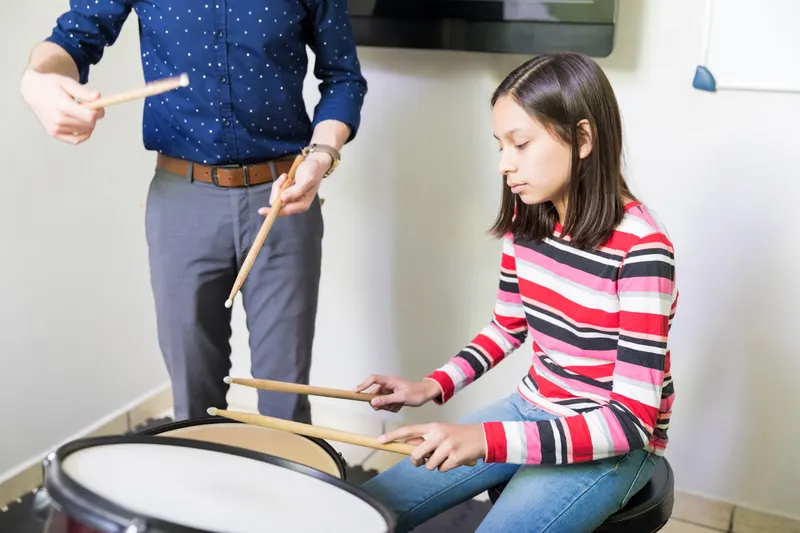
Drums are the most immediate instrument we teach: steady time in the hands and feet, kit skills built on pad fundamentals, and a teacher who spent eight years on tour deciding exactly what beginners actually need.
Honest start age: 6. A 4-year-old who loves rhythm is a Little Notes kid, not a drum student — we'll suggest exactly that, cheerfully, and mean it.
Adults: no age note applies to you, only the reassurance that about a
third of this studio is grown-ups, several on their first instrument ever.
Under five entirely? Little Notes
is the right room, at $228 per 12-week session.
The first 90 days
What actually happens, week by week
01
Weeks 1–3 — stick grip, full-kit posture, first rock beat you can name
Weeks 9–13 — three grooves, one fill vocabulary, first play-along with a track
Timelines assume the honest practice minimums from the
FAQ — five focused minutes
a day for the youngest, twenty for teens and adults. Slower is fine;
we adjust the plan, not the kid.
Your teacher
Who teaches drums here
JW
Jerome Whitaker
Drums & percussion · Rock Band Lab · 11 years teaching
Eight years touring (national club circuits) before teaching
Percussive Arts pedagogy coursework — Milton College of Music
Background-checked annually, like all staff
Jerome spent eight years on tour deciding exactly which drum skills matter and which are showing off. He starts six-year-olds on pads, teens on the kit, and adults on the groove they've been air-drumming since high school. Households are issued earplugs and honest practice schedules.
When they teach
Monday 4:15 p.m. – 6:30 p.m.
Wednesday 3:30 p.m. – 6:30 p.m.
Friday 3:30 p.m. – 5:45 p.m.
Saturday 12:00 p.m. – 1:30 p.m.
These are the same slots the trial booker offers — one schedule, no bait.
Pick a teacher and a real slot from their actual schedule. If the honest answer at the trial is 'wait a year' or 'different instrument,' you'll hear it there, free, instead of three paid months in.