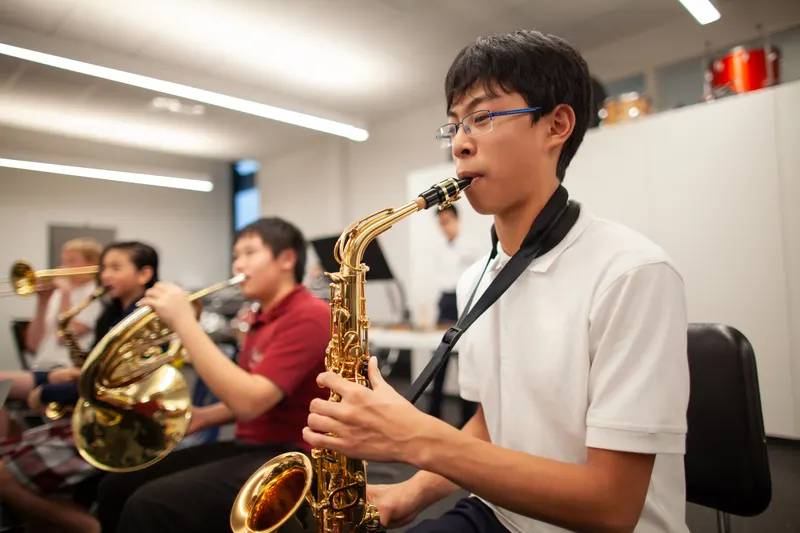
Alto sax is the classic start; Alina also teaches tenor, clarinet, and flute, so band-season emergencies are welcome here. Tone first, honks acknowledged, squeaks forgiven — that's the woodwind deal.
Honest start age: 9 — front adult teeth and lung capacity genuinely matter. Younger kids who love the sound usually start piano or drums first, and arrive at the sax stronger for it.
Adults: no age note applies to you, only the reassurance that about a
third of this studio is grown-ups, several on their first instrument ever.
Under five entirely? Little Notes
is the right room, at $228 per 12-week session.
The first 90 days
What actually happens, week by week
01
Weeks 1–3 — assembly, reed care, first clean notes without the honk
02
Weeks 4–8 — first octave, breath phrasing, five-note tunes with backing tracks
03
Weeks 9–13 — first full song plus the school-band audition basics if you want them
Timelines assume the honest practice minimums from the
FAQ — five focused minutes
a day for the youngest, twenty for teens and adults. Slower is fine;
we adjust the plan, not the kid.
Your teacher
Who teaches saxophone here
AP
Alina Petrova
Saxophone, clarinet & flute · beginner piano · 8 years teaching
Alina is the school's woodwind department and its band-season emergency line. She teaches sax, clarinet, and flute, covers beginner piano for the youngest starters, and tells eight-year-olds who want the saxophone the truth: next year, and it'll be worth the wait.
When they teach
Tuesday 3:30 p.m. – 5:45 p.m.
Wednesday 4:15 p.m. – 6:30 p.m.
Saturday 9:30 a.m. – 11:45 a.m.
These are the same slots the trial booker offers — one schedule, no bait.
Pick a teacher and a real slot from their actual schedule. If the honest answer at the trial is 'wait a year' or 'different instrument,' you'll hear it there, free, instead of three paid months in.