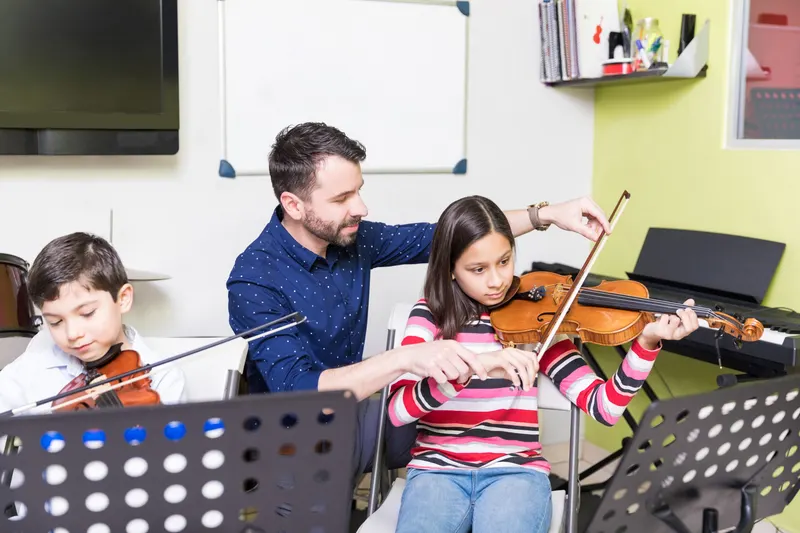
Yuki teaches violin the patient way: posture and sound before speed, tiny instruments for tiny people, and a caregiver in the loop from the first lesson. It's the slowest-looking fast progress in music.
Honest start age: 4 — the earliest we offer, because 1/16-size violins exist for a reason. A caregiver stays in the room and becomes the home practice partner. That's the method, not a rule we made up.
Adults: no age note applies to you, only the reassurance that about a
third of this studio is grown-ups, several on their first instrument ever.
Under five entirely? Little Notes
is the right room, at $228 per 12-week session.
The first 90 days
What actually happens, week by week
01
Weeks 1–3 — instrument hold, bow hold, and a sound the neighbors forgive
02
Weeks 4–8 — first open-string rhythms, left-hand fingers, ear training by echo
03
Weeks 9–13 — first melody with the bow; caregivers learn the practice-partner role
Timelines assume the honest practice minimums from the
FAQ — five focused minutes
a day for the youngest, twenty for teens and adults. Slower is fine;
we adjust the plan, not the kid.
Yuki starts violinists as young as four — with a caregiver in the room and a 1/16-size instrument in tiny hands — and keeps teens through their first concerto. Her studio motto is on the wall in two languages: sound before speed.
When they teach
Monday 3:30 p.m. – 6:30 p.m.
Wednesday 3:30 p.m. – 5:45 p.m.
Thursday 4:15 p.m. – 6:30 p.m.
These are the same slots the trial booker offers — one schedule, no bait.
Pick a teacher and a real slot from their actual schedule. If the honest answer at the trial is 'wait a year' or 'different instrument,' you'll hear it there, free, instead of three paid months in.