Coach Reuben Coached, not programmed

Client stories · results vary

No before-and-afters. On purpose.

You won't find bikini grids or 12-week shred montages here. Bodies aren't a shame contest, and photos of strangers prove nothing about what your year would look like. What I can show you is what coaching actually produces: capability, kept over time.

So here are four stories with the numbers that matter — timelines, adherence, and milestones — plus an honest footnote on each, because every result has context that marketing usually deletes. All four said yes to being written about. Names are theirs.

Dana mid-set on suspension trainer straps, focused, with her coach watching from across the gym floor
Dana, 29 · ER nurse · shift worker

9 months to a first strict pull-up · Full Coaching

The pull-up that took nine months — on purpose

Started with: Could hang from a bar for 10 seconds. Rotating night shifts. Two previous programs abandoned at week 5.

Dead hang
10 sec → 75 sec
Strict pull-ups
0 → 4
Sessions kept
81% over 9 months
Programs quit
2 before · 0 since

Dana's application said “I want one strict pull-up before I'm 30” and her history said she'd quit two programs at exactly week five — both times when night shifts stacked up. So the program was built around the shifts, not despite them: two anchor sessions a week that never moved, one floater she could drop without guilt.

The pulling work was boring by design. Hangs, then flexed-arm holds, then eccentrics — three months before a single band-assisted rep. Her week-5 wobble arrived on schedule; this time a check-in caught it, we cut volume for two weeks instead of her cutting the whole program, and she kept going.

Rep one happened in month nine, filmed on a phone propped against a water bottle. She sent it at 6 a.m. after a night shift.

“He didn't fix my consistency. He built a program my consistency could survive.”

— Dana

Priya checking the training plan on her sports watch mid-run, city skyline behind her
Priya, 34 · Product manager · recreational runner

18 months, three half-marathons, one heavy deadlift · The Blueprint

The runner who stopped treating strength as cross-training

Started with: Four years of running, recurring calf niggles every training block, deadlift she guessed was 'maybe 95 pounds'.

Trap-bar deadlift
~95 lb → 225×2
Half-marathons
3, zero missed blocks
Calf flare-ups
Every block → 1 in 18 months
Lifting days/week
Just 2

Priya came in experienced, self-accountable, and skeptical — she wanted strength work that served her running, not a lifting hobby bolted onto it. The Blueprint fit: two lifting days programmed around her run calendar, rebuilt monthly from her log.

The first two blocks were almost insultingly simple — trap-bar deadlifts, step-ups, calf work at tempos she called “meditative punishment.” The niggle pattern broke in month four. Not cured, not magic: the calf that used to flare at 30km weeks stopped flaring, and she kept the mileage.

Eighteen months later she's run three halfs without a missed training block and pulled 225 for a double. The deadlift wasn't the goal. It's just what the goal weighed.

“Monthly check-ins were all I needed — but they were real. He'd read every line of the log and change things I didn't know needed changing.”

— Priya
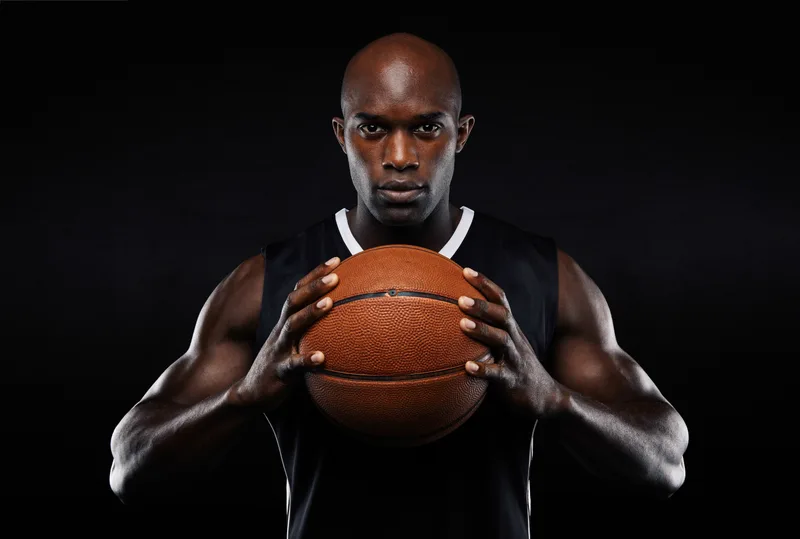
Marcus holding a basketball at chest height, photographed in dramatic low light before an evening league game
Marcus, 41 · Masters-league basketball · torn ankle ligament (cleared)

14 months from physio discharge to full seasons · Full Coaching

Back on the court without the brace-and-pray routine

Started with: Post-physio ankle, cleared to train, terrified to cut left. Hadn't jumped in a year. 41 years old in a league of 28-year-olds.

Return to scrimmage
Month 7
Full seasons since
2, no ankle time-off
Single-leg calf raises
4 → 22 per side
Physio collaboration
First 8 weeks

Marcus arrived with a discharge letter and a question: “cleared for what, exactly?” Physio had rebuilt the ankle; nobody had rebuilt his trust in it. The first month Reuben coordinated directly with his physiotherapist — same exercise names, same load language, no turf wars.

The program was strength-led and boring where it mattered: calf ISO holds, single-leg work, then months of graded plyometrics — landing before jumping, straight lines before cuts, cuts before games. Every jump session was filmed and reviewed. He hated the pace. The check-ins have the complaints on record.

He scrimmaged at month seven, played short minutes at month nine, and has now finished two full seasons. The ankle held. So did the habit — he still lifts twice a week in-season, which 41-year-old Marcus considers his actual competitive advantage.

“The physio fixed the ankle. Reuben fixed the part where I flinched every time I planted it.”

— Marcus
Leah seated on the gym floor with a foam roller, talking through her weekly plan with her coach and his clipboard
Leah, 38 · Consultant · two kids · a back with opinions

24 months from 'my back is fragile' to barbell squats · Day One

Unlearning fragile

Started with: A decade of on-and-off back pain, a folder of scary MRI words, and a rule she'd written for herself: never lift anything heavy again.

Back squat
0 (by rule) → 135×5
Flare-up recovery
~8 weeks → 2–3 days
Live sessions used
44 over 24 months
Rules unlearned
1, the big one

Leah's application was mostly disclaimers. Cleared by her doctor, discharged from physio twice, and still training like her spine was made of chalk — which, per her clinician, it is not. She booked Day One specifically for the live sessions: she didn't trust herself to know what “normal discomfort” meant.

The first live calls were almost all conversation and light goblet work. The rule was simple: loads went up only when the log showed a week she'd rated easy. It took five months to put a barbell on her back, and it was embarrassingly light, and it was the whole point — the barbell was a fear milestone, not a strength one.

Two years in, she squats 135 for sets, deadlifts more, and — her metric, not Reuben's — carries both kids up the stairs at once without negotiating with her back first. Flare-ups still happen occasionally. Now they're a two-day nuisance with a plan, not a two-month spiral.

“I paid for the live sessions so someone could tell me I wasn't breaking. Turns out I needed to hear it about 40 times. Worth every dollar.”

— Leah

Pattern recognition

What all four stories share

The middle was boring

Every story has a long stretch where nothing photogenic happened — months of hangs, tempo work, easy loads. That stretch is the program working. Nobody skips it; some people just don't tell you about it.

The plan bent before they broke

Night shifts, a flare-up, week-5 drift — each time, the check-in caught it and the next week got easier on purpose. That's the coaching. The alternative is what they'd all done before: quit, wait, restart.

The timelines are real

Nine months for a pull-up. Two years for a fear of loading to unwind. If those numbers feel slow, it's because most marketing lies about them — not because these four were slow.

Standard disclosure, meant sincerely: these are individual outcomes from individual people with their own histories, schedules, and clinicians where relevant. They are not averages, not guarantees, and not timelines you should expect to match.

Start here

Your story would start with an assessment.

Every one of these four began the same way: a free application, an honest conversation, and a program built from what showed up in it. If I don't think I can help, that's what I'll tell you.

Start the free assessment See programs & pricing

Roster capped at 45 · currently reviewing applications

Sample site by SearchPod