The Stride Method
Assessment first. Always.
Most clinics treat first and figure it out as they go. We measure first — because a plan built on baselines beats a plan built on vibes, every time.
-
Assess
A real assessment, not a rushed intake
Your first visit is a full hour, one-on-one. History, movement screen, strength and range baselines measured and recorded. No treatment plan exists until the numbers do.
-
Explain
You leave visit one understanding your body
Plain-language findings, the plan, the expected timeline, and the expected cost — in writing. If we think you need four visits, we say four. If we think you need a different clinician, we say that too.
-
Treat
Hands-on care plus progressive loading
Manual therapy opens the window; strength work keeps it open. Every plan ends on the strength floor — because tissue that's been loaded is tissue that lasts.
-
Progress
Re-tested every visit, discharged on merit
We re-measure your baselines every session and progress the plan against them. When you pass your return-to-sport or return-to-life test, you're done. Discharge is the goal, not the loss of a customer.
Why it works
Rehab ends where training begins
Pain relief is the easy part — hands-on treatment, needling, and manipulation all buy you a window where movement feels better. The clinics that stop there see the same patients back every few months.
We use the window. Every Stride plan progresses onto the strength floor: racks, turf lane, gait treadmill, and loading programs calibrated against your own baselines. Tissue that's been loaded is tissue that lasts — that's the whole method in one sentence.
What visit one looks like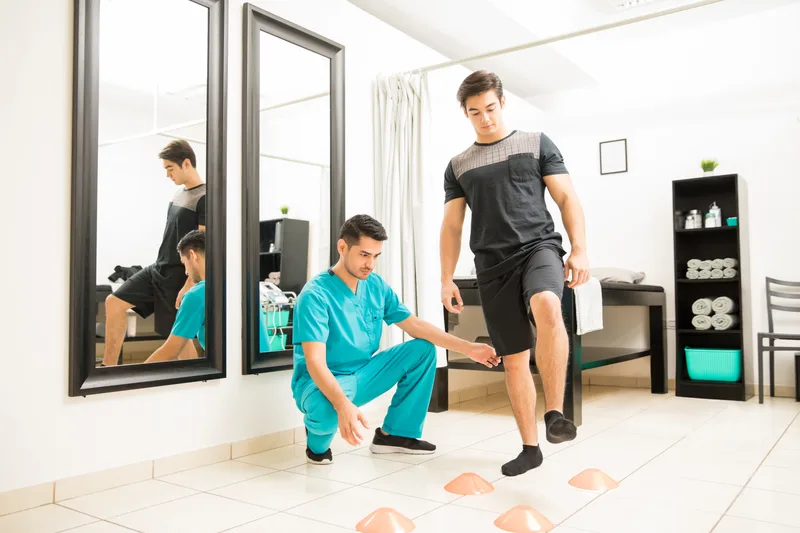
The deal
Four promises, every patient
45-minute visits, never double-booked
Your appointment is yours. No treating two rooms at once, no handing you off to a heat pack while the clock runs.
A written plan with a visit count
After visit one you know the expected number of visits, the timeline, and the cost. If you're ahead of schedule, the plan shrinks.
Numbers you can watch improve
Strength, range, hop distance, symptom thresholds — measured at baseline, re-measured every visit, shown to you every time.
An honest discharge
When you pass your return-to-life test, we say so and let you go. Alumni get priority rebooking if anything ever flares.
What we believe
- Assessment before opinion
- We measure before we diagnose, and we re-measure before we claim progress. Baselines beat vibes.
- Discharge is the goal
- A rehab plan that never ends isn't care, it's a subscription. We're proudest of the patients who don't need us anymore.
- One team, one chart
- Physio, chiro, massage, and athletic therapy share one record and one plan. You never re-explain your injury in our building.
- No mystery invoices
- Every fee is on the website, every plan comes with an expected cost, and direct billing happens before you leave.
Test the method //
One assessment. Sixty minutes. You leave with numbers, a plan, and a timeline — whether or not you ever come back.