Why we plant in drifts — and what it does for winter
May 14, 2026 · 6 min read · by Sofia Marchetti, Head of Horticulture
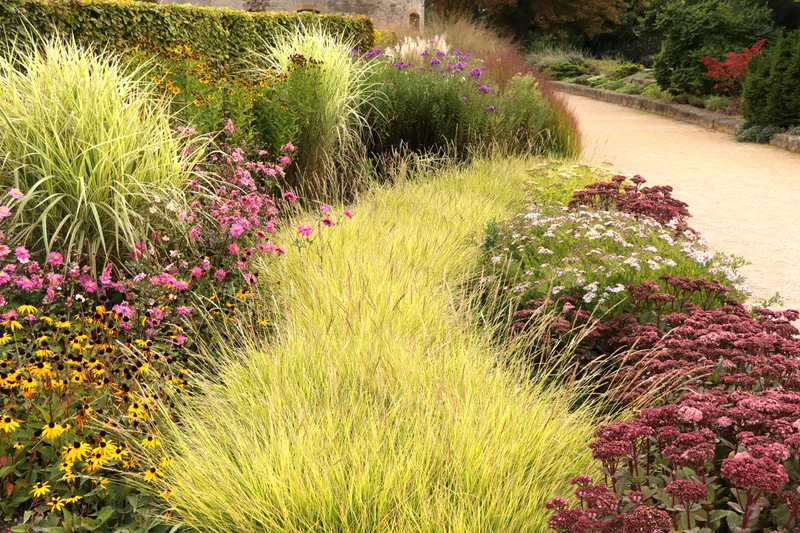
Walk a nursery in May and the temptation is democratic: one of this, one of that, a little of everything that's in flower that week. The result, by August, is what we call a collection — botanically interesting, visually noisy, and invisible from the house. The eye can't rest on anything because nothing repeats.
Drift planting is the opposite discipline. We choose a short list of plants — five to eight species for a large border — and plant them in overlapping groups of fifteen, thirty, fifty. Grasses form the fabric; perennials stitch pattern through it. From the kitchen window, the border reads as intentional shapes and seasons rather than a catalogue.
A garden you can read from the kitchen window at forty paces — that's the drift test.
The winter argument
Here's the part that surprises clients: we don't cut the borders down in October. Fountain grass, coneflower seed heads, sedum's rusted domes — they stand all winter, catching frost and low light, feeding finches, sheltering everything that overwinters at ground level. A drifted border is designed to die beautifully.
The cut happens once, in March, just before the new growth pushes. One maintenance event instead of a season of tidying — and in exchange, you get a fourth season instead of five months of bare mulch.
Where to start
If you're converting lawn, start with the ground preparation, not the plant list — the difference between a meadow and a weed field is decided before anything is planted. And if you're editing an existing border, the cheapest transformation in horticulture is division: dig what you love, split it, and repeat it until it reads from forty paces.
Our Kestrel Hill Meadow project is the drift method at half-acre scale — 4,800 plugs, six species doing the work of sixty. The grammar scales down to a townhouse border just as happily.
Questions about your own garden? The walk-through is free — and Sofia Marchetti occasionally tags along.