Calder & Rowe Road injury lawyers
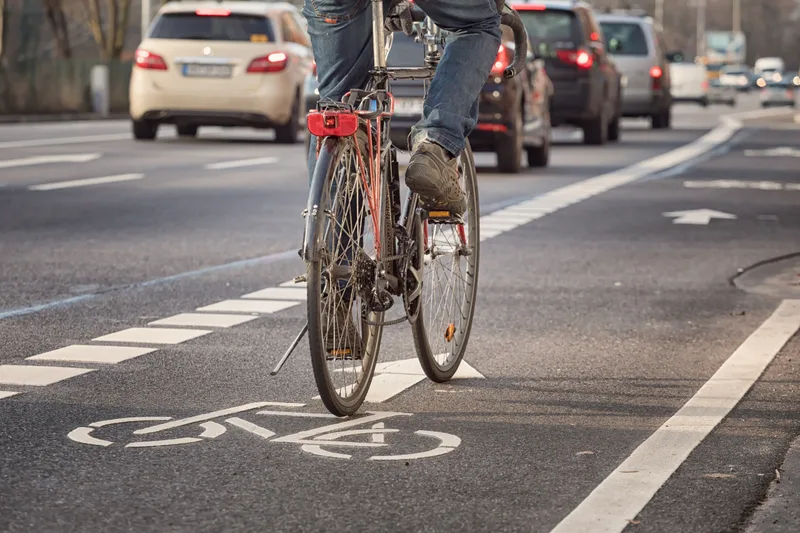
A cyclist riding in a marked city bike lane with cars close behind

Bicycle accidents

Section menu

Cyclists

A parked driver flings a door open. A car passes you, then turns right across the bike lane. These are not freak accidents. They are patterns, and the law has answers for both.

What usually happens

Most bike crashes we see happen in town, in daylight, often in or next to a bike lane. The two we hear about most have names: the dooring and the right hook.

Like a person on foot, a cyclist has nothing around them. Broken collarbones, wrist fractures, road rash and head injuries are common, even at low speed.

Afterwards, the adjuster usually asks the same questions. Were you in the bike lane? Did you run the light? Were you wearing a helmet? We answer with data, not guesses.

What the insurer says, and what we do

  • “The cyclist ran the light.”

    Your bike computer or phone often recorded your speed and position second by second. We pull that file before it syncs over.

  • “She was not in the bike lane.”

    Ohio lets cyclists use the road. Leaving the lane to avoid a parked car or debris is often the safe move, and we show why.

  • “He came out of nowhere.”

    Ohio law requires drivers to leave at least three feet when they pass a cyclist. A right hook usually starts with a pass that was too close.

The two crashes we see most

Both have clear rules on the driver's side. Knowing the name of what happened to you helps the claim.

The dooring

A driver or passenger opens a car door into your path without looking. In Ohio, a person must not open a door on the traffic side unless it is safe to do so. The person who opened the door, and sometimes a rideshare or taxi driver, may be responsible.

The right hook

A driver passes you, then turns right across your path at a corner or driveway. The driver must yield to you in the bike lane. Turn signals and car video often tell the story.

Checklist

What to do this week

  • Save your ride file from your bike computer, watch or phone app. Export it if you can.
  • Keep the bike as it is. Get a written repair or replacement estimate from a bike shop.
  • If you were working a delivery shift, write down the app and the order. Workers' comp may apply too.
  • Photograph the scene: lane markings, the parked car, the door, the corner.
  • Ask nearby shops about cameras the same week. Many record over in a few days.

Who may pay

  • The driver's liability insurance Or the policy of the person who opened the door.
  • Your own auto policy, even on a bike Uninsured or underinsured coverage on your car policy can follow you onto your bike.
  • A household member's policy If you do not own a car, a relative you live with may have coverage that applies.

Questions we hear about bicycle crashes

I was on an e-bike. Is that different?

Usually the claim works the same way. If the e-bike or battery failed, there may also be a product claim against the maker or seller. Keep the bike and the battery.

I was not wearing a helmet. Does that end my claim?

No. The insurer may argue it made a head injury worse, but it does not change who caused the crash.

More answers on the questions page.

An example outcome

Example outcome Settled before a lawsuit
Bicycle accidents

Doored in a downtown bike lane

A parked driver opened a door into a cyclist's path. The insurer said the cyclist was riding too fast and too close to the cars.

What happened: The cyclist's ride file showed a steady, moderate speed inside the lane. The claim settled for her medical bills, lost work and pain, without a lawsuit.

What we took from it Bike computer data is honest evidence. Save the file before it syncs or gets deleted.
These are invented examples for a sample website. They show the kinds of results a road injury firm might describe. Every case is different, and past results do not guarantee or predict a similar outcome in any other case. See all example outcomes.

Talk it through with Samir

Samir Haddad leads our bicycle work. Start the free case evaluation with this crash type already picked, or call the intake line any hour.

Call any hour. A lawyer calls you back.

Tell us what happened in five short steps, or call the intake line. A free case evaluation costs nothing, and you do not have to hire us afterwards.

No fee unless we recover money for you. Answered 24 hours a day, every day.

Fictional sample site by SearchPod