Calder & Rowe Road injury lawyers
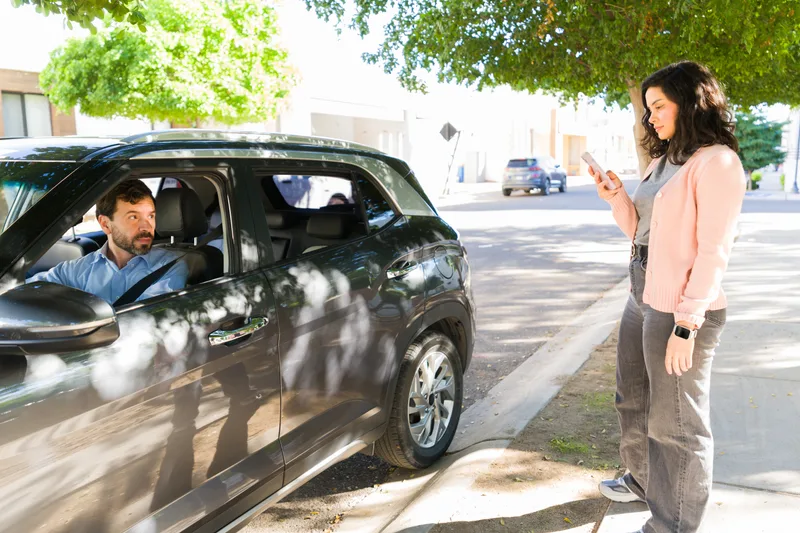
A woman checks her phone as a rideshare car pulls up to the curb to pick her up

Rideshare accidents

Section menu

Passengers

A rideshare crash is really an insurance question. The answer depends on one fact: what the driver's app was doing at the moment of impact. We find that fact before it disappears.

What usually happens

You may have been a passenger in the back seat. Or you were driving, walking or cycling, and a rideshare car hit you. Each of those points to a different insurance policy.

Rideshare drivers are usually treated as contractors, not employees. So most claims go to the insurance tied to the trip, not to the company itself.

Proving the app status takes records the rideshare company holds. Those records are not kept forever. We send a request to preserve them in the first days.

What the insurer says, and what we do

  • “The driver was off the app.”

    Trip logs, phone data and your receipt show exactly when a ride was accepted. We request them in writing so they are kept.

  • “Try the driver's personal insurer.”

    Personal policies often exclude driving for pay. We make sure the right policy is on the hook from the start.

  • “Passengers are covered, so just send your bills.”

    Coverage is not the same as a fair payment. Your claim still needs medical proof and a clear picture of what you lost.

How rideshare coverage works

Rideshare insurance comes in layers. The layer depends on the driver's app status when the crash happened.

How rideshare coverage works
Driver's app statusCoverage that usually appliesWhat we check
App off The driver's own auto policy Whether the driver was really off, and the limits on their policy
App on, waiting for a ride request Limited coverage from the rideshare company's policy Login times, and whether the driver's own policy refuses the claim
Ride accepted, or passenger on board The company's policy, with much higher limits Trip records, the route and the exact time of the crash

General information about how these policies are usually set up. The exact coverage depends on the policy and the facts.

Checklist

What to do this week

  • Screenshot the trip in your app: the receipt, the route, the driver's name and car.
  • If you were in another car, get the rideshare driver's details and ask if a trip was active.
  • Report the crash in the app, but keep it to the basic facts.
  • Do not agree to a recorded statement with the rideshare insurer before you talk to us.

Who may pay

  • The trip's insurance policy Usually the deepest source, when a ride was active.
  • The driver's personal policy When the app was off.
  • Another at-fault driver If a third car caused the crash, their policy comes first.
  • Your own uninsured motorist coverage When the at-fault driver has no insurance or not enough.

Questions we hear about rideshare crashes

Can I sue the rideshare company directly?

Sometimes, but usually the claim goes against the driver and the insurance tied to the trip. We look at the facts to see if the company itself did something wrong.

I was the rideshare driver. Can you help me?

Yes, if another driver hit you. Your claim may also involve the company's policy and your own coverage. Tell us what your app showed at the time.

More answers on the questions page.

An example outcome

Example outcome Settled before a lawsuit
Rideshare accidents

Passenger hurt on the way to the airport

A rideshare passenger was hurt when her driver rear-ended a truck. The driver's personal insurer denied the claim.

What happened: Trip records showed a ride was active at the time of the crash. The claim was paid under the trip's commercial policy.

What we took from it App status decides which policy pays. Ask for the trip records in writing, early.

These are invented examples for a sample website. They show the kinds of results a road injury firm might describe. Every case is different, and past results do not guarantee or predict a similar outcome in any other case. See all example outcomes.

Talk it through with Samir

Samir Haddad leads our rideshare work. Start the free case evaluation with this crash type already picked, or call the intake line any hour.

Call any hour. A lawyer calls you back.

Tell us what happened in five short steps, or call the intake line. A free case evaluation costs nothing, and you do not have to hire us afterwards.

No fee unless we recover money for you. Answered 24 hours a day, every day.

Fictional sample site by SearchPod