Sightline Optometry

Children’s exams · $0 with OHIP · yearly to age 19

Kids don’t report blur. They just stop liking books.

A child who has never seen clearly thinks everyone sees this way. That's why exams are scheduled by age, not by complaint — and why OHIP pays for one every year until they're 20.

The screening truth

“Passed the school screening” is not a diagnosis.

A passed school screening is not a clean bill of eye health. Screenings mostly test distance sight on a chart across a room. They routinely miss farsightedness, eye-teaming and focusing problems, and one strong eye covering for a weak one — the exact issues that show up as “doesn’t like reading” before they show up as blurry vision.

When to come in

  • 6–9 months First exam — eye alignment, tracking, and how the eyes are developing. No reading chart required; we have other tools.
  • 2–5 years At least one full exam before school. This is when amblyopia (“lazy eye”) is most treatable — and most invisible to parents.
  • School age Yearly. OHIP covers an annual exam to age 19, so cost is not the barrier here — awareness is.
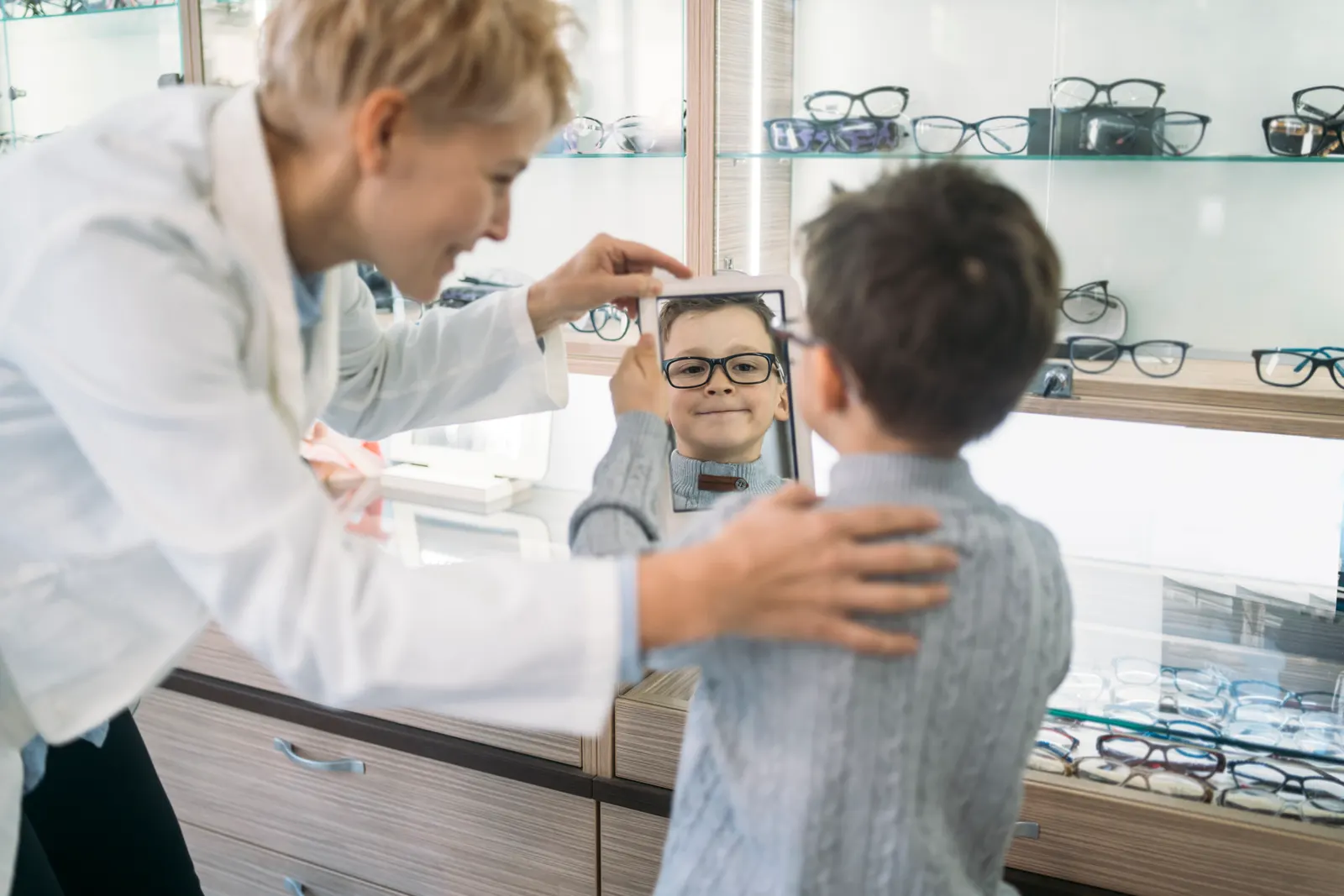
A school-age boy studying his first pair of glasses in a hand mirror at the dispensary counter
Exams are kid-paced. Nobody has to read anything they can’t.

Myopia management

Slowing nearsightedness: what the evidence supports.

Nearsightedness usually climbs through the school years because the eye itself is growing too long — and higher adult myopia carries real, if modest, lifetime risks for retinal problems. Three approaches have solid trial evidence for slowing that growth. None of them reverse it.

Dual-focus soft lenses (daily)

≈$780 / year, lenses + reviews

Daily disposable lenses a child wears like normal contacts; the optics create peripheral defocus that slows eye growth.

Evidence The strongest trial evidence of the three — multi-year randomized studies show roughly 40–60% average slowing of progression. “Average” matters: individual response varies.

Orthokeratology (overnight lenses)

$1,100 first year · ≈$400 / year after

Rigid lenses worn during sleep gently reshape the cornea; the child sees clearly all day with nothing in their eyes.

Evidence Well-studied with effect sizes similar to dual-focus lenses. The trade-offs are cost, a careful hygiene routine, and a small but real infection risk we’ll discuss plainly.

Low-dose atropine drops

≈$35 / month at the pharmacy + monitoring

A nightly drop prescribed alongside regular glasses or contacts.

Evidence Good evidence for slowing progression, with ongoing research on the best concentration. Often the choice for younger kids or alongside another method. Some children notice light sensitivity.

Our position, in writing

Myopia management slows progression — it does not reverse it, and it is not mandatory. We measure axial length (the eye’s actual growth) at baseline and every six months, and we only recommend a program when the trajectory justifies it. For a slow progressor, well-fitted single-vision glasses and more daylight time outdoors remain a legitimate plan — and we’ll say exactly that, for free, instead of enrolling everyone.

The program is led by Dr. Ethan Roy, OD. Baseline axial-length measurement is part of any myopia consult — ask for one at your child’s regular exam.

Next available this week

Book the yearly exam OHIP already pays for.

Bring their health card; the exam costs you nothing until age 20. If myopia management ever becomes worth discussing, you'll see the growth numbers before you see a recommendation.

Sample site by SearchPod