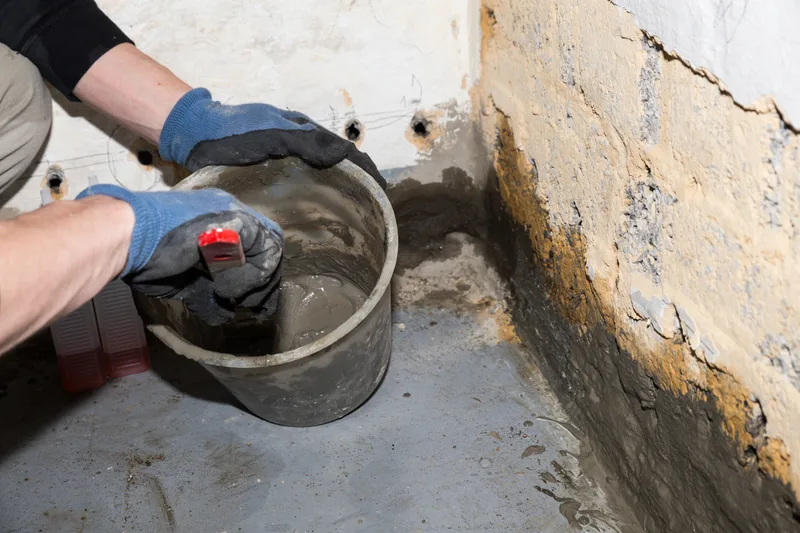
Water in a basement usually comes from one of three places: rain landing too close to the house, groundwater pushing up under the floor, or a crack or joint that lets it in. Each one has a different fix and a very different price.
We check the outside first. If your downspouts empty next to the wall or the soil slopes toward the house, fixing that may be all you need. If water still gets in after that, we talk about a drain system.
Signs
What you might be seeing
- Water on the floor where the wall meets the slab
- Damp patches or tide marks low on the walls
- White, chalky powder on the concrete (called efflorescence)
- A musty smell that gets worse after rain
- Peeling paint or bubbling on basement walls
- Wet carpet or swollen baseboards in a finished basement
Honest sorting
Simple fix or full system?
- Damp only after one big storm, near one downspout
- Water drops on cold walls or pipes in summer (damp air, not a leak)
- Efflorescence on its own, with dry floors
- Water along several walls, or coming up through the floor
- Water every spring thaw, even with good grading
- A sump that runs often in wet weeks, or a high water table
Rough guides from our inspections, not engineering rules. We measure before we tell you which side yours is on.
Not sure which group yours is in?
A free inspection measures it. You get the readings and the answer in writing, even if the answer is "leave it alone."
Method
How we fix it
-
01
Interior drain tile
We cut a narrow channel along the inside of the walls, lay perforated pipe in clean stone and lead it to a sump pump. Water is caught at the footing and pumped out before it reaches the floor.
-
02
Outside membrane
For a wall that needs fixing from the outside. We dig to the footing, clean and seal the wall, add a dimpled drainage membrane and new weeping tile, then backfill and restore the yard.
-
03
Crack and joint sealing
Leaking cracks get injected from the inside. Pipe and cable openings get sealed. For many basements this is the whole job.
-
04
Wall drainage liner
A liner sends any seepage down into the drain and keeps finished walls dry. Optional, and only where it helps.
Prices
Price ranges
Planning ranges in Canadian dollars for typical Ottawa-area homes, HST extra. Your written quote after the inspection is a fixed price.
| Job | Range (CAD) |
|---|---|
| Leaking crack injection Per crack, from inside, most poured walls | $550–$950 |
| Interior drain tile Includes channel, pipe, stone and new concrete | $85–$135 per ft |
| Outside dig and membrane Includes digging, membrane, weeping tile and yard restoration | $180–$320 per ft |
| Window well drain and cover Per window well | $650–$1,300 |
| Full interior system Typical 1,000 sq ft bungalow basement, with sump pump | $9,500–$17,000 |
Typical total
A single leaking crack is often under $1,000. A full interior system for a typical Ottawa bungalow runs $9,500 to $17,000, sump included.
Honesty note
Finished basements cost more because walls come off and go back on. We price the removal on its own line so you can choose who rebuilds.
Warranty. Interior drain systems: 25 years, transferable. Crack injection: 10 years per crack. Read the terms
Questions
Questions about waterproofing
Should I waterproof from the inside or the outside?
Inside drainage costs less and handles groundwater well. Outside membranes stop water at the wall and suit one bad wall, or a basement that is finished and staying that way. When both make sense, we price both.
Do I need to empty the basement?
We need about 1 m of clear floor along the walls we work on. Our crew can help move heavy items and covers everything else in plastic.
Is there a lot of dust?
Cutting concrete makes dust. We seal off the work area, run air scrubbers and clean up each day before we leave.
More answers on the FAQ page, or call (613) 555-0148.