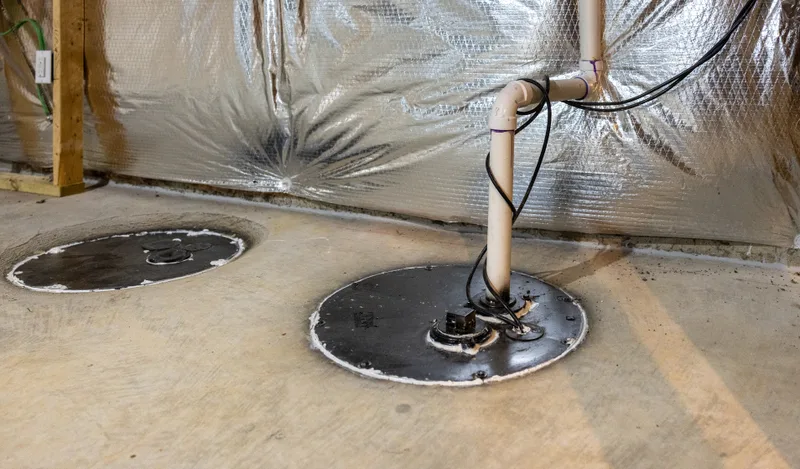
A sump pump moves water from under your basement floor out to the yard. It works quietly for years, then can fail during the storm when the power goes out. That is the moment it matters most.
We install new pits and pumps, replace tired ones and add battery backups. We also check the discharge line, because a line that freezes in January stops even a brand-new pump.
Signs
What you might be seeing
- The pump runs often, or runs without shutting off
- Rust, clicking or grinding noises from the pit
- The pump is more than 7 to 10 years old
- No backup pump, and the basement is finished
- Water near the pit after storms
- The discharge pipe ends right beside the house
Honest sorting
Simple fix or full system?
- A stuck float switch (often just debris in the pit)
- A noisy or chattering check valve
- A short discharge line that needs an extension
- A pump that cannot keep up in heavy rain
- A pit with no lid, or one that keeps filling with silt
- A finished basement with no backup at all
Rough guides from our inspections, not engineering rules. We measure before we tell you which side yours is on.
Not sure which group yours is in?
A free inspection measures it. You get the readings and the answer in writing, even if the answer is "leave it alone."
Method
How we fix it
-
01
Right-size the pump
We look at how often your pump runs and how high it lifts water, then pick one that handles it with room to spare. Bigger is not always better.
-
02
Sealed lid and check valve
A sealed lid keeps out damp air and soil gas. A good check valve stops water falling back into the pit.
-
03
Battery backup
A second pump on its own battery takes over when the power or the main pump fails, with an alarm so you know it happened.
-
04
Discharge line
We run the line well away from the house and add a winter outlet, so a frozen pipe does not block it.
Prices
Price ranges
Planning ranges in Canadian dollars for typical Ottawa-area homes, HST extra. Your written quote after the inspection is a fixed price.
| Job | Range (CAD) |
|---|---|
| Sump pump replacement Existing pit, cast-iron pump and new check valve | $650–$1,200 |
| New sump pit and pump Includes cutting the floor, pit, pump and discharge | $1,800–$3,200 |
| Battery backup pump Second pump, battery, charger and alarm | $950–$1,900 |
| Freeze-protected discharge line Buried or extended line with a winter outlet | $300–$750 |
| Yearly sump check Test, clean, and battery check, about 30 minutes | $149 |
Typical total
Most pump replacements are under $1,200. A new pit with a battery backup usually lands between $2,800 and $4,800.
Honesty note
Some cities offer rebates for sump pumps and backwater valves. Programs change, so we check what applies when you book and fill in our part of the paperwork.
Warranty. Pumps: maker's warranty (3 to 5 years) plus 2 years on our labour. Read the terms
Questions
Questions about sump pumps
How long do sump pumps last?
Most last 7 to 10 years. Pumps that run a lot wear out sooner. We write the install date on the pit lid so you never have to guess.
Do I need a battery backup?
If your basement is finished or holds things you care about, we think so. Big storms and power cuts often arrive together.
Can you just check my pump?
Yes. The yearly sump check is $149 and takes about 30 minutes.
More answers on the FAQ page, or call (613) 555-0148.