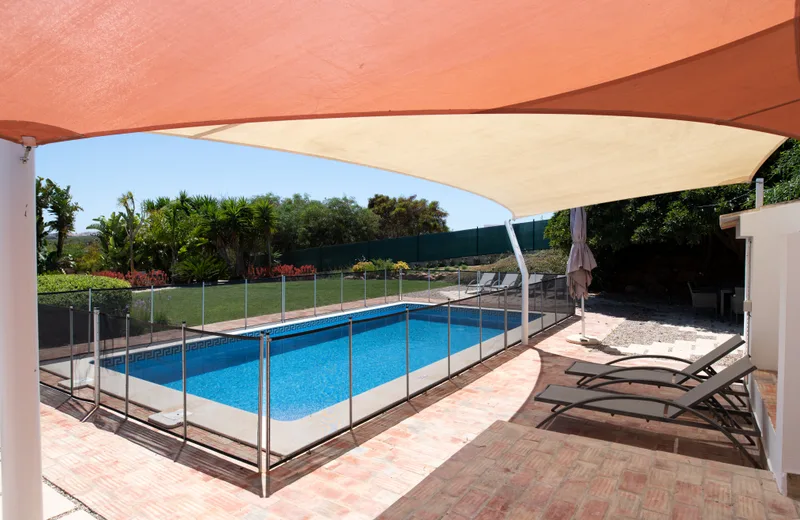
Permits and pool safety
What a pool usually needs before it can be filled, explained in plain words. The exact rules come from your city, and we check them for your address.
This page is general information, not legal advice. Pool rules differ between cities, counties and HOAs, and they change. Your permit drawings follow the code that applies to your address on the day we submit.
Permits a pool usually needs
We pull every permit in our name and attend every inspection. The cost is a printed line in your contract.
- Building permit
- Almost every city and county in Central Texas requires one for an in-ground pool. It covers the structure, setbacks from property lines and easements, and the barrier.
- Electrical permit
- For the pump, lights, heater and controls. A licensed electrician does the work, and the city inspects the bonding and the wiring.
- Gas or plumbing permit
- When you add a gas heater, fire bowls or an outdoor kitchen. Done by a licensed plumber.
- HOA approval
- Not a city permit, but many neighborhoods need it before work starts. We prepare the drawings they ask for.
- Utility locates
- Before any digging, underground lines are marked through the free 811 call-before-you-dig service. We place the request.
Fence and gate rules, in plain words
Many Texas cities base their pool barrier rules on the International Swimming Pool and Spa Code or the International Residential Code, with local changes. These are the rules we see most often.
-
48 in
Tall enough
Fences or walls around a pool are commonly required to be at least 48 inches high, measured on the outside.
-
4 in
No gaps a child fits through
Openings in the barrier are usually limited so a 4-inch sphere cannot pass. Gaps at the bottom are kept small too.
-
Out
Gates swing away from the pool
Gates commonly must open outward, away from the water, so a child pushing on them closes them.
-
Auto
Self-closing, self-latching
Gates should close and latch on their own. Latches are usually mounted high, around 54 inches, or on the pool side.
-
Alarm
Doors to the pool area
When the house forms part of the barrier, doors that open toward the pool usually need an alarm or a self-closing device.
-
Climb
Nothing to climb
Horizontal rails, planters and furniture next to the fence can act as a ladder. We plan the fence line to avoid them.
Layers of protection
Water safety groups agree that no single measure is enough. The goal is several layers, so if one fails, another is still there. These are the layers we build in or hand over.

-
A barrier on every side
Fence, gates and door alarms that meet your city's code, inspected before the pool is filled.
-
Safe drains and wiring
Anti-entrapment drain covers that meet the federal Virginia Graeme Baker Act, and bonding and GFCI protection under the electrical code.
-
Covers and alarms
Safety covers for spas, and optional pool alarms or automatic covers. We explain what each one does and does not do.
-
Adults watching
No barrier replaces supervision. At pool school we talk about naming a water watcher at every swim.
-
Swim lessons and CPR
We give every family a list of local swim lesson and CPR class options when the pool is handed over.
Safety is drawn on the plan, not added at the end.
At your design consult we sketch the barrier with the pool, so the fence line, gates and doors are priced from day one.
Sunpath Pool Studio
Prefer to talk? (512) 555-0143