Mould remediation
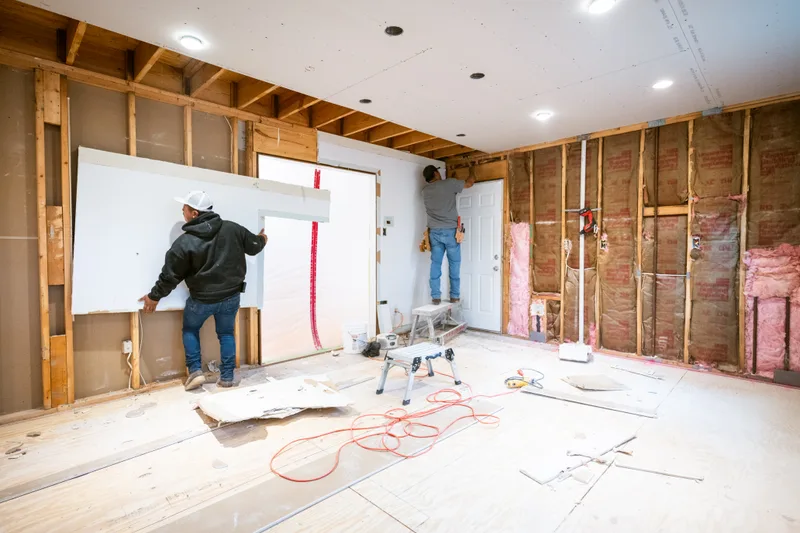
We find the moisture that feeds the mould, contain the area, remove what's affected and fix the cause, so it does not come back next season.
How we handle it
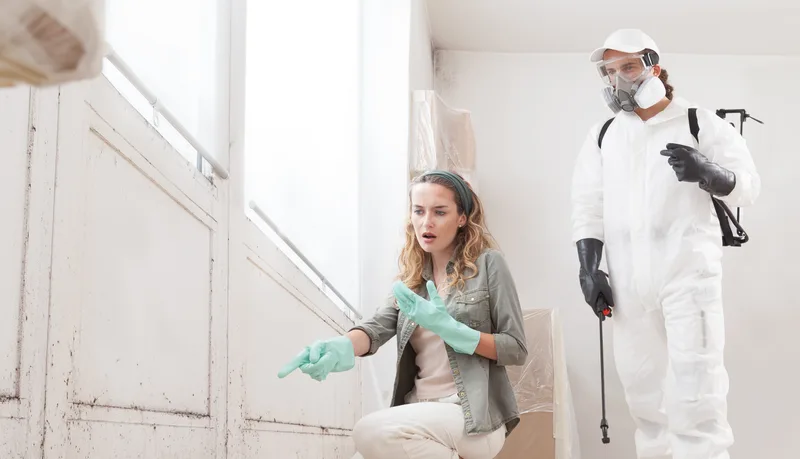
Mould needs moisture to grow. If we only clean it and leave the moisture, it comes back. So every mould job starts with finding the source: a slow leak, condensation on a cold wall, a bathroom fan that vents into the attic. Then we set up containment so spores do not travel, remove affected materials with HEPA filtration running, and clean what can be saved. Small spots are often something you can handle yourself, and we will tell you when that is the case.
Call us when
- You see mould larger than a doormat, or it keeps coming back after cleaning
- There is a musty smell in a basement, closet or attic and you cannot find why
- A home inspection or a buyer flagged mould before a sale
- Water damage was not dried properly and it has been more than two days
- Someone in the home has asthma or allergies and the area is near where they sleep
Before we arrive: safe first steps
- Do not scrub, sand or dry-brush mould. It spreads spores through the house.
- Do not point a fan at it. Fans move spores to new areas.
- Keep the room door closed and run the bathroom or kitchen exhaust fan if there is one.
- Small spots on hard surfaces, like a window sill, can usually be cleaned with soap and water.
- Take a photo with something for scale, like a coin or your hand.
Our process, step by step
-
Step 1
Find the moisture
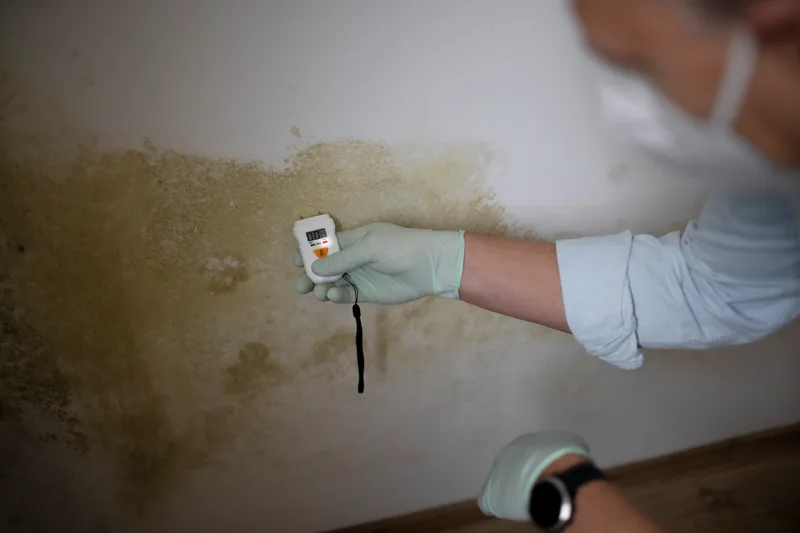
Moisture meters and a thermal camera show what is feeding the growth.
-
Step 2
Contain the area
Plastic barriers and negative air pressure keep spores out of the rest of the home.
-
Step 3
Remove what's affected
Mouldy drywall, insulation or carpet is bagged and removed. Sound framing is cleaned.
-
Step 4
Clean and filter
HEPA vacuuming and air scrubbers capture what is left in the air and on surfaces.
-
Step 5
Fix the cause
We repair the leak or recommend the fix: venting, insulation or grading.
-
Step 6
Check before rebuild
A visual check and moisture readings before walls close. Third-party testing is available if you want it.
Mould safety, in plain words
- Most mould is a nuisance, not an emergency. The real problem is the moisture behind it.
- If anyone in the home has asthma, a weak immune system, or is very young or elderly, keep them away from the area and talk to your doctor if you notice symptoms.
- Bleach does not fix mould on drywall or wood. It whitens the surface and adds water. Removal and drying do the work.
Insurance basics
Many home policies limit or exclude mould, especially when it comes from long-term moisture. Mould caused by a sudden covered event, like a burst pipe, is sometimes treated differently. Check your policy wording or ask your broker before assuming either way.
General information only. We are not your insurer or your adjuster, and we cannot tell you what your policy covers.
How claims usually workWhat it usually costs
Typical ranges in Canadian dollars, before tax. Assessments and written estimates are free.
| Job | Typical range |
|---|---|
| Small area, under 10 sq ft Behind a vanity, a closet corner | $800 to $2,000 |
| Bathroom or closet Containment, removal, HEPA cleaning | $2,000 to $5,000 |
| Basement or attic section Larger containment, insulation removal | $4,000 to $10,000 |
| Post-remediation check Optional third-party air and surface testing | $300 to $600 |
Ranges are for homeowners paying directly. The fix for the moisture source (venting, plumbing, grading) is quoted separately. See all costs.
Common questions
Can I clean mould myself?
Small spots on hard surfaces, roughly smaller than a doormat, can usually be cleaned with soap and water while wearing gloves and a mask. Larger areas, or mould inside walls, are best handled with containment.
Do I need mould testing?
Usually not before the work. If you can see mould, we already know it needs removing. Testing is most useful after remediation, as an independent check, or for a real estate sale.
Will it come back?
Not if the moisture is fixed. That is why we start with the source and show you what we found.
Other services
24/7 emergency line
Need help with mould remediation?
Call the 24/7 line and a person will answer. If the damage has already stopped, the online intake takes about three minutes and we call you back.