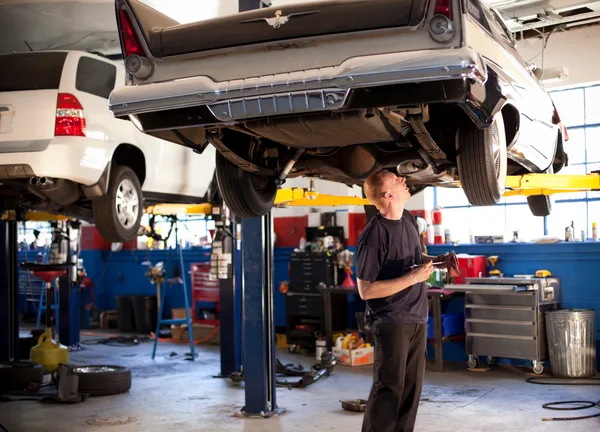
A buyer's guide for shop management software vendors: how to judge an agency on speaking in ARO and effective labor rate, not generic SaaS pitches.
Why a generic SaaS marketing agency misses how repair shops buy software
A shop management platform is not sold the way most B2B software gets sold. Most agencies build a funnel around lead scoring and a features page. That plan ignores the buyer: a lot of shop owners came up as technicians, not software buyers, and every switch carries a real risk of losing years of repair order history, customer records, and technician schedules built up on whatever system the shop already runs.
A generalist agency will write a benefits page and run a generic paid search campaign, then wait for demo requests. That skips the actual sales cycle. A shop owner rarely signs off alone. A service advisor or, at a multi-bay group, an operations or fixed-ops director usually weighs in too, and all of them increasingly check reviews on G2, Capterra, or an AI assistant summarizing them before a rep is ever contacted. Jumping straight to "book a demo" without addressing what happens to the shop's old data is the single biggest reason a good product stalls at the top of the funnel.
Then there's a network a generalist agency won't know exists. Shop owner coaching groups like ATI and Elite Worldwide, plus local ASA chapter meetings, are where a lot of shortlists get built long before anyone fills out a form. An agency with no plan for that world is only competing for whatever traffic is left over.
The first qualifying question: can they sell on your shop's own numbers?
Ask any agency you're considering to describe, specifically, how they would build a demo page around effective labor rate and average repair order value, not a generic list of software features. The answer tells you almost everything.
A specialist should name those exact shop-floor numbers, plus car count and the share of technician hours billed against hours clocked, and explain how the platform moves them, often through photo and video digital vehicle inspections that raise the share of recommended work a customer actually approves. If the answer sounds like a template built for any SaaS company, that's a sign they will market your platform the way they'd market a project management tool, and shop owners will tune it out within seconds.
A second, smaller test is whether the agency even knows the tools your prospects already run. If they've never heard of Mitchell ProDemand, Alldata, or a parts-ordering system like WHI or PartsTech, they don't know what a shop is comparing your platform against, and they'll write copy that talks past the buyer instead of to them.
The channels that actually fill a demo calendar for shop software, in order
Search intent here is narrower than most SaaS categories. Owners do search plain category terms like "shop management software," but a large share of real intent sits in "[incumbent] alternative" and head-to-head comparison searches, because most prospects already run something and are comparing, not starting from a blank page. Content built around those exact comparisons, backed by a real, current presence on G2 and Capterra, gets found before a rep is ever looped in.
Google Ads and LinkedIn work best aimed narrowly at owners, service advisors, and operations or fixed-ops directors at multi-location groups, not a broad "auto industry" audience that wastes spend on technicians and parts suppliers who can't buy the software. Showing up where the actual shortlist forms, ATI and Elite Worldwide 20-group meetings and ASA chapter events, reaches the same buyers before they ever open a search bar.
Case studies from other shops carry outsized weight here, more than a features comparison chart ever will, because an owner trusts a peer's numbers over a vendor's claims. An agency that helps you produce and place real customer case studies in front of these owner networks is doing more for your pipeline than another blog post could.
None of that closes a deal by itself, because these are demo-led sales, not self-serve signups. A follow-up email sequence built to answer the two objections that actually stall a shop, what happens to repair order and customer history during migration, and how a service advisor gets trained without losing a week mid-season, is what turns a booked demo into a signed account instead of a stalled one.
Seasonality here is about your buyer's calendar, not a retail calendar
A repair shop's own busy season, usually spring and summer as car count climbs, is close to the worst time to ask an owner to relearn a new system. Deal flow for shop software tends to slow through those peak months and pick back up once the pace calms in fall and winter, which is also why many shops are more open to signing right around the new year, when a clean start is easier to justify.
The number worth tracking is not raw demo requests. It's cost per booked demo, and further along, cost per signed shop, with a clear view of how that account's value grows once a parts ordering integration such as WHI, PartsTech, or Nexpart, or a labor time and estimating tool such as Mitchell ProDemand or Alldata, gets attached to the account. Ask any agency candidate this directly: "How will you track cost per signed account, not just cost per demo, and show me which channel produces shops that actually stick around?" If the answer stops at counting leads, they're optimizing for a number that doesn't tell you whether your pipeline is turning into revenue.
Red flags, and the ownership questions that protect your pipeline
The clearest warning sign is a template. If an agency's proposed messaging never mentions effective labor rate, average repair order, or car count, and leans instead on generic language about "workflow efficiency" or "streamlined operations," they haven't done the work to understand how a shop owner actually evaluates software.
A promised number of demos or signups is worth doubting, since this purchase gets decided partly inside coaching groups and referral networks no agency actually controls.
Ask plainly who owns your landing pages, your ad accounts, your CRM data, and any case studies built from your own customers. An agency that builds your comparison pages on a platform you can't take with you, or runs ads from an account you don't control, has built a relationship that's hard to leave, not one designed to keep earning your business every month.
A last flag: an off-the-shelf package sold identically to every software vendor in the trades. A platform built for single-location independents and one built for multi-bay groups with a fixed-ops director are selling to different buyers with different objections, and the marketing should reflect that difference, not paper over it.
Six questions to ask before you hire a shop-software marketing agency
One: how would you build a demo page and ad campaign around effective labor rate, average repair order value, and car count instead of generic feature bullets? Two: how do you handle "[incumbent] alternative" and comparison searches, and what's your plan for our presence on G2 and Capterra? Three: how would you reach owners and service advisors through the coaching groups and ASA chapters where a lot of shortlists already form? Four: how will you track cost per signed shop, not just cost per demo, including how account value grows once a parts or labor-time integration gets attached? Five: what follow-up sequence would you run to answer the repair-order migration and mid-season retraining objections that actually stall a deal? Six: do I own my landing pages, ad accounts, and CRM data, and what happens to them if we part ways?
SearchPod is one of the agencies you could run through this exact list. We work with software companies in the trades, shop management platforms among them, and we don't hide our numbers: Google Ads management runs at 10% of ad budget with a $600 monthly minimum and no markup on spend, SEO is priced at $50 per page starting at 10 pages a month, and a custom site or landing page build is a one-time fee from $1,500 to $20,000 or more, with no setup charge and no long contract. Every engagement is month to month, backed by a 30-day guarantee, and a free proposal reaches you within one business day at /get-proposal. Whichever agency you pick, hold them to these six questions and expect real, shop-specific answers, not a rehearsed pitch.