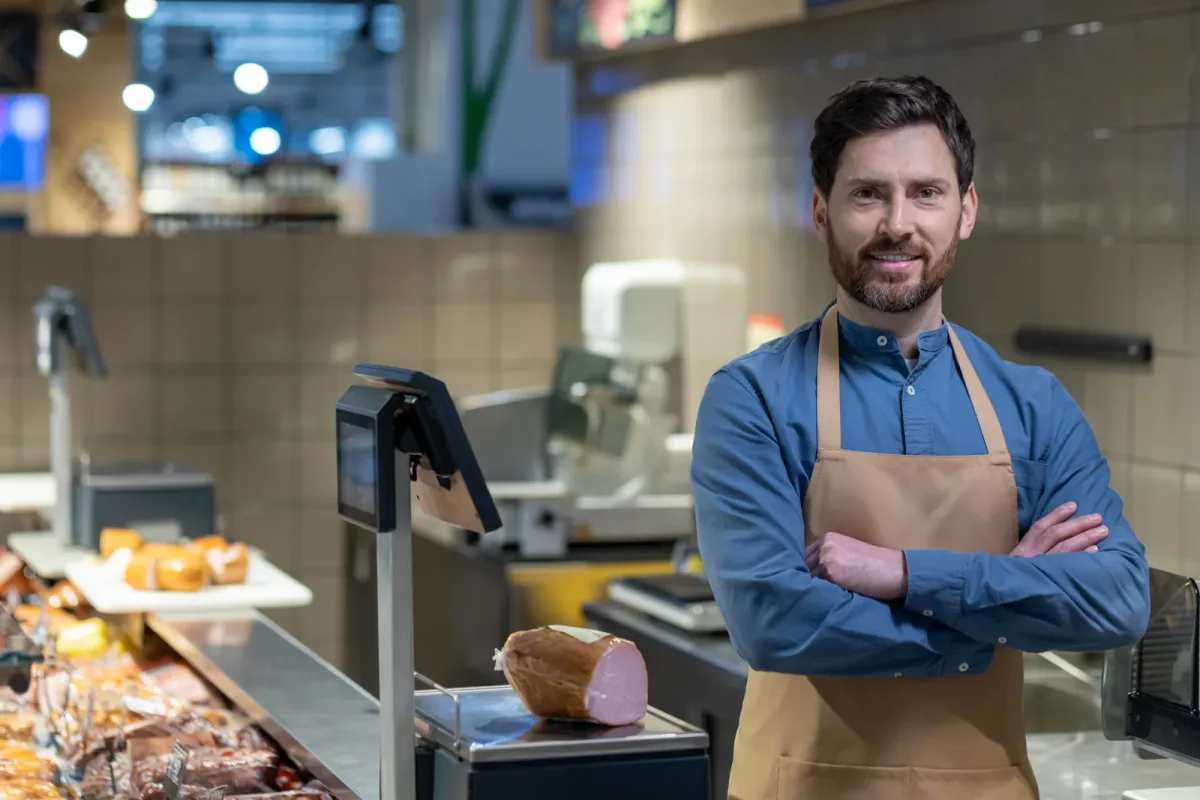
How to choose a marketing agency for a butcher shop: beating the supermarket case, holiday pre-orders, the weekly regular, list ownership and the questions to ask.
The competitor is the grocery store, and most agencies do not know how to fight it
A butcher shop does not lose customers to the butcher across town. It loses them to the meat case at the supermarket, where the same shopper buys ground beef on autopilot with the rest of the groceries. Agencies that serve dentists and roofers are used to competing against businesses that look like their client. They have no plan for a rival that is on every corner, open until eleven, and never runs a single ad about meat.
The second thing a generalist misses is what actually moves the needle in this trade: the holiday order, the freezer box, the weekly regular. A turkey ordered in November, a prime rib for the holidays, a quarter of grass-fed beef sold as a box, and the family that comes in every Saturday are the whole business. A campaign built around one-time visits will look busy and change nothing.
The third miss is the counter itself. The shop's story lives in the case, the cuts, the farms it buys from and the people behind the counter. Marketing that cannot show that in photos and words is invisible against a supermarket flyer, and most agencies have never photographed a dry-aging room.
The first question to ask: how do you turn a first visit into a weekly habit?
The answer tells you whether the agency understands where the profit is. A weak answer talks about reach and new customers. A strong answer names the tools: an email and text list built at the counter and at checkout, a pre-order page for holidays that opens weeks before the rush, a standing beef box or meat-of-the-month subscription, and reminders tied to the way people actually shop, weekly for a family, monthly for a box.
Then ask how they would measure it. The number that matters is the share of customers who came back within thirty days and the size of the pre-order list before each holiday, both of which come from your point-of-sale and email tools rather than from an ad platform. If the agency has never asked what POS you run, they are not planning to be judged on this.
The channels that fill a butcher counter, in the order that pays
Google Business Profile comes first, because the search that decides a cookout is butcher near me, and it resolves in the map pack. The profile needs the right category, current hours, a menu-style list of what you carry, photos of the case and the cuts, holiday hours posted early, and reviews that mention specific things, the brisket, the sausage, the staff who knew what to recommend. A website with a page for each thing people search (dry-aged beef, whole lamb, halal or kosher if you offer it, catering trays, custom cutting, freezer boxes) gives Google the longer searches too.
Second is the list. Email and text carry the holiday pre-order push, the weekly special, the box subscription and the story of the farm you bought from this month. This is the cheapest revenue in the business because it goes to people who already know where you are. Third is Google Ads in the two windows where new customers are actively searching: the weeks before Thanksgiving, Christmas and Easter, and the start of grilling season. A small budget on the plain searches and the holiday searches (order turkey, prime rib near me) brings new households in when they are deciding.
Instagram matters more here than for most local shops because meat photographs well and the case changes daily, but treat it as the place people check after they search, not as the engine. Reviews close the loop, and a follow-up text after a big holiday order is where the next order begins.
Seasonality, what a customer is worth in words, and the cost question to ask
The butcher's year has three peaks and one long trough. Grilling season opens with the first warm weekend in spring and runs through Labour Day; Thanksgiving through New Year's is the largest stretch of high-ticket orders; Easter and any local festival bring a short third peak. January through March is quiet in most cities, and that is when a subscription box and a good list carry the shop. An agency that spends evenly through the year is spending wrong.
The value of a customer is easy to describe without inventing a number. A one-time visitor buys a few steaks. A holiday customer buys the largest single order of the year and, if reminded, repeats it every year. A weekly regular is fifty visits a year, and a box subscriber is predictable revenue the shop can plan purchasing around. Marketing should be judged on how many first-time buyers become one of those three.
So ask the agency about cost per new regular and the size of the pre-order list, not cost per click. Agree on how those numbers will be pulled from the POS and the email tool, and ask to see them on a monthly report for another food retail client.
Red flags and ownership questions before you sign
Be wary of an agency that wants to own your email list or run it from their platform. The list is the most valuable asset the marketing creates, and it should live in a tool under your login. The same is true for the Google Business Profile, the website, the domain and the ad account. If any of those would be created in the agency's name, fix it in writing before anything starts.
A second red flag is a plan that is mostly social content with no pre-order pages, no list and no holiday calendar. Followers do not buy turkeys; a reminder in the second week of November does. A third is any promise about ranking or sales numbers, and any contract longer than the feedback loop of one holiday season.
Ask what happens if you stop after three months: who keeps the photos, the pages, the list and the ad history. The answer should be you, every time.
Six questions to ask, written for a butcher shop
One: what is your plan for the holiday pre-order, and when does it start? Two: how will you build and run the email and text list, and who owns it? Three: which searches will you rank for and buy, and how will you show me the map-pack result? Four: how will you photograph the case and the cutting room, and how often? Five: who owns the profile, the site, the domain, the list and the ad account, in writing? Six: what does it cost month to month, and what does it cost to leave?
For a reference point, our approach for shops like yours is described at /butcher-shop-marketing and the prices are public: Google Ads management at 10% of the ad budget with a $600 monthly minimum, SEO at $50 per page from ten pages, websites as one-time packages from $1,500, no setup fee, month to month, with a 30-day guarantee. A proposal with exact numbers takes one business day at /get-proposal. Hold every quote, including ours, to the six questions above.