How to choose a deck builder marketing agency: the real questions, the short build season, and the numbers that decide who fills your calendar.
Why a generalist home-services agency misses how deck builders actually sell
Deck building runs through a normal residential permit process, but the details are specific to the trade: footings have to reach the local frost line, the ledger board needs proper flashing where it meets the house, and guardrails have to clear a set height with tight baluster gaps before an inspector signs off. A generalist agency that treats a deck company like any other contractor won't build a site or ad campaign around any of that.
The build season itself is short, roughly twenty workable weeks once frost clears, and most homeowners want a deck finished before their first cookout of the season. That means estimate requests spike hard every February as people plan around Memorial Day and the Fourth of July, and an agency that doesn't plan campaigns months ahead of that window is reacting instead of leading it.
Many subdivisions also require a homeowners association to approve a design and material sample before a permit application even goes in, and homeowners routinely forget that step until it slows them down. A builder who explains that process up front tends to win the job before a competitor's quote even lands in the inbox, and marketing that never mentions it is missing a genuine differentiator.
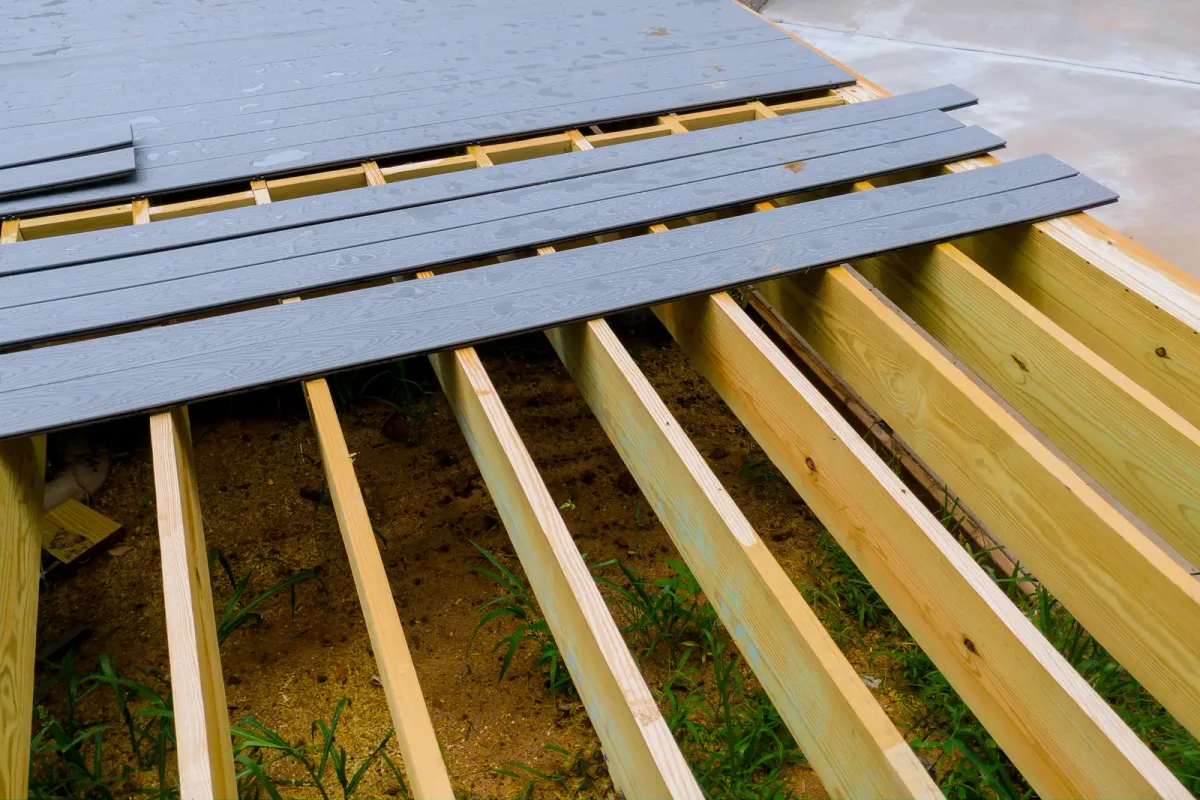
There's a pricing question baked into almost every one of these searches too. Composite decking now outsells pressure-treated wood for anyone planning to keep a deck past a decade, but it can run eight to fifteen dollars more per square foot, and a site that doesn't address that gap up front leaves the homeowner guessing which option actually fits their budget.
The inspection process itself follows a predictable order that a good site should walk a homeowner through: a city inspector checks footings first, then framing, then signs off at final, with no DNR or Army Corps involvement the way a marine project might need. Explaining that plainly builds trust before a competitor's quote ever shows up in the inbox.
The first qualifying question: do they understand composite versus wood, and why it matters?
Ask directly: how would you explain composite versus pressure-treated wood on my site, and why does the price gap matter to a homeowner deciding between them? That exact question is one of the most-searched before anyone calls a builder, and a site that dodges it loses a homeowner right at the moment they're ready to compare options.
A specialist should also know that photo-heavy portfolios beat a generic quote form in this trade, since homeowners are comparing board patterns, railing styles, and multi-level layouts across several builders at once. If an agency's plan doesn't lead with real finished-project photography, often the same photos a crew already logs with a job-tracking app like CompanyCam, they're not speaking the homeowner's language.
Push further and ask how they'd protect you from the pay-per-lead directories that resell the same homeowner to three or four competing builders at once. An agency that doesn't already know that's a real problem in this trade hasn't worked with deck companies before, and they'll happily point you toward the exact lead sources that are quietly hurting your close rate.
Which channels actually produce booked estimates, and in what order
A fast website with real finished-deck photography and a clear quote form has to come first, since a homeowner comparing three builders judges your work before they ever call. Google Ads on searches like "composite deck installer near me" or "multi level deck builder near me" fills the calendar fastest, especially once campaigns are live ahead of the February surge.
A well-tuned Google Business Profile decides who lands in the map pack for "deck builder near me" across the towns you actually build in, and that traffic keeps arriving without a per-click cost attached to it. Reviews carry real weight too, since a homeowner picking between similar quotes often picks the builder with the stronger, more recent reviews over the cheaper bid.
AI search is starting to matter in this trade as well, as more homeowners ask an assistant directly who should build their deck. Email follow-up closes the loop between the estimate visit and the signed contract, since most homeowners are collecting two or three quotes before they decide, and staying visible during that window is often what wins the job over a competitor who never followed up again.
The build window, and the numbers worth tracking
Deck building has one of the tightest seasons in home services, roughly twenty workable weeks a year once the ground thaws, with estimate requests climbing sharply from February through April ahead of Memorial Day and the Fourth of July. Running the same flat budget all year, instead of building visibility ahead of that window, wastes the cheapest months to advertise before demand ever peaks.
A deck job is a real, mid-to-high ticket purchase, and a composite or multi-level build usually pays far better than a small repair, so the mix of jobs your marketing produces matters as much as the total volume. The number worth tracking isn't leads. It's booked, signed jobs by build type, since a lead that turns into a small repair costs about the same to generate as one that turns into a full composite rebuild, but the two are worth very different amounts to your bottom line.
A candidate worth hiring can tell you, in real dollars, the going rate for landing one signed composite or multi-level job apart from smaller repair calls, and how that number should shift once February arrives.
Warning signs, and who should keep the leads exclusive
Watch closely for shared leads. If an agency's plan involves buying from or selling into a lead-generation directory, you're likely paying for a homeowner who's also talking to two or three other builders at the same time, which drags down your close rate no matter how good your pitch is on the phone.
Your business, not the agency, should be the legal owner of the website, the ad account, the Google Business Profile, and the customer list from the day the first campaign goes live. If any of that sits on a platform only the agency can touch, walking away later means starting over from nothing, exclusive leads included.
Be cautious of guarantees tied to a specific number of jobs, since weather, permitting, and local competition all affect outcomes no honest agency fully controls. And watch for reporting that shows clicks and calls but never connects back to which build type actually got signed. A long lock-in contract is also a warning sign in a trade this seasonal, since you need the freedom to adjust before your busiest months, not after they've already passed you by.
Six questions worth putting to any deck builder marketing agency
Take these six questions to every builder-marketing pitch you're weighing.
One: how will you explain composite versus wood pricing to a homeowner comparing options? Two: will my leads be exclusive, or shared with other deck builders through a directory? Three: in real dollars, what's the going rate to land a signed composite or multi-level job specifically? Four: how do you plan campaigns ahead of the February-to-April surge? Five: if I decided to switch builders' marketing next spring, would my website, my ad account, and my customer list come with me, or would I be starting over? Six: how would you help homeowners find my company when they ask an AI assistant who should build their deck?
SearchPod happens to be one agency built for exactly this kind of business, so treat us as one option on your list rather than the only call to make. We build the finished-project-led site, split your Google Ads by build type, run local SEO and AI-search visibility, and manage the follow-up emails that keep a quoted job warm. Our rates live openly at /pricing, there's no contract to sign, and a 30-day guarantee protects your first month. A free proposal shows up within a business day once you fill out /get-proposal.