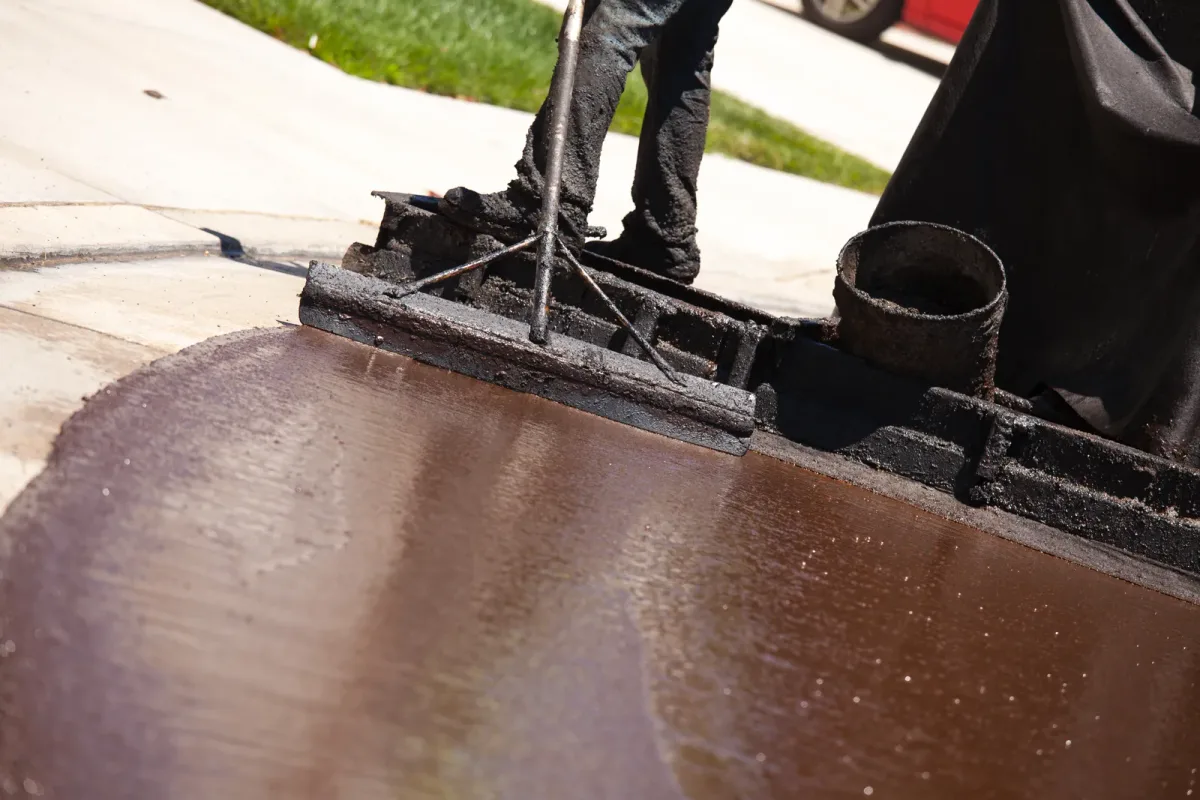
A buyers guide for sealcoating crews: judging an agency on weather timing, the sealing scam story, reseal cycles, and six questions to ask first.
Why a generalist agency misjudges a sealcoating business
A sealcoating crew is a different business from a paving contractor, even though the two get lumped together constantly. Sealcoating crews often run lean, a truck, a trailer tank, a squeegee crew, sometimes as a summer or fall add on to a different trade, with none of the heavy equipment a full repave needs. A generalist agency that markets it like a paving company, chasing big single contracts, is aiming at the wrong kind of job entirely.
The work is locked to weather in a way most home service marketing ignores. Sealcoating needs dry pavement and warm enough temperatures, so a single rainy stretch can wipe out an entire week of bookings, not just slow things down. An agency that spends an even budget across every week of the year, the way it would for a plumber or an electrician, is wasting money on weeks when a crew cannot even work.
Because a single driveway job is small compared to a full repave, this is a volume business. A crew needs many booked driveways every clear week of a short season, not a handful of big ticket contracts, and a marketing plan built around a small number of large leads is solving the wrong math.
Many sealcoating crews run this as a seasonal add on to a different trade, landscaping in summer or another business in the fall, which means the branding and the marketing have to work even when the same crew is known locally for something else the rest of the year.
The first qualifying question: how do they handle trust and the scam story?
Ask any candidate directly: how would you address the driveway sealing scam story before a homeowner even asks about it? Nearly every homeowner has heard some version of it, a stranger with a tank trailer, a same day cash deal, watered down material, gone before it fails. Real reviews, real job photos, and a findable, licensed local business are what separate a legitimate crew from that story, and an agency that does not build a site and campaign around proving that difference is ignoring the single biggest trust hurdle in this niche.
A second, closely related question is how fast a campaign can turn on and off with the weather. Because a rainy stretch can erase a week of bookings outright, an agency that cannot describe a specific plan for pausing and resuming spend around the forecast is planning for a business that does not actually exist in this climate dependent trade.
A third thing worth asking: does the agency understand that a sealed driveway needs it again roughly every two to three years? A crew that only markets to new customers, without a plan to win back the same driveway at its next cycle, is leaving its easiest, cheapest job on the table every single time.
Which channels actually book driveways, in what order
Google Ads turned on the moment the weather clears are the fastest path to a booked job. Campaigns built around driveway sealcoating near me and related searches, like crack filling and sealcoating near me, catch a homeowner right as they decide to act, and because homeowners often bundle a crack fill quote with the sealcoat itself, a landing page that covers both wins more of that search than one that only mentions sealcoating.
A tuned Google Business Profile, backed by steady local SEO, wins that same visibility for free, neighborhood by neighborhood, and they matter more here than in a lot of home service niches because the season is short and every free click during a clear week is a click a crew did not have to pay for.
Before and after photos and real reviews do more trust building work in this niche than almost any other home service, precisely because of the scam story every homeowner has already heard. A steady stream of fresh reviews and real job photos, gathered right after a driveway looks its best, is what turns a wary homeowner into a booked customer.
Email and text reminders close the loop on repeat business. Since a sealed driveway needs it again in two to three years, a reminder sent at the right time wins that reseal automatically, before the homeowner ever pulls a new flyer out of their mailbox.
Commercial parking lot work is a separate segment worth its own page and its own outreach, since a property manager comparing bids searches and decides differently than a homeowner booking a single driveway. A crew that only markets residential driveways is leaving that steadier, larger volume work to a competitor who bothered to ask for it.
The short season, and the real numbers worth asking about
Because the season is so weather dependent, the real number to watch is cost per booked driveway measured against how many clear weeks are left, not a monthly average that hides how uneven demand actually is. A crew that books slowly in week one of the season and only ramps up in week four has effectively lost a quarter of its short year.
Cure time is also a real logistics detail worth building marketing around, not just a technical footnote: a fresh coat typically needs roughly 24 to 48 hours before it can handle vehicle traffic, and clear scheduling and reminders around that window keep jobs booked instead of stalled on basic questions from a homeowner.
Have any candidate explain how they would put a real number on the reseal cycle, not just the first job. A driveway sealed once and never followed up on is a customer handed to whichever flyer reaches them next, roughly two to three years later, and that is revenue a good marketing plan should be built to protect automatically.
A short season limits crew capacity just as much as the weather does, so a flood of leads that a two or three person crew cannot physically reach in a given week does not actually help anyone. A plan sized to real crew capacity, not just maximum possible lead volume, keeps a short season from becoming its own kind of bottleneck.
Red flags, and the ownership questions that protect you
Be cautious of any agency promising a fixed number of bookings per month in a weather dependent trade. A rainy stretch can erase a week of demand outright, and an honest agency plans around that reality instead of promising a number no crew can control.
Nail down whether your website, your ad accounts, your job photos, and your customer list are truly yours to keep. A crew that leaves an agency should be able to take its before and after gallery, its reviews, and its customer history with it, not start over from nothing.
Watch for a plan that never mentions the reseal cycle or the scam story homeowners already know. If a candidate treats a sealcoating crew like a generic handyman service, with no plan for repeat business and no answer for how to build trust against that scam story, they have not actually studied this niche.
Watch also for a plan heavy on social posting but light on the map pack and paid search that actually book jobs. A feed of pretty before and after photos with no real search visibility behind it looks like marketing without producing a single booked driveway.
Six questions to ask before you sign with anyone
One, how would you turn ad spend on and off around the weather forecast, rather than spending evenly all year? Two, how would you build trust against the driveway sealing scam story before a homeowner even brings it up? Three, do you plan to bundle crack filling into sealcoating searches, since homeowners often ask for both together? Four, how would you win back the same driveway at its next two to three year reseal, not just book new customers? Five, will the website, the before and after photos, and the customer list stay under my name no matter what? Six, how would you track cost per booked driveway against the clear weeks actually left in my season?
How an agency handles these six questions on the spot tells you far more than any polished pitch deck could. Our team builds the site, the weather timed ads, the local SEO, and the reseal reminders a sealcoating crew actually runs on, at prices we publish rather than hide behind a phone call. Everything runs month to month, and reaching out at /get-proposal usually brings a reply within one business day. SearchPod is only one name worth testing against this same short list.