How to choose a paintless dent repair marketing agency that turns on hail-season demand fast and wins dealer recon accounts, not just retail jobs.
Why a generalist agency gets paintless dent repair wrong
A typical local-service agency will build a site, run some ads for 'auto body shop near me', and call it done. That plan ignores the two things that actually decide whether a paintless dent repair (PDR) business grows.
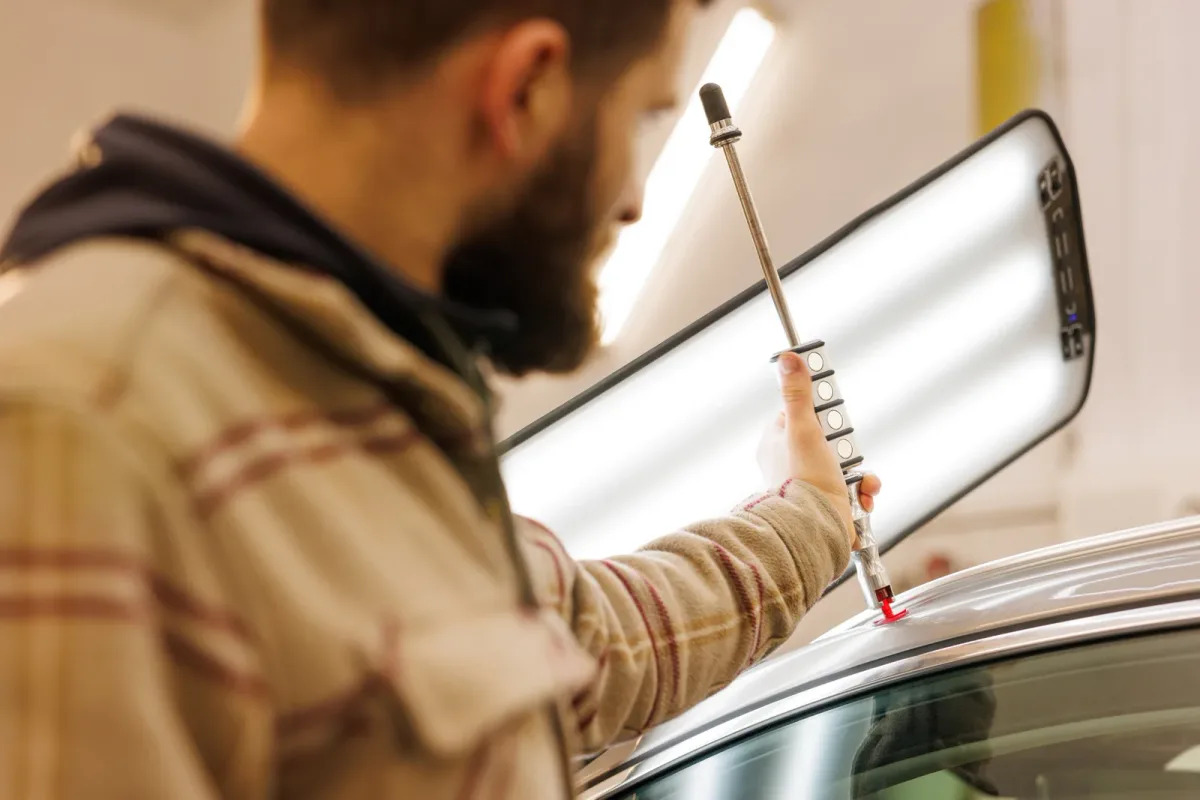
First, most people don't know PDR exists as an option. They assume any dent means a body shop, days without their car, and a big bill. If your marketing doesn't explain, in plain language, that a tech can massage a dent out from behind the panel without touching the factory paint, you lose the customer before they even understand what you're offering. That's a very different job than the one an agency does for a collision shop, which sells to a customer who already knows what they need.
Second, demand here is genuinely lumpy in a way most local services aren't. Door dings and shopping-cart dents trickle in year-round, but a single hailstorm can flood a market with weeks of work overnight, and then the calendar goes quiet until the next one. An agency that plans a flat, steady ad budget every month is planning for a business that doesn't exist. And a large share of operators run mobile out of a van with no storefront, which means the trust problem a customer has to get past is bigger than for a shop with a sign out front. Fourth, dealership used-car recon and rental-fleet contracts are steady, recurring B2B revenue that most operators never actively pursue, because their whole business was built around one-off retail jobs rather than standing accounts.
The first qualifying question: can they turn on hail-season demand fast?
Ask directly: 'If a hailstorm hits my area tomorrow, how fast could you get me showing up for hail-damage searches?' A generalist will need weeks to build a new landing page and campaign from scratch. A specialist should already have a plan, and ideally pages and ad copy, ready to go live within days of a storm, because that surge in search volume doesn't wait.
The second half of that same competence is explaining PDR itself. Ask them to show you sample copy for someone who has never heard of paintless dent repair. If it jumps straight into booking language without first explaining that the paint stays untouched and the car isn't in the shop for days, they don't understand the education problem this category has.
An agency that treats you like any other auto shop, without a plan for storm surges or a customer who doesn't know PDR is a thing, is going to leave real revenue sitting on the table every time a storm rolls through. Ask them a third question too: how would they help you approach a used-car dealership about a standing recon contract, since that outreach looks nothing like a hail-damage ad campaign and most agencies serving this niche have never tried it.
Which channels actually book dent jobs, and in what order
Google Ads for 'paintless dent repair near me' and, especially, 'hail damage repair near me' catch the customer at the exact moment they need help, and that second phrase spikes hard right after a storm. Ads are the fastest way to catch that surge before a competitor does.
Local SEO and Google Business Profile carry the steady, year-round door-ding business. Map-pack visibility, before-and-after photos, and a plain-language explainer of how PDR works are what turn a routine search into a booked job without paying for a click. AI search matters here too: when someone asks an AI assistant to find a trustworthy mobile dent tech nearby, you want to be the name that comes back.
Reviews carry more weight for a mobile operator than for a shop with a storefront, because a driver has to believe a stranger who 'comes to you' will actually show up and do clean work. Email and follow-up are the most overlooked channel: dealership used-car recon and rental-fleet contracts are steady, repeatable B2B revenue that most PDR businesses under-market because they're built around one-off retail jobs, and a simple outreach sequence to local dealers can turn into standing accounts most competitors never bother to chase.
Seasonality, and the real numbers to ask about
There is no busy season and slow season here in the usual sense. There's storm season, and there's everything else. A hailstorm can generate weeks of backlogged work overnight, while the calendar between storms depends on routine dings, dealer recon, and whatever fleet accounts you've built. A good agency plans hail-ready pages and campaigns ahead of storm season rather than scrambling once one hits.
Instead of asking for invented percentages, ask the agency to describe your economics in plain terms: how does the value of a single door-ding job compare to a full hail claim, and how does either compare to a standing dealer recon account with repeat monthly work. Then ask what it would cost to book one more job through their channels, and whether that cost holds steady or spikes during a storm surge when everyone else is also buying ads.
Because many operators run mobile without a storefront, ask specifically how they'd help you compete against shops with a physical location and a sign. The answer usually comes down to reviews, before-and-after photos, and a fast callback, not paid spend alone. Ask, too, how a hailstorm surge should change your staffing and scheduling messaging, since a customer who can't get a callback within a day or two during a busy week will simply call the next name on the map.
Red flags, and the ownership questions that protect you
The clearest red flag is lock-in. Ask plainly: do I own my website, my Google Ads account, my Google Business Profile, and my before-and-after photo library? If the agency built your site on a platform you can't take with you, leaving later means rebuilding from nothing, right when you need continuity most.
Be skeptical of any guarantee tied to storm timing, like a promised number of hail leads. Nobody controls the weather, and an honest agency will say so. Also watch for a generic package sold identically to every auto-adjacent business; a mobile PDR tech and a multi-bay dent studio need different plans, and an agency that hasn't asked which one you run hasn't done its homework.
Ask who owns the relationship with your dealer and fleet accounts if you switch agencies, and whether reporting shows you real numbers you can check yourself, in your own accounts, rather than a summary you have to take on faith.
A short checklist before you sign anything
Run every candidate agency through the same six questions and compare the answers directly.
One: 'How fast could you get me visible for hail-damage searches after a storm hits?' Two: 'How would you explain paintless dent repair to someone who's never heard of it, in the actual copy you'd write?' Three: 'Do I own my website, ad accounts, and Google Business Profile, and what happens to them if we part ways?' Four: 'How would you help me win dealer or fleet recon accounts, not just retail jobs?' Five: 'How do you plan ad spend differently around storm season versus the rest of the year?' Six: 'Can I see real tracking and reporting in my own accounts, not just a summary you send me?'
That kind of integration is where SearchPod fits: one team running your website, Google Ads, SEO, AI search, and email follow-up for paintless dent repair as a connected system. Pricing is public: Google Ads management is 10% of ad budget with a $600 a month minimum and no markup on spend, SEO is $50 per page from 10 pages a month, and custom websites run from $1,500 to $20,000 and up as one-time packages. Setup is $0, it's month to month, and there's a 30-day guarantee, with a free proposal within one business day at /get-proposal. Hire on specifics you can verify, not confidence alone, and use the storm-readiness and dealer-outreach questions above to separate a real specialist from a shop that only knows how to run a generic auto-repair campaign.