A plain guide to choosing a hardscape marketing agency that books the season early and owns local search, not just a manufacturer locator listing.
A hardscape company is not a landscaper, a concrete crew, or a paver aisle
A marketing shop that treats you like a general lawn care company or a concrete contractor will build the wrong site and buy the wrong keywords. Your business sets interlocking pavers, natural stone, and retaining wall units for patios, driveways, and full outdoor living builds. That is a different trade and a different buyer than a company that mows lawns and plants beds, or one that pours and finishes wet concrete flatwork. An agency that blends all three into one generic outdoor improvement campaign wastes your budget on searches for a lawn mow or a plain concrete slab.
The second thing a generalist misses is where a real share of your leads already comes from. If you carry a Belgard, Unilock, or similar certification, that manufacturer runs its own find-a-contractor locator, and homeowners searching a brand name plus dealer near me often land there before they ever reach your site. That listing sends real work, but it belongs to the manufacturer, not to you, and an agency that does not understand this dynamic will never build your own local search presence strongly enough to catch the homeowner who searches your brand directly instead.
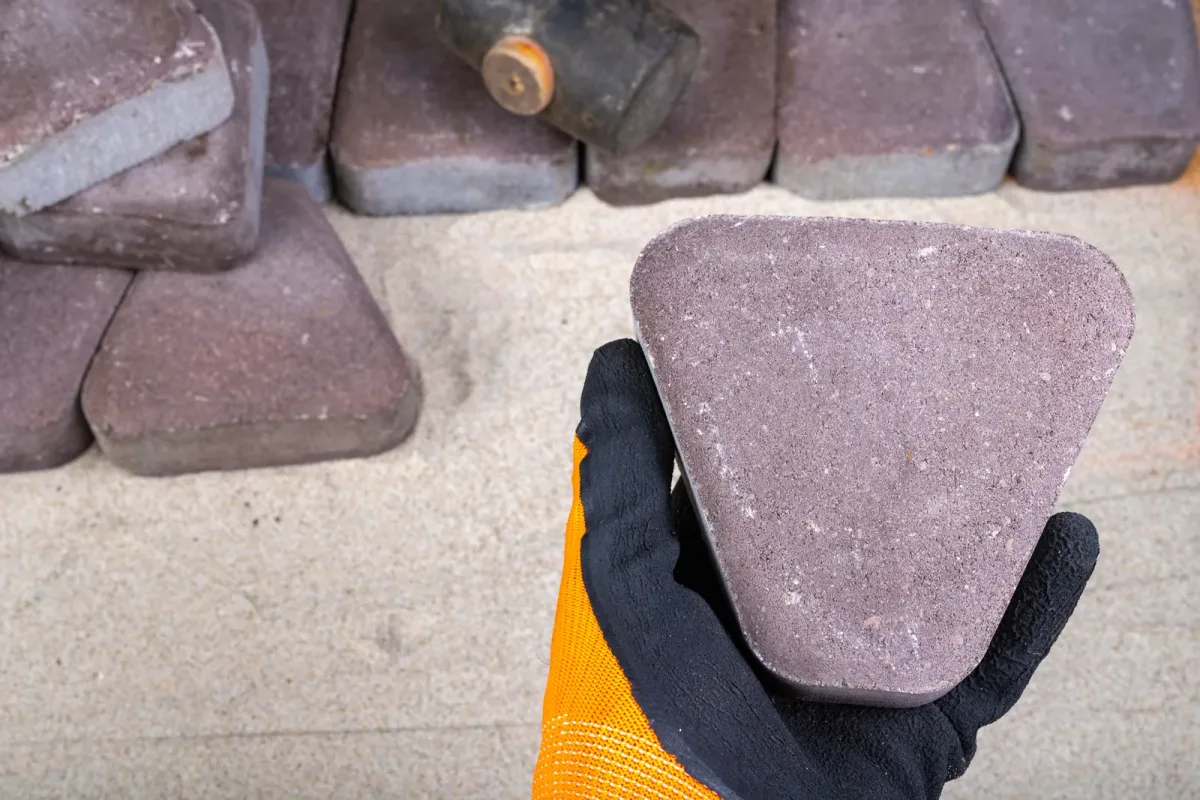
The third gap is trust. Base prep, compaction depth, geogrid, and edge restraint decide whether a patio stays flat for years or heaves and shifts by its second winter, and none of that is visible in a bid packet. The exact same pavers sit on a pallet at a big-box store, so homeowners both underestimate the skill involved and worry about hiring the wrong crew. A generic site with stock photography does nothing to answer that fear, and a project this size is usually sold after an in-person measure and design visit, not a phone call alone.
Ask this before anything else: can they name your certification and your competition?
Ask a candidate agency, without prompting, how they would market a certified Belgard or Unilock installer differently from a generic landscaping-and-hardscape company down the street. If the answer is one blended plan with no mention of manufacturer certification, product lines, or the credentials you hold, that agency has not done the homework a hardscape company needs.
A second useful test is asking how they would treat the manufacturer's own locator listing. A competent agency treats that locator as one channel among several, not the whole plan, and can describe how your own website and local search would capture the homeowner who searches for your certified brand directly, instead of waiting for the manufacturer's site to send the lead your way.
The answer should also tell you whether they understand the sales cycle. A patio, driveway, or retaining wall project is usually sold after someone comes to the home to measure and give a real design, not off a single web form. An agency that only talks about lead volume, and never asks how you close the estimate once it lands in your calendar, is solving half the problem at best.
The order that actually fills a hardscape install calendar
Google Ads earns its place first because a homeowner searching for a paver patio installer, a retaining wall contractor, or a specific brand like a certified Unilock dealer is often ready to book a measure visit within days. These are considered, big-ticket searches, not impulse clicks, so a campaign built around the exact project type and brand terms a hardscape buyer types will out-convert one generic hardscaping services ad group every time.
Local SEO and a properly built-out Google Business Profile carry the steadier volume behind the paid search, especially for map-pack visibility on hardscape contractor searches and dedicated pages for the product lines you install. This is also where you compete directly with the manufacturer's own locator: a strong local listing and a set of pages built around your certifications give you a real shot at the homeowner before they ever click through to a competitor's dealer page.
AI search is worth taking seriously too, since more homeowners now ask an assistant who installs pavers or builds retaining walls nearby before they open Google at all. Reviews feed all of this at once, and they matter more here than in most trades, because a wary homeowner wants proof that base prep and compaction were done right, not just a nice-looking photo. A steady flow of reviews, ideally with photos of a patio a year or two after installation, settles that fear better than any ad copy can.
How the ground itself decides your marketing calendar
Hardscape work does not spread evenly across the year the way some trades do. Excavation and base compaction stop the moment the ground freezes or turns to mud, so in most climates demand concentrates hard into the warm months, and the companies that stay booked are the ones who start marketing before that window opens, not once it is already underway.
Ticket size is worth describing rather than pinning to a number. A single patio, driveway, or retaining wall project is a genuine big-ticket sale, often large enough on its own to cover what a company spends on marketing that month, and a finished patio is frequently just the first phase of a larger yard, with a fire pit, an outdoor kitchen, or a pool deck following later from the same happy customer. Sealing and joint-sand refreshes on a multi-year cycle give you a second, quieter reason to stay in touch with past customers instead of treating every season as a fresh hunt for new leads.
The number worth asking any agency about is cost per signed project, not cost per lead or per click. Multiple-bid shopping is standard in this trade, and the company that follows up fastest with a firm number usually wins the job even when its crew and materials are better, so ask how an agency would track a lead from the first click through the design visit to a signed contract, and how quickly they would tell you which project type is actually worth chasing.
Red flags and ownership questions before you sign anything
The biggest warning sign is lock-in. Ask plainly whether you own your website, your Google Ads account, your Google Business Profile, and your customer data, or whether the agency holds the login. A site built on a platform you cannot take with you, or an ad account you would lose on the way out the door, is a relationship built to make leaving expensive rather than one built to keep earning your business month after month.
Be wary of anyone who guarantees a set number of leads or jobs in a seasonal, weather-dependent trade like this one. No honest agency can promise that outcome, and a guarantee like that usually means the fine print does the real work. Watch too for reporting you cannot check yourself inside your own Google accounts, since that is often how an agency hides a rising cost per signed job behind a flattering lead count.
Two hardscape companies in different markets, with different certifications, crew sizes, and competitors, should never get the same cookie-cutter package. If a proposal reads like it was written before anyone looked at your service area or your product lines, it probably was, and that is a sign the agency plans to run your account the same way it runs everyone else's.
Six questions to ask, and where SearchPod fits
Once you are down to two or three agencies, ask each one the same six questions so the comparison is fair. One, how would you market our certified installer status differently from a generic landscaping or concrete company? Two, how would you help us win the homeowner who searches for our brand directly, instead of relying on the manufacturer's locator? Three, do we keep ownership of our website, ad accounts, Google Business Profile, and customer data if we ever part ways? Four, how would you scale our ad spend up before our install season opens and pull it back once the ground freezes? Five, how do you plan to track cost per signed project, not just cost per lead? Six, will one team handle our site, ads, SEO, AI search, and reviews, or are we coordinating several vendors who never compare notes?
A free proposal typically lands within one business day once you reach out through /get-proposal, and you can see more of how we approach this trade at /paver-hardscape-installer-marketing. We are a Canadian and US performance marketing agency, and our pricing is posted where anyone can check it before they ever call us: Google Ads management costs 10% of whatever you spend on the platform, never less than $600 a month, and we do not add any markup on top of your ad spend. SEO is billed at $50 per page each month, with a 10-page minimum to start, and a custom website is a one-time build, priced from $1,500 up to $20,000 or more depending on scope. There is no setup fee, no contract keeping you locked in, and everything runs month to month; a 30-day guarantee means an underperforming first month costs you nothing.
Whichever agency you choose, hold them to the same standard: can they explain your certification, your season, and your real cost per signed job in plain language, or do they just talk about clicks?