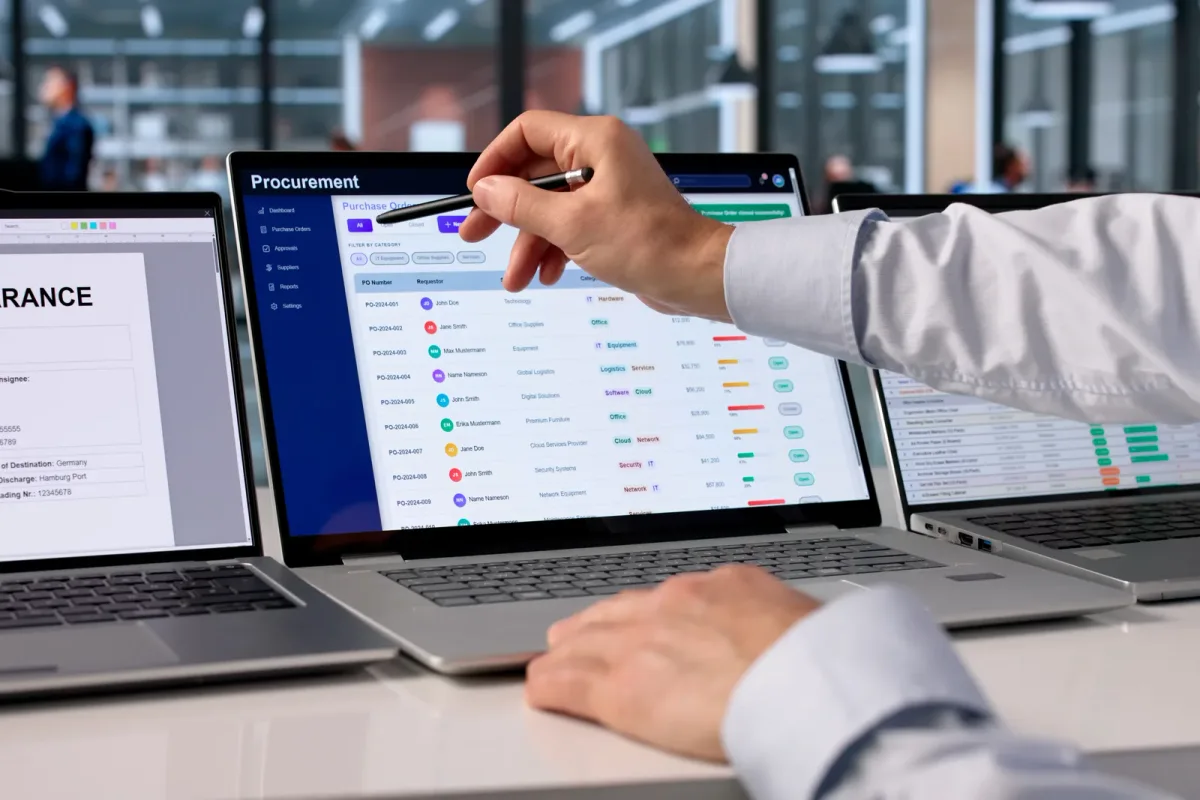
A guide for procurement software founders on picking an agency that understands the finance and IT sign-off that decides most deals.
Why a generalist SaaS agency struggles with procurement software
Procurement software sits next to better-known categories like CRM or project management, but far fewer agencies specialize in it specifically. Most procurement marketing gets handled by generalist B2B SaaS shops, which leaves a real gap for a buyer who actually understands this market. That gap shows up the moment a generic agency has to explain why your platform matters against an enterprise incumbent like SAP Ariba or Coupa, versus a challenger like Procurify, Precoro, or Order.co competing on speed and ease of setup for a smaller finance team.
The second thing a generalist misses is that your buyer is rarely one person. A procurement or operations lead feels the daily pain of purchase orders stuck in email and spreadsheets. A finance or controller stakeholder has to trust the numbers before signing off. IT or security often has to clear the tool before it can touch spend data and connect to the accounting system. A campaign written for only one of those three people misses the other two, and procurement deals close when all three agree.
Third, the trigger that sends a buyer looking is almost always operational pain, not a feature wish list, maverick spend, a slow approval chain, or no real-time visibility into what's about to be spent. Content and ads that speak to that daily frustration convert better than a features list ever will.
The first qualifying question: how do they handle a stalled buying committee?
Ask any candidate agency this directly: what happens, in your plan, after a great demo when the deal goes quiet? The answer tells you almost everything about whether they understand this category.
The single biggest growth risk in procurement software isn't a stalled trial, it's a stalled buying committee. A demo can go well, and the deal can still sit for weeks while finance signs off on cost and IT clears a security and integration review. An agency that has no answer for that gap, no follow-up content, no material built to help your champion sell the tool internally, is planning for a funnel that doesn't match how procurement software actually gets bought.
A strong answer describes specific content built for the internal champion to forward to their own finance and IT stakeholders, and a follow-up email sequence timed to that review window, not just a generic "nurture" drip that ignores what's actually happening inside the buyer's company.
A second thing worth checking: do they understand that a lot of procurement deals compete against the price of doing nothing? Sticking with email and spreadsheets feels free in the short term, even though it's costing the buyer visibility and control, so content that names that hidden cost directly tends to move a stalled deal further than another feature comparison ever will.
Which channels actually produce demos and paying accounts
A capable agency for procurement software should be able to name where your demos actually come from, and it's rarely one channel working alone.
High-intent Google and LinkedIn ads reach buyers the moment they're evaluating, aimed at searches like "procurement software alternatives" or "purchase order software." This channel can produce the first demo requests within a few weeks, but procurement and finance leaders shortlist tools on G2 and Capterra before they ever click an ad, so paid search alone won't close the gap.
SEO and comparison content are where the category, "alternatives to," and "[tool] vs [tool]" searches live, the exact queries a procurement lead runs before a rep is ever on a call. This typically takes three to six months to build, then keeps compounding without a per-click cost.
AI search is now part of that shortlist-building step too, since buyers increasingly ask an assistant which procurement platform integrates best with QuickBooks or NetSuite before ever emailing sales. Finally, onboarding and expansion email get a new account live and approving real purchase orders fast, which matters because a demo that never leads to a working approval flow never turns into renewed revenue. A platform that only buys ads and skips the comparison content and the follow-up email is running on one leg.
Do they understand your buying cycle and your real numbers?
Procurement software doesn't move on a retail calendar. It moves on budget cycles and fiscal-year planning, so a lot of evaluations start when a finance team is setting next year's budget and looking to fix a process that's costing them visibility into spend. An agency that plans a flat campaign schedule all year, ignoring that rhythm, isn't thinking about your buyer's calendar.
Beyond timing, there's a harder question: does an agency actually speak in your real unit economics? Ask directly: what does it actually cost to acquire a paying account, factoring in the deals that stall in security review and never close, and how does that number compare across your self-serve SMB tier versus your enterprise pipeline? Those two buyer types carry very different sales cycles and very different acquisition costs.
You won't get a straight answer to any of that without attribution that follows a demo request through the whole buying committee, not just to the first form fill. Most procurement software companies skip building that visibility, and that's exactly why they can't say with confidence whether their content, their ads, or their sales team's own network is what's actually producing signed customers.
Red flags, and the ownership questions that protect your pipeline
A short list of signals separates agencies that actually grow procurement platforms from ones that just collect a fee.
Start with ownership. Confirm your website, your ad accounts, your analytics, and your customer data stay with your company no matter what happens next. A vendor that builds your site on a system you can't leave, or that holds your ad accounts under its own name, is designing for its own retention, not yours.
Next, be wary of a promised demo count or a guaranteed close rate, since nobody honest can promise either in a category where finance and IT sign-off set the real timeline, not a marketing plan. Reporting you can't check against your own CRM is a similar flag, and so is a contract that locks in a year of revenue for the agency regardless of what it actually delivers.
Finally, ask whether the agency has ever sold into a three-person buying committee before. Push on how they'd handle a deal stuck in security review, and how they'd trace one demo all the way to signed revenue. A vague answer to either question tells you what you need to know.
A short, honest checklist for evaluating any agency
Take whichever two or three finalists remain and put the same six questions to each one, then stack the answers up against each other.
One: what happens in your plan after a demo, when the deal has to clear finance sign-off and an IT security review? Two: how do you trace a signed customer back to the specific campaign, keyword, or content piece that produced the original demo? Three: do I own my website, my ad accounts, my analytics, and my customer data, and do I keep all of it if this arrangement ends? Four: how would you build content and email differently for a self-serve SMB buyer versus an enterprise buying committee? Five: is there a single team accountable for my site, my ads, my SEO, my AI search, and my lifecycle email, or am I managing a handful of vendors myself? Six: how would you help me win the comparison and "alternatives to" searches my buyers actually run before they shortlist a platform?
The fifth one carries more weight than it looks like at first. Spread your landing pages, your paid campaigns, and your follow-up content across different vendors, and the seams become exactly where a deal goes quiet after a good demo.
SearchPod runs all of it as one system for procurement software companies: the site and landing pages, high-intent Google and LinkedIn ads, comparison and category SEO, AI-search visibility, and the onboarding email that gets a new account live fast. The pricing behind all of that is public, not a number you have to request. SEO content runs $50 a page, 10-page floor to start. Managing your Google Ads is 10% of your spend with a $600 monthly floor, and we don't add anything on top of what you actually pay Google. A new site is a separate one-time build, one of eight fixed packages between $1,500 and $20,000 or more depending on scope. There's no charge just to get started, no year-long commitment, and a 30-day window where you owe nothing if the results aren't there. Tell us about your platform and expect real numbers back within one business day at /get-proposal. Run every candidate through the six questions above before you sign.