A straightforward guide to choosing an SMP marketing agency that understands discreet reviews, long research windows, and touch-up revenue.
Why a generic beauty or medical agency gets SMP wrong
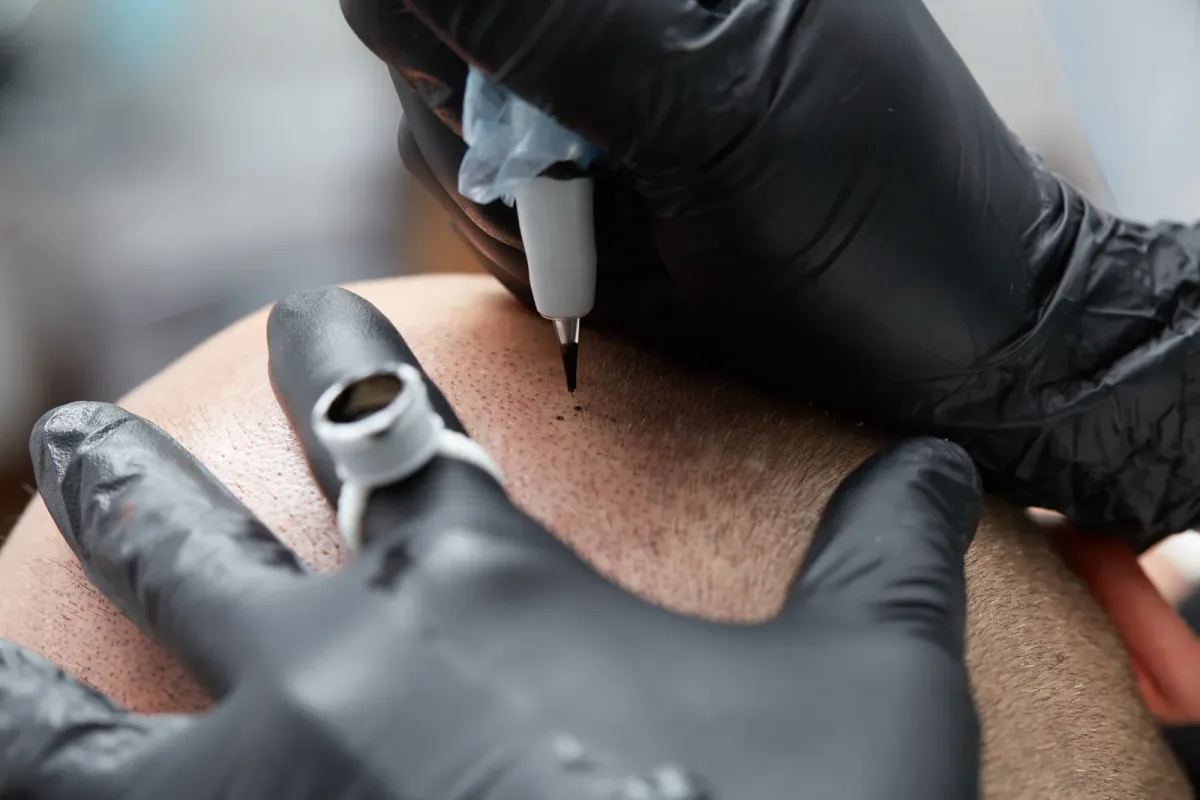
Most marketing agencies lump scalp micropigmentation in with tattoo shops or hair-transplant clinics, because on the surface it can look like both. It's neither. SMP is its own craft, layering pigment to mimic closely shaved hair follicles, and clients researching it are trying to tell the difference between you, a body-art tattoo studio, and a surgical hair-transplant clinic before they ever pick up the phone. An agency that calls your work a “tattoo” or a “procedure” without drawing that line is confusing the exact person you need to convert.
The bigger issue is privacy. Healed, close-up hairline photos are the single strongest trust signal in this field, but a large share of happy clients will leave a written review while refusing to have their photo or name attached publicly. A generic review-request script that pushes for a tagged photo testimonial will fail with exactly the clients who would otherwise be your best advocates, and an agency unfamiliar with that pattern won't know how to work around it.
The buying decision itself is unusual too. A full SMP treatment typically runs two to four sessions spaced weeks apart, which makes it a considered, high-ticket decision rather than an impulse booking. Most people research quietly for weeks before contacting a single studio, and whichever studio stays in touch during that window, not necessarily the most skilled artist, is often the one that gets the booking.
The first qualifying question: how would they handle a client who won't be tagged?
Ask any agency candidate this directly: how would they get a review out of a happy client who does not want their photo or name shared publicly? If the answer assumes every testimonial comes with a tagged before-and-after photo, that agency hasn't worked with this client base before, since a meaningful share of SMP clients will happily write a glowing review while asking that nothing identifying goes anywhere public.
The next question is how they'd explain what SMP actually is, in your marketing, without letting it read like a tattoo service or a surgical procedure. Local search results and AI-assistant answers routinely blur SMP together with both, which is a real ranking and trust problem specific to this field, not a small copywriting note. An agency that treats it as a minor detail hasn't thought through how a self-conscious researcher decides who to trust.
The last thing worth asking about is deposits. A session block runs multiple hours, so a no-show is an expensive gap in your calendar, not a minor inconvenience. An agency that has never mentioned deposits or pre-session communication has probably never had to protect a studio's calendar the way this business actually requires.
Which channels actually book SMP consultations, in order
Search visibility built specifically for SMP terms comes first: “scalp micropigmentation near me” and “smp near me” need to rank on their own, in a Google Business Profile category kept clearly separate from tattoo studios and hair-transplant clinics, so people searching for you actually find you. Content answering “smp vs hair transplant” and “scalp micropigmentation cost” sits right alongside it, since those are exactly the comparison questions a cautious researcher types before ever calling anyone.
Paid search comes next, targeting people typing “hairline tattoo near me” or “smp for alopecia” right when they're closest to booking, and it should be judged by consultations that actually get scheduled, not by clicks alone. AI search visibility matters just as much, since people increasingly type questions like “what's the difference between SMP and a hair transplant” straight into ChatGPT or Gemini and take the named answer at face value, the same trust a strong review would otherwise have to earn.
Email and text follow-up matter more here than in most beauty businesses, because of the long research window before a first consult and the multi-session nature of the treatment itself. A consult follow-up sequence that keeps in touch with someone who hasn't booked yet, plus session reminders and deposit confirmations, protects both the sale and the calendar. Reviews close the loop, handled with the discretion this client base actually needs, since trust is the entire product before the first needle ever touches skin.
Seasonality, session value, and the recurring revenue most studios miss
SMP doesn't follow a sharp retail season, but demand does shift with the calendar. Interest tends to build heading into spring and summer, when people plan ahead of warmer weather and more time spent bareheaded outdoors, and again around the new year alongside other appearance-focused resolutions. A studio running the exact same marketing plan every month of the year is ignoring a real, predictable rhythm in when people start researching.
A completed client is worth more than the first treatment plan alone. Healed pigment fades gradually and needs a color-refresh touch-up years down the line, real recurring revenue that a studio without a reminder system simply lets slip away as past clients drift toward whichever studio they happen to see first when the time comes. Treating a client's value as the sum of the first plan and the eventual touch-up changes what's worth spending to win them in the first place.
The number worth tracking is not leads or consult requests alone, it's cost per booked treatment plan, alongside how many past clients actually return for a touch-up. Ask any agency how they'd track and report both numbers, and what a touch-up reminder sequence would look like; one with no answer for the second half of that question is only planning for half your business.
Red flags, ownership, and the guarantees to be wary of
A quick way to test any agency is to ask who is registered as the owner of your Google Business Profile, your website domain, and your ad account. If those sit in the agency's name instead of your studio's, you find out what that costs you only when you try to leave and discover your listing, your reviews, and your ranking history stay behind. Everything, your site, your accounts, and your client list, should already be registered to your studio, not something you have to negotiate to get back.
Be cautious of any agency promising a specific number of new clients or a guaranteed ranking position, since neither is something an outside agency can actually control. A studio confident in its craft, and an agency confident in its process, should be comfortable describing how the work gets done rather than promising a number nobody can guarantee. A long-term contract is worth questioning too; an agency doing real work doesn't need one locked in to keep earning your business.
Watch, too, for review-generation tactics that pressure every client toward a public, tagged testimonial. Beyond being the wrong approach for this client base, it can quietly cost you reviews altogether, since a client asked to do more than they're comfortable with often just declines to leave one at all. Reporting that shows only site traffic or ad clicks, without ever tying back to a booked treatment plan, is the same red flag here as anywhere else: numbers that look fine but explain nothing about your actual calendar.
A short checklist for hiring an SMP marketing agency
With two or three studios' worth of options in front of you, ask each agency these six questions and judge the answers on detail, not tone.
One: How would you get a review from a client who won't share a photo or be tagged publicly? Two: How would you keep my marketing clearly distinct from tattoo studios and hair-transplant clinics? Three: What would a consult follow-up sequence look like for someone who has been researching for weeks? Four: How do you track cost per booked treatment plan, not just consult requests? Five: What would a touch-up reminder system look like once pigment starts to fade? Six: Will my website, Google Business Profile, and client list stay in accounts my studio owns?
SearchPod already builds that approach for SMP studios: SMP-specific local SEO and Google Business Profile work, Google Ads pointed at hairline and density searches, AI-search visibility, and discreet review and touch-up follow-up, all tracked back to cost per booked treatment plan, not a script borrowed from a tattoo shop or a medical clinic. Rates are posted plainly: Google Ads management is 10% of your ad spend with a $600-a-month floor and nothing marked up on top of it, SEO is $50 a page with a 10-page starting minimum, and a new studio website runs as a one-time package priced from $1,500 to $20,000 or beyond, depending on what you need. There's no setup cost, no contract to sign, and every plan runs month to month with a 30-day guarantee behind it, meaning an unhappy first month costs you nothing. Ask for a proposal at /get-proposal and a plan scoped to your studio shows up within one business day.
Skilled work doesn't market itself. Ask these six questions before you hire, and pick the studio's next agency based on real answers, not a pitch that sounds the same for every beauty business in town.