A plain guide to picking an assisted stretch studio marketing agency: local map pack wins, referral partners, and ownership terms to check.
Why a generalist fitness agency treats a stretch studio like a group class business
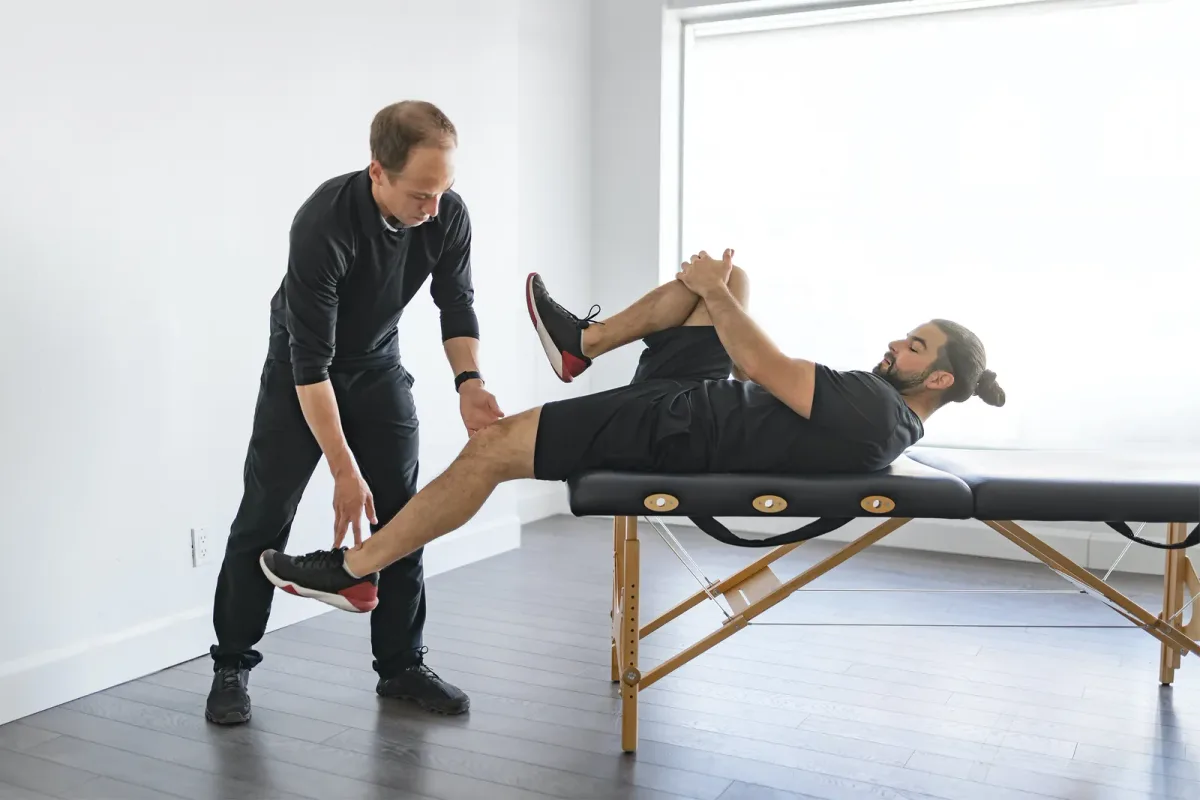
Assisted stretching sessions are one-on-one with a trained practitioner, not group classes, which means your capacity is bounded by practitioner hours, not room size. A generalist fitness agency used to marketing a yoga or pilates studio, where filling a class means filling open floor space, will build a plan around the wrong bottleneck. An empty appointment slot here is revenue that doesn't come back, the same problem a hair stylist's chair or a massage therapist's room has, and a generalist agency that doesn't grasp this will chase broad awareness instead of filling specific practitioner hours.
The category itself is still emerging, and national franchise brands have built most of the public's awareness of assisted stretching while outspending independents on national advertising. That means an independent studio's real opportunity is the local map pack and the neighborhood, not trying to outbid a franchise's national marketing budget, and a generalist agency that proposes a broad brand-awareness campaign is fighting a battle you can't win on spend alone. Winning a handful of neighborhood searches consistently is worth more to an independent studio than a scattershot campaign that tries to compete on national name recognition it will never have.
A generalist agency also tends to assume people already understand your service, when in fact a large share of searchers still don't know what "assisted stretching" is or how it differs from a massage or a chiropractor visit. Your site has to educate, not just convert, and a generalist agency that jumps straight into booking-focused ad copy without first explaining what a session actually involves will lose visitors who are still trying to figure out what they'd be paying for.
The first qualifying question: can they explain what assisted stretching even is?
Ask any agency you're considering to write a single paragraph explaining assisted stretching to someone who's never heard of it, in plain language, without leaning on jargon. If they can't do this clearly, they'll struggle to write ad copy and landing pages that convert a curious searcher who doesn't yet understand the difference between your service and a massage or a chiropractor visit.
A sharper agency will bring up referral relationships as a real client-acquisition channel here, more central to this category than to most other fitness niches. Chiropractors, physical therapists, personal trainers, and gyms are natural referral sources for people already dealing with mobility issues or recovering from injury, and an agency with no plan to build and support those relationships is only working half of your realistic client pipeline.
The answer should also address retention, since results like improved mobility, pain relief, and range of motion depend on consistency, and clients who go quiet for a few weeks rarely restart on their own. Ask how they'd handle reminders and win-back campaigns for clients who've gone quiet, since acquiring a new client costs more than reactivating one who already knows and trusts your studio.
Which channels actually fill practitioner hours, and in what order
Local SEO and a well-built Google Business Profile matter more here than trying to compete with a national franchise's brand advertising, since your real opportunity is winning the map pack in your own neighborhood. Content that plainly explains what assisted stretching is, and how it differs from a massage or a chiropractor visit, helps you win searches from people who are curious but not yet sure what they're looking for.
Google Ads can work well for the intro-offer-to-membership funnel this business runs on, a first session or trial that leads to a session package and eventually a recurring membership, the same pattern as other boutique fitness categories. But the ad and landing page both need to briefly explain the service before asking for a booking, since a searcher who doesn't understand what they're buying won't convert no matter how good the offer is.
Referral relationships with chiropractors, physical therapists, personal trainers, and gyms deserve deliberate outreach, not passive hope, since these professionals already see clients dealing with the exact mobility and pain issues your service addresses. Reviews matter enormously too, since this is hands-on work with a stranger, often for people managing pain or recovering from injury, and practitioner credentials paired with real reviews carry more weight in a client's decision than for a typical group-class studio.
An empty appointment slot is the real cost, and the number that actually matters
Because capacity is bounded by practitioner hours rather than room size, an empty appointment slot is lost revenue that never comes back, unlike an under-filled class where a few extra people could still show up. A marketing plan needs to be judged on how well it fills specific open slots on your schedule, not just on broad lead volume or brand impressions, since a studio can generate plenty of inquiries and still leave Tuesday afternoons empty if nobody is matching demand to actual practitioner availability.
Describing client value in words rather than an invented number is the honest approach for a membership-and-package business like this. A client who moves from a first session through a package and into a recurring membership is worth substantially more over time than a one-time session, and a client who goes quiet for a few weeks and is never won back represents lost membership revenue that a reminder system could often have prevented.
The number worth tracking is practitioner utilization, booked appointment hours against total available hours, alongside the rate at which first sessions convert into packages and memberships. Ask any agency how they'd report on both, since a studio that generates plenty of first-session bookings but fails to convert them into packages, or that lets member appointments quietly go empty, is losing revenue that raw lead counts would never reveal.
Red flags, and the ownership questions that protect your studio
Ask plainly whether you own your website, your Google Ads account, your Google Business Profile, and your client and membership data, or whether the agency controls them. Your client list and their session history are core to a membership business like this, and losing access to it on the way out the door is a real cost.
Watch for an agency that proposes a national brand-awareness campaign instead of a local map-pack strategy, since that's a losing fight against a franchise's advertising budget. Watch too for a plan with no referral-relationship strategy for chiropractors, physical therapists, personal trainers, and gyms, since that channel is more central here than in most fitness categories.
Watch for guaranteed booking counts or membership numbers, since a service this dependent on client trust and consistency can't honestly be guaranteed. Reporting you can't verify inside your own accounts, and long contract terms that lock you in rather than earning renewal every month, are both signs the agency is protecting its own revenue rather than your studio's actual growth.
Six questions to ask before you hire a stretch studio marketing agency
Put the same six questions to every agency you're seriously considering. One, can you write plain-language copy that explains what assisted stretching is to someone who's never heard of it? Two, how would you build referral relationships with chiropractors, physical therapists, personal trainers, and gyms? Three, do we keep ownership of our website, ad accounts, Google Business Profile, and client and membership data if we ever part ways? Four, how would you track practitioner utilization and the rate at which first sessions convert into packages and memberships? Five, how would you win our local map pack instead of trying to outspend national franchise advertising? Six, how would you handle reminders and win-backs for clients who've gone quiet for a few weeks?
This is also a fair place to say plainly that SearchPod is one of the options a stretch studio might consider. We're a Canadian and US performance marketing agency with public pricing: Google Ads management runs 10% of your ad budget with a $600 monthly minimum and no markup on spend, SEO is $50 per page starting at 10 pages a month, and custom websites run $1,500 to $20,000 or more depending on scope. Everything is month to month with a 30-day guarantee, and a free proposal is available within one business day at /get-proposal. Our own /stretch-studio-marketing page shows how we'd approach your studio specifically, and we'd rather be judged against the six questions above than take our word for it.