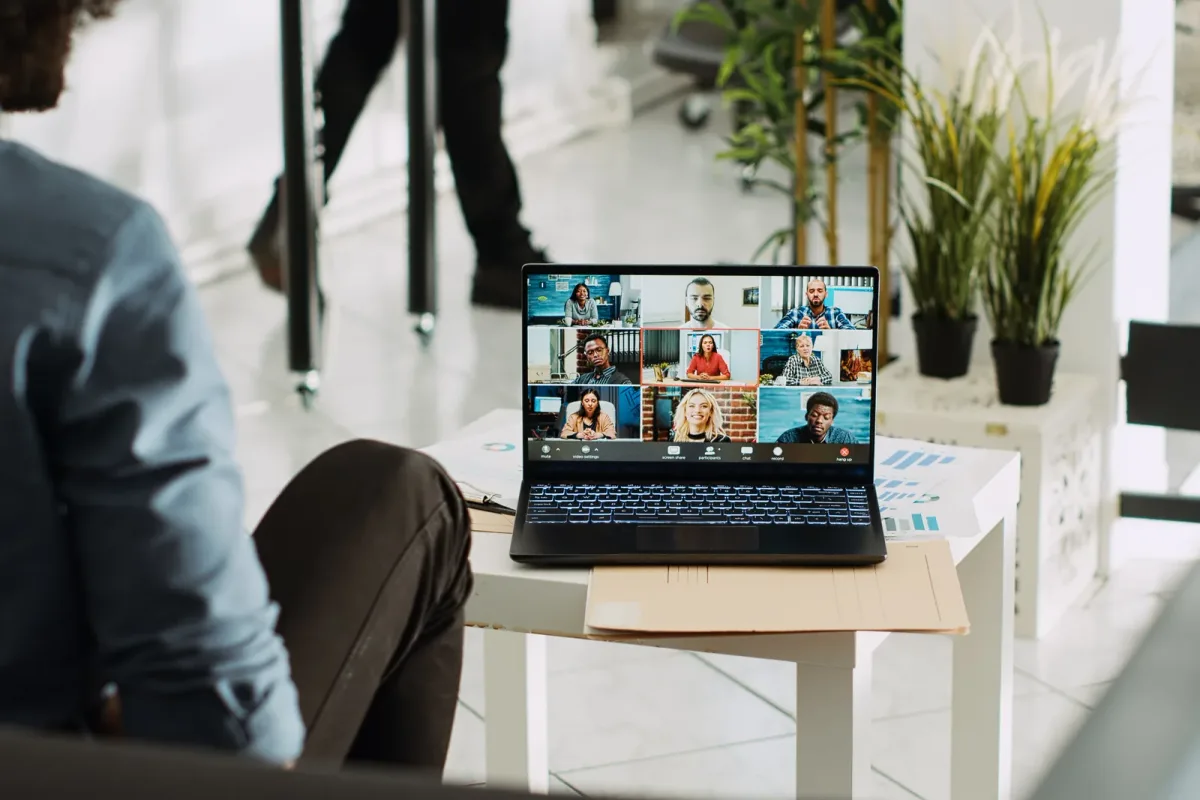
A guide for video conferencing and UCaaS founders on picking an agency that beats a free incumbent and stops seats from drifting back to habit.
Why a generalist agency doesn't know it's fighting a free incumbent
Most video conferencing evaluators already have Microsoft Teams or Google Meet included in a Microsoft 365 or Google Workspace plan they're paying for anyway. A generalist SaaS agency treats this like any other competitive category, when really you're not just fighting other vendors, you're fighting a free tool already installed on every laptop your buyer owns. A landing page that doesn't make a specific, concrete switching case, better call quality, room-hardware support, a feature the bundled tool skips, loses to "what we already have" before a trial ever starts.
The second thing a generalist misses is that your buying committee actually splits into two roles that need different copy. An IT or security stakeholder evaluates uptime, admin controls, calendar and SSO integration, meeting-room hardware compatibility, and compliance, SOC 2, HIPAA if there's a telehealth use case, E911 if there's a voice component. An end-user or ops stakeholder just wants meetings that don't glitch and that colleagues will actually join instead of defaulting to habit. Copy written for only one of those two people misses the other.
Third, the biggest growth risk isn't losing the sale, it's winning it and then losing the seats anyway. IT can sign a deal and roll it out, and end users keep opening whatever's already pinned to their taskbar out of habit. A platform only earns its renewal if meetings actually happen on it.
The first qualifying question: how do they get a signed account to actually adopt?
Ask this directly: once IT signs and rolls this out, how do you get the rest of the team to stop opening their old app? If the answer stops at admin onboarding, that agency is planning for account setup, not adoption.
A good answer describes onboarding that targets habit change across a whole team, not just the admin who bought it, since an account can be fully paid for and licensed and still fail if half the company keeps defaulting to what's already pinned to their taskbar. That's the actual churn risk in this category, and it happens after the deal closes, not before.
A second question worth asking: how would they answer the calendar-sync, SSO, and meeting-room hardware questions IT will ask, before those questions turn a promising demo into a slow email thread that stalls the deal.
Worth raising too: if your platform has any voice component, do they know E911 compliance is a real question a buyer's IT team will ask, and can they point to where that answer lives on your site?
Which channels actually beat a free incumbent
A capable agency for video conferencing software should be able to explain where a paying seat actually comes from, and it's rarely a head-on fight against Zoom's brand awareness.
Google Ads built around "zoom alternative," "teams alternative," and comparison searches reach people already looking to leave a platform they don't like, the moment they're ready to switch off a free incumbent. This channel can produce trial signups and demo requests within a few weeks, but only when the landing page it points to answers the specific switching case, not a generic feature list.
SEO and comparison content own the "switching from Zoom" and category searches a buyer reads before ever filling out a demo form, organic rankings that keep paying back long after a paid click would have stopped, typically three to four months to build.
AI search now answers the same switching question directly, so being the name ChatGPT or Gemini recommends when someone asks for a Zoom alternative matters. Finally, onboarding email that targets the teams still opening their old app out of habit, not just the admin who bought the account, is what actually protects the seats you've already sold. A vendor that only runs ads and skips habit-focused onboarding is winning signatures it can't keep active.
Do they understand your two-stakeholder sale and your real numbers?
This category doesn't move on a retail season. It moves on IT budget cycles and contract renewal dates, so a vendor evaluating a switch often starts that process around its own fiscal-year planning or when an existing contract with a competitor is coming up for renewal. An agency running a flat campaign every month, ignoring that rhythm, is missing when your buyer is actually motivated to act.
Set the budget cycle aside. The tougher question is whether the agency ties spend to actual adoption, not just a signature. Ask directly: what does it actually cost to acquire a paying seat, and how does adoption, not just signup, actually track after IT signs the deal? Because churn risk here comes from low adoption after the sale, not from a lack of interest before it, a good agency should track both numbers separately.
There's no honest answer to that without tracking that follows a demo through IT's review process and then through actual meeting activity after rollout. Most video conferencing vendors skip this second half of the picture, and it surfaces later as guesswork over whether a signed account is actually renewing revenue or quietly churning back to habit.
Red flags, and the ownership questions that protect your growth
A few clear signals tell you whether an agency actually understands the free-incumbent problem in this category.
Ownership comes first. Confirm your website, your ad accounts, your analytics, and your customer data all stay registered to your company, whatever happens later. A vendor building your site on a closed platform, or holding your ad accounts under its own name, has designed a relationship that's hard to leave.
Next, be wary of a plan that just bids on generic "video conferencing software" terms and ignores that you're competing with a tool that's already free, since that's a losing strategy against Teams and Meet's built-in distribution. A guaranteed demo count is an equally bad sign, and so is reporting you can't cross-check against your own CRM or analytics.
Finally, watch for an agency that talks only about signups and never about what happens after the signature. Ask how they'd measure whether a signed account is actually holding meetings on your platform a month into rollout, since that adoption gap is where this category's real churn happens.
A short, honest checklist for evaluating any agency
Get down to two or three real options, put the same six items to each of them, and see how the answers actually compare.
One: how would you make a specific, concrete case for switching, rather than trying to outbid a free incumbent on generic terms? Two: how do you get a signed account's whole team to actually adopt the platform, not just the admin who bought it? Three: do I own my website, my ad accounts, my analytics, and my customer data, and does any of it disappear if this doesn't work out? Four: how would you answer the calendar-sync, SSO, and room-hardware questions IT raises before they stall a deal? Five: does a single team own my site, my ads, my SEO, my AI search, and my onboarding email, or would I be coordinating several vendors myself? Six: how would you help me rank next to RingCentral, GoTo, or Dialpad on G2 and Capterra?
The fifth one is worth more thought than it first appears to deserve. Hand your landing pages, your ads, and your onboarding email to separate vendors, and the seams become exactly where a signed account quietly drifts back to old habits.
SearchPod runs all of it as one system for video conferencing and UCaaS companies: a site that leads with meeting reliability and room-hardware compatibility, Google Ads built around real switching searches, comparison SEO, AI-search visibility, and the onboarding email aimed at the teams still defaulting to their old app. Pricing is the same for everyone and posted where anyone can check it. SEO content is $50 a page with a floor of 10 pages. Google Ads management runs 10% of your spend, floored at $600 a month, with nothing marked up on top of what you actually pay Google. A new site is a separate one-time project, one of eight fixed packages from $1,500 to $20,000 or beyond. There's no setup invoice, no year-long contract, and a 30-day window where a weak first month costs you nothing. Tell us what your platform does and hear back with real numbers within one business day at /get-proposal. No agency should get your signature until it has answered all six.