How a window cleaning company should choose an agency: beating the franchises, recurring route accounts, spring and fall peaks, and six questions before you sign.
Why a generalist lumps you in with pressure washing, and why that costs jobs
The first thing a generalist gets wrong is the trade itself. Window cleaning is glass, screens, tracks, and sills. Most window crews do not touch siding, concrete, or roofs, and most pressure-washing crews never do interior glass. An agency that writes “exterior cleaning” pages and bids on pressure-washing keywords sends you leads for driveways. The owner who lives in this trade can tell in one sentence whether the person writing the copy knows it.
The second miss is the two engines of the business. One-off jobs, like a move-in clean or a post-construction wipe-down, are the harder sell and the easier lead. Recurring accounts are the steady money: twice-a-year or quarterly plans for homes, and weekly, bi-weekly, or monthly routes for storefronts and small offices. A generalist optimizes for the cheap lead. A specialist builds the reminder system that turns the first clean into a standing account.
The third miss is who is searching. “Window cleaning near me” and “window washing near me” come from homeowners and from office managers shopping for a storefront contract. The searches look the same; the buyer, the pitch, and the sale are not. Both need their own page. There is also the interior question. Inside glass means someone in the customer's home, moving furniture and blinds, so shoe covers, drop cloths, and a tidy crew are selling points that belong on the page, not just in the truck.
Ask first: how will they help you beat a franchise in your own town?
Unlike pressure washing, window cleaning has a franchise layer. Fish Window Cleaning and Window Gang operate in many metros with national name recognition and national SEO weight. As an independent, you are not just outranking other independents; you are trying to win the map-pack spot from a brand people already know. Ask any agency: “How would you get my company above the franchise for ‘window cleaning near me’ in my town?”
A real answer talks about your Google Business Profile categories and service area, a service page for each thing you actually do, neighborhood and business-district pages, and a review base that grows every week. It talks about trust signals that mean something in this trade: insured and bonded, and a water-fed pole system that means no ladder on the property. Those are not filler; a homeowner is letting a stranger near expensive glass, often up a ladder. Ask, too, whether they would set your service area on the profile honestly; a profile set to a whole metro when you serve three suburbs draws calls you cannot take.
A weak answer says “we will run ads.” Ads help, but a franchise will outspend you on the same words. Owning the local organic result is the fight that pays.
The channels that fill a window cleaning calendar, in order
The map pack comes first, which means local SEO and the Google Business Profile, because that is where the homeowner and the office manager both look. Photos of real streak-free glass, a clear service menu, reviews that mention insurance and care with ladders, and pages for “residential window cleaning near me,” “storefront window cleaning,” and “window screen cleaning near me” are the building blocks.
Google Ads comes second and is best used with intent. Run it hard before spring and before fall, aim it at “window cleaning company [your city]” and “commercial window cleaning near me,” and send each click to a page with an instant quote form. Track every call and form back to its keyword, so you know what a booked job costs and not just what a click costs. AI search sits alongside: when someone asks an assistant “find an insured window cleaning company near me with good reviews,” the same clear pages and reviews are what earn the mention.
Email and text follow-up is the channel most window cleaners skip and the one with the best return. A six-month reminder that says “time for your fall clean, book in two taps” turns a one-time customer into a plan. Missed-call text-back keeps the homeowner who called between jobs from calling the next name on the map. Reviews finish the loop, requested right after the job while the glass still shines.
Commercial accounts need their own pitch. An office manager cares about a fixed schedule, an invoice that matches the quote, a crew that shows up before opening, and a certificate of insurance on file. A page that speaks to that, and a form that asks how many storefronts and how often, will win route accounts a residential page never will.
Spring, fall, the quiet middle, and what a customer is worth
Residential demand has two peaks: spring, when people open the house up, and fall, before the weather closes it. The stretch between them is quieter, and winter is quieter still in most of Canada and the northern US. Storefront and office routes run steady all year and are the natural way to smooth the swing. A good plan pushes residential campaigns ahead of each peak and pushes commercial account pages all year. Post-construction cleans deserve a mention too: builders and renovation contractors need new glass cleared of stickers, paint, and mortar haze before handover, and one builder relationship can send a job every month.
Think about value in plan years, not in jobs. A one-off clean is worth one invoice. A home on a twice-a-year plan is worth years of invoices with no new lead cost. A storefront route account is worth a visit every week or two for as long as the business stays open. Ask each agency to price two things separately: winning a recurring account, and winning a one-off job. If they only report cost per lead, they cannot tell the difference.
Uninsured “guy with a ladder” competitors will always undercut you on price. The way to win against them is not a cheaper ad; it is being the company whose reviews and insurance are visible when the homeowner decides.
Red flags and what you must own
You should own the website, the domain, the Google Business Profile, the Google Ads account, and the customer list. Some agencies build on a platform you cannot leave, or hold the Business Profile under their own login. In a trade where the map pack is the main lead source, losing control of the profile is losing the business's front door.
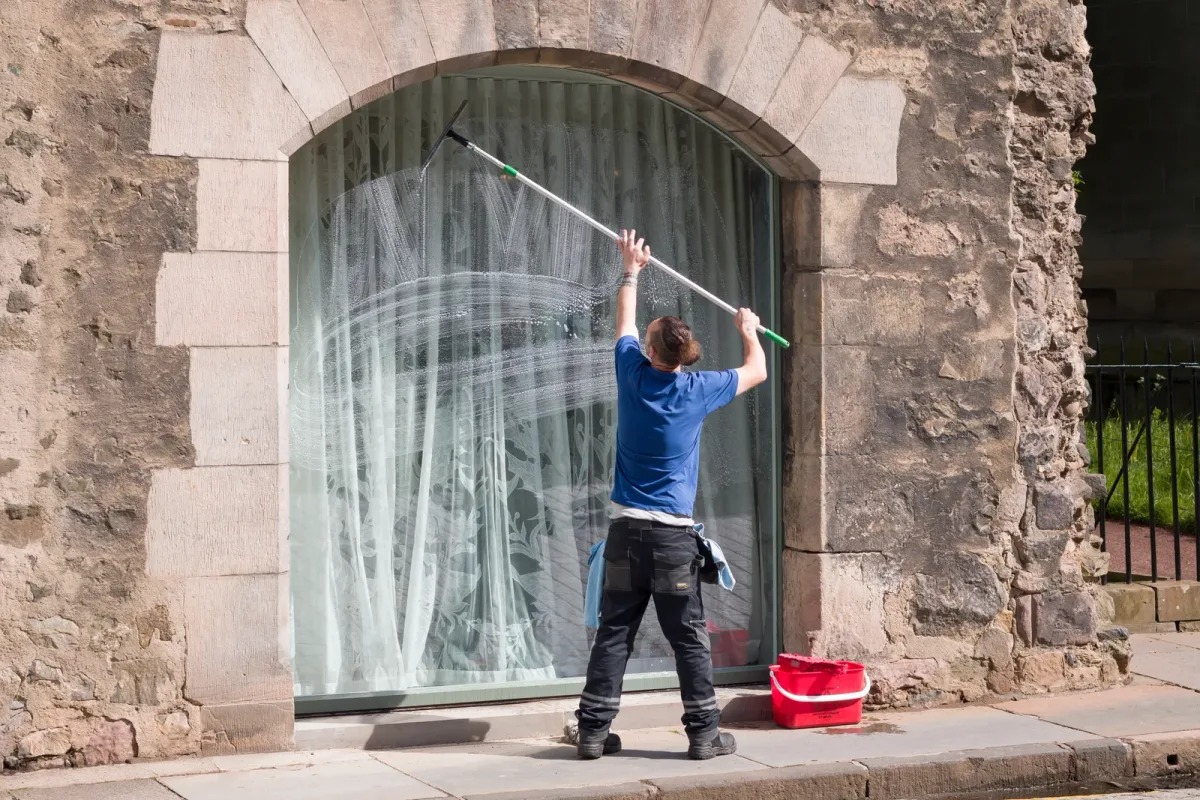
Warning signs: guaranteed rankings; a “home services package” with the same pages a pressure washer or gutter company gets; leads sold to several companies at once; reports that count clicks but never booked jobs or recurring accounts. Another one: no plan for reminders. An agency that only buys you new leads is renting you customers you will have to buy again in six months. Photos matter here as well: an agency that uses stock images of someone squeegeeing a window is telling homeowners nothing about your crew or your work.
Ask for month-to-month terms and for your own dashboard login. Ask what happens to everything if you leave. Simple answers are a good sign.
Six questions for a window cleaning marketing agency
One: “What is the difference between what I do and what a pressure washer does, and how will my pages reflect it?” Two: “How do you get an independent above Fish or Window Gang in the map pack?” Three: “Will residential, storefront, and recurring-plan leads be tracked separately?” Four: “What reminder and review flow turns a first clean into a twice-a-year customer?” Five: “Who owns the Business Profile, the site, and the ad account?” Six: “When should I start so both SEO and ads are working before spring?”
Whoever answers with specifics about tracks, sills, water-fed poles, and route accounts has done this before.
SearchPod builds and runs the whole stack for window cleaning companies, from the website and Google Ads through local SEO, AI search, email, and reviews, with residential, storefront, and recurring work reported separately. Our prices are posted: ad management is 10% of your Google Ads budget, minimum $600 per month, and we add no markup; SEO is $50 a page, with a 10-page monthly starting point; a new site is a one-time build priced from $1,500 to $20,000+; setup is $0; terms are month to month; and the first 30 days carry a you-don't-pay guarantee. The free proposal form is at /get-proposal, and replies go out inside one business day.