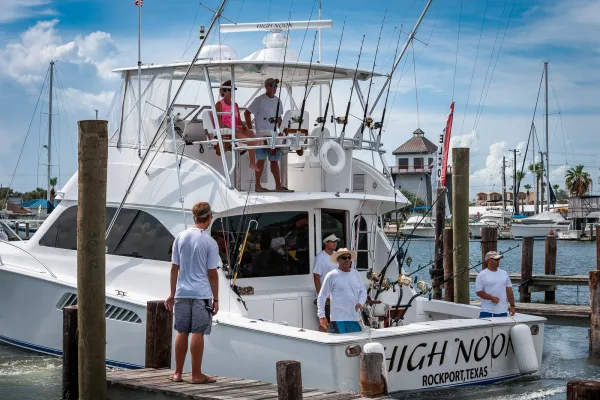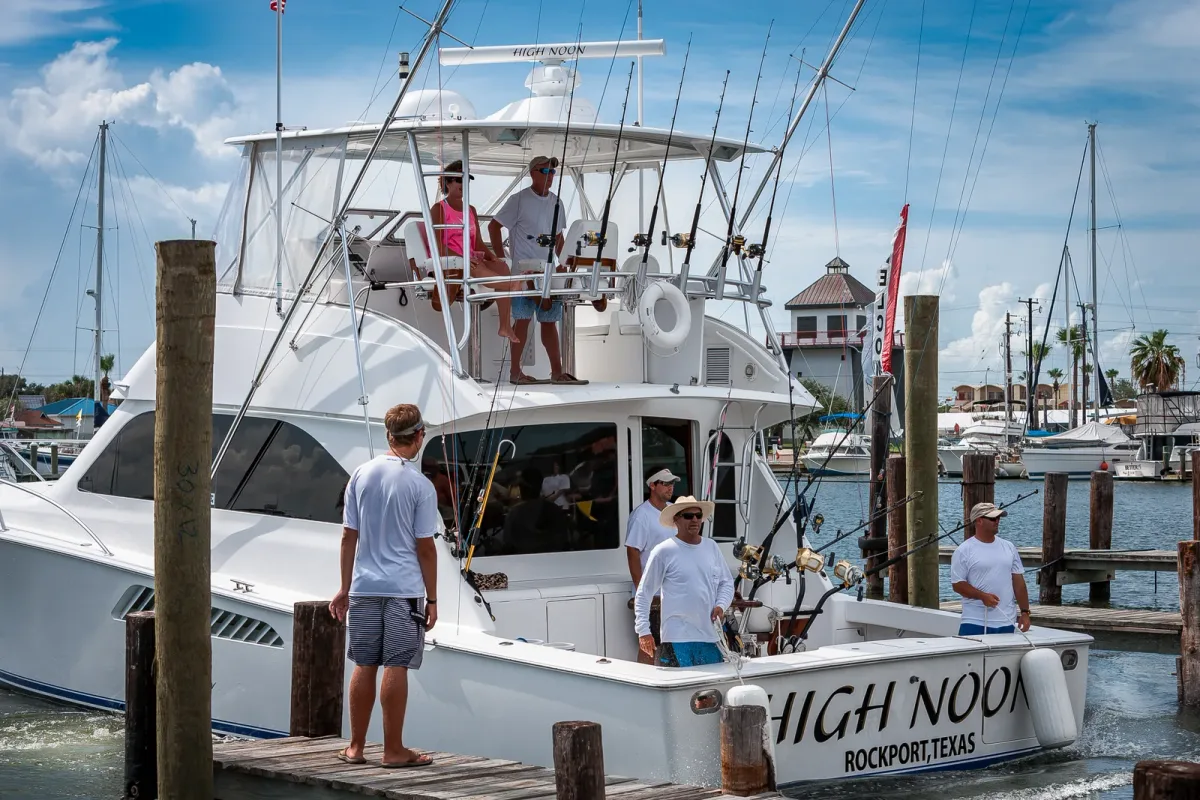
How a fishing charter fills the boat with direct bookings in 2026: live calendar, species pages, destination ads, fresh catch photos, dock-side review asks, and cost per booked trip.
What marketing has to do for a fishing charter
Most of your customers will never see your boat before they pay for it. They book from a hotel room, a kitchen table three states away, or an airport gate. That one fact shapes charter marketing. The customer is choosing a captain sight unseen, and the choice is made on photos, reviews, and how fast you answered.
The buying trigger is a trip. A family books a beach week and someone wants one day on the water. A group of friends plans a bachelor weekend. A company plans a client outing. A regular waits for the season to open on the species they chase, such as red snapper in the Gulf, salmon in the Pacific Northwest or British Columbia, walleye on the Great Lakes, or tarpon in Florida. Seasons, both the fish's and the tourist's, drive nearly all of the demand.
The decision maker is the trip planner, often not the most serious angler in the group. They care about safety, whether kids are welcome, what is included (gear, licenses, bait, cleaning the catch), and whether the boat has a bathroom. The serious angler cares about the species and the captain's recent catches. Your marketing has to answer both.
The referral channel you compete with is the dock. Hotels, marinas, bait shops, and vacation rental hosts recommend captains they know. Booking marketplaces also sit between you and the customer, charging a commission and keeping the angler's contact details. Marketing has to win fresh “near me” searches every season, because most of a season's trips are first-time tourists, and it has to move repeat bookings onto your own calendar.
The funnel, from vacation search to the dock at 6 a.m.
It starts with a search weeks or days before the trip: “fishing charter near me,” “deep sea fishing [city],” “half day fishing charter [town],” “tuna charter,” or a species plus “charter.” The planner opens the map pack, checks reviews and photos, and looks for a price and a calendar. In charters, the next step is a date check. If your site shows real-time availability and takes a deposit online, the booking happens right then. If it says “call for availability” and you are on the water, the booking goes to the next boat.
The booking tools most charters use are FareHarbor, Peek Pro, or Xola, which handle the calendar, the deposit, the waiver, and reminders. They also connect to marketplaces if you choose. A charter that books on its own site pays no commission and keeps the angler's email for next season.
After booking: a confirmation with the meeting spot, what to bring, and the weather policy. A reminder the day before. The trip. The photos. Then the follow-up that turns a tourist into a regular: the catch photos sent to the group, a thank-you, and a note when the season opens next year.
Group and corporate trips run longer. A planner requests a quote for eight people, you send options, and it closes by phone or email over a week or two. Those trips are worth more per day and book earlier, so give them their own path.
The captain's problem in all of this is reach. You are on the water for six or eight hours with no signal. Missed-call text-back and online booking are the two fixes, and they are not optional.
The website that books a trip without a phone call
Photos first. Recent catch photos with dates, real customers, kids holding fish, the boat from the dock, the cabin, the bathroom. A charter site with year-old photos reads as a boat that has not been out.
Pages you need: a trip types page with half-day, full-day, and multi-day options, each with the price, the number of anglers included, what is included, and a “book now” button that opens the live calendar; a page per target species with the season dates for your water; a page per departure marina if you run more than one; a captain page with the license (a USCG captain's license in the US, Transport Canada certification in Canada), years running trips, and the boat's specs; a “first time?” page that answers the planner's questions (seasickness, what to bring, tipping, whether the license is covered, what happens if the weather cancels); a group and corporate page with a quote form; and a reviews page pulled from Google.
Proof that matters: dated catch photos, the review count and rating, the captain's license, the boat's safety gear, and a clear cancellation policy. Anglers worry about two things they cannot see: whether the boat is safe and whether the captain finds fish. Show both.
The booking step should show the real calendar, take a deposit, and send the waiver by email. On mobile, the “book now” button stays fixed at the bottom of the screen. Under it, one line: “Booking direct saves you the marketplace fee.” That line is true and it converts.
Google Ads and local SEO for charter searches
Bid on “fishing charter near me,” “fishing charter [destination],” “deep sea fishing [city],” “inshore fishing charter [town],” “half day fishing charter,” species plus “charter” or “fishing trip,” and “family fishing charter.” Bid by the destination the tourist types, not the marina's town, because planners search “fishing charter Destin” or “Key West fishing charter” before they know where the dock is.
Leave out “license,” “regulations,” “report,” “forecast,” “tides,” and “pier,” which bring people who are fishing on their own. Leave out “boat rental” and “jet ski.” Leave out the marketplace brand names unless you want to pay for people who will book through the marketplace anyway.
Budget follows the season and leads it by a few weeks. Planners book before they arrive. Raise budget four to six weeks before your peak, keep it steady in peak, and shift it toward shoulder-season weekdays when peak books itself.
Local SEO: your Google Business Profile should use the fishing charter category, list each trip type as a service with a price, and carry new photos every week in season. Google rewards fresh photos and so do anglers. Reviews should name the species and the captain. Build a page per species and a page per destination the tourists search. A redfish page and a tuna page should not read like the same page; one is a calm half-day with kids, the other is a long run offshore.
Federal and state or provincial seasons are the local fact that wins trust. A species page that says “red snapper season on our water usually opens in early summer and runs a few weeks, so book early” tells the planner you know the water. Do not quote exact dates unless you update them every year.
Follow-up, texts, and the review ask on the dock
Before the trip: a booking confirmation with the meeting point, a map pin, what to bring, and the weather policy. A text three days out with the forecast and a reminder to bring sunscreen and cash for the tip if that is your custom. A text the night before with the exact time and the captain's cell. This cuts no-shows and the 5 a.m. “where are you” calls.
During the trip: photos. Take them, and take them well, because they are next year's marketing.
After the trip: the same evening, send the photos to the whole group by text with a thank-you and a review link. That is the review ask, and it works because the group is still talking about the day. Ask them to name the species and the captain. Reply to every review within a day.
Then the long game. Thirty days later: a short email with the group's photos again and a note on what is biting next month. Before next season opens: a reminder to the past-angler list that dates are open, with a small direct-booking discount. Before their trip anniversary: a “one year ago you caught this” note. For group planners: a note in January that corporate and bachelor dates fill by spring.
Keep the list in your booking software or a simple email tool, and keep it yours. The marketplace will not send your past anglers back to you.
What to measure and a good first 90 days
Measure booked trips by source (ads, map, direct site, marketplace, phone), cost per booked seat and per booked trip from the paid side, the share of bookings that came direct versus through marketplaces, and repeat bookings from the past-angler list. Watch missed calls weekly and open dates in the shoulder season monthly. The number to care about each month is booked trips from your own site and what each cost, because those are the trips with no commission and a customer you keep.
A good first 90 days depends on when you start. Month one: the site launches with live booking, trip pages, and species pages; the profile is completed with new photos; ads run on the destination and trip-type phrases; missed-call text-back is on. If you start before the season, bookings for the season begin in the first weeks. Month two: the pre-trip and post-trip text sequence runs, the first reviews from ad-booked trips appear, and the species pages start to rank for the smaller terms. Month three: direct bookings begin to outpace marketplace bookings on ad-driven dates, the past-angler list exists, and you can see cost per booked trip by phrase. Judge the quarter on direct bookings and open shoulder-season dates filled, not only on total trips, because peak fills itself.
SearchPod keeps pricing simple and public for charters. Google Ads: 10% of budget, $600 a month minimum, no markup. SEO: $50 a page, ten pages minimum. Sites: one-time builds from $1,500 up to $20,000+. $0 setup, month to month, 30 days guaranteed. Ask for the free proposal; it lands in one business day.