How a pediatric dental practice wins new families in 2026: the AAPD first visit rule, parent reviews, owning kids dentist searches, and the six month recall math.
What marketing actually has to do for a pediatric dental practice
The American Academy of Pediatric Dentistry tells parents to book a child's first visit by age one or the first tooth, whichever comes first, so a lot of searching starts early, often before a parent even knows what a pediatric specialist actually offers over a general dentist. Two other seasonal waves add to that steady flow: back-to-school checkups and the scramble to use up insurance benefits before the year ends.
The decision maker is entirely the parent. The child is the patient, but never the buyer, and marketing copy that leans on generic “kids love us” energy misses the actual sale, which is convincing a nervous parent this practice will be gentle with their child. The channel you're really competing against is the general family dentist down the street, who also shows up for “kids dentist” searches without any pediatric-specific training behind the smile. Owning the pediatric-specific terms, and the gentle-first-visit story, is what separates a specialist practice from that generalist competition.
Practices offering sedation options, or with specific training working with children who have sensory sensitivities or special needs, have a real, differentiated story to tell, since a parent searching for that kind of support is often more anxious than most and more willing to travel further for a practice that clearly knows how to help.
The funnel, stage by stage
It starts with a search, “pediatric dentist near me” or “when should my child first see a dentist,” often prompted by that first-birthday or first-tooth milestone, or by a referral from a pediatrician or another parent. First contact is a call or an online booking, and parents are already comparing reviews at this point, since other parents' words carry more weight here than almost anywhere else in local healthcare.
The niche's own next step is the first visit itself, calibrated specifically to be calm and unrushed for a child who may have never sat in a dental chair. That single visit is the highest-value moment in the entire relationship: a happy parent brings siblings next, returns on the standard six-month recall, and refers other families in their circle. A rocky first visit does the opposite, and a family that leaves anxious rarely comes back to give the practice a second try.
Most pediatric practices also have a natural transition point, usually somewhere in the early teenage years, when a patient moves on to a general dentist, and a practice that manages that handoff gracefully, with a warm referral rather than an abrupt goodbye, keeps its reputation intact with a family that will likely have younger children still coming in for years.
Sibling visits often get scheduled back to back once a family is comfortable, and a practice that makes that double-booking easy, rather than making a parent coordinate two separate appointments on two separate days, removes a small but real source of friction for a busy household.
The website that converts
The single page that does the most work on a pediatric dental site is a clear what-to-expect page, walking a nervous parent through exactly what happens during a first visit, since that's the question keeping them from booking in the first place. Bright, genuinely kid-friendly photos of the actual office, not stock imagery, tell a parent this is a place built for a child, not a scaled-down adult clinic.
Insurance information needs to be easy to find, since a parent juggling coverage questions alongside a nervous child doesn't want to call just to ask what's covered. Online scheduling and real reviews written by other parents, not generic testimonials, round out a page built to move a hesitant parent to book rather than keep researching.
Photos and short bios of the actual dentists and hygienists, not just the practice as a brand, help a parent picture exactly who will be working with their child, which matters more here than in most healthcare marketing since trust is being extended on behalf of someone who can't fully advocate for themselves yet.
Google Ads and local SEO for a pediatric dental practice
Bid on “pediatric dentist near me” and the informational search “when should my child first see a dentist,” which catches parents earlier in their decision than a pure near-me search would. The harder job is owning the broader “kids dentist near me” query too, since general family dentists chase that same phrase without the training a true pediatric specialist has, and losing that search to a generalist means losing a family who would have been better served by a specialist.
Claim your Google Business Profile as a pediatric dentist specifically, not a general dental category, and stock it with real photos of your space and your team. Ramp ad spend ahead of back-to-school season and again toward year-end when insurance benefits are about to expire, since both windows reliably bring a wave of parents finally ready to book.
Because so many new parents research everything about their child's care well before a symptom or milestone forces the issue, showing up consistently rather than only during a spike in demand helps a practice become a familiar name by the time that first-birthday visit actually gets scheduled.
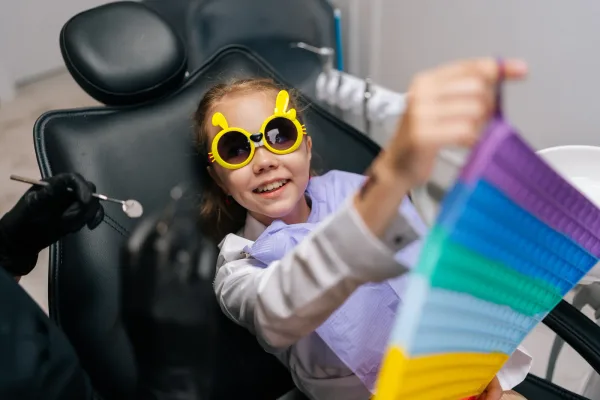
Pediatric-specific ad copy that shows an actual child in a comfortable, non-clinical setting tends to reassure a scrolling parent faster than a photo of equipment or a sterile-looking office ever could.
Follow-up, email and text, and when to ask for a review
The six-month recall reminder is the single most valuable piece of follow-up in this business, because a family that isn't reminded quietly drifts, and a lapsed recall is much harder to win back than a fresh new patient is to book in the first place. Seasonal nudges timed to back-to-school and the end-of-year insurance window bring in families who've been meaning to book but needed a reason to act now.
Ask for the review right after a smooth, calm first visit, while the parent's relief that their child didn't cry through the whole appointment is still fresh. Since other parents lean so heavily on reviews written by parents like them, a steady stream of specific, honest reviews does more to fill your new-patient schedule than almost any other single tactic.
When an existing patient family welcomes a new sibling, a simple note letting them know you're ready whenever they're ready for that child's first visit keeps a proven, trusted relationship from having to restart the research process all over again.
What to measure, and what a good first 90 days looks like
Track cost per new family booked rather than cost per lead, since one won family is worth siblings, years of six-month recall visits, and referrals, not just a single appointment. Watch your six-month recall return rate closely too, because that number quietly reveals whether families are actually coming back or drifting to whoever they see next in their feed.
A good first 90 days looks like a finished what-to-expect page, a fully built-out Google Business Profile under the pediatric dentist category, and a review-request habit running after every good first visit. By the time back-to-school season arrives, your recall reminders should already be catching families before they forget, and your local search visibility should be pulling in new families who typed “pediatric dentist near me” instead of settling for the family dentist down the street. SearchPod keeps your website, Google Ads, and local SEO under one roof rather than splitting them across vendors, priced at 10% of your ad spend, a $600 floor each month, with nothing marked up, and a free proposal shows up within one business day.
Break new-patient volume out by month so the back-to-school and year-end insurance windows show up clearly in the data, since a practice that can see those patterns ahead of time can staff and schedule for them instead of being caught off guard by a sudden rush.
Watch sibling conversion specifically too, the share of new families who bring a second child in within their first year, since that number is a clean proxy for how much whole-family value a given new patient is actually generating for the practice.