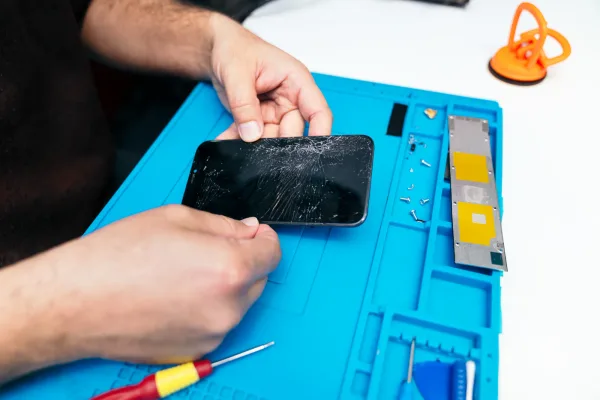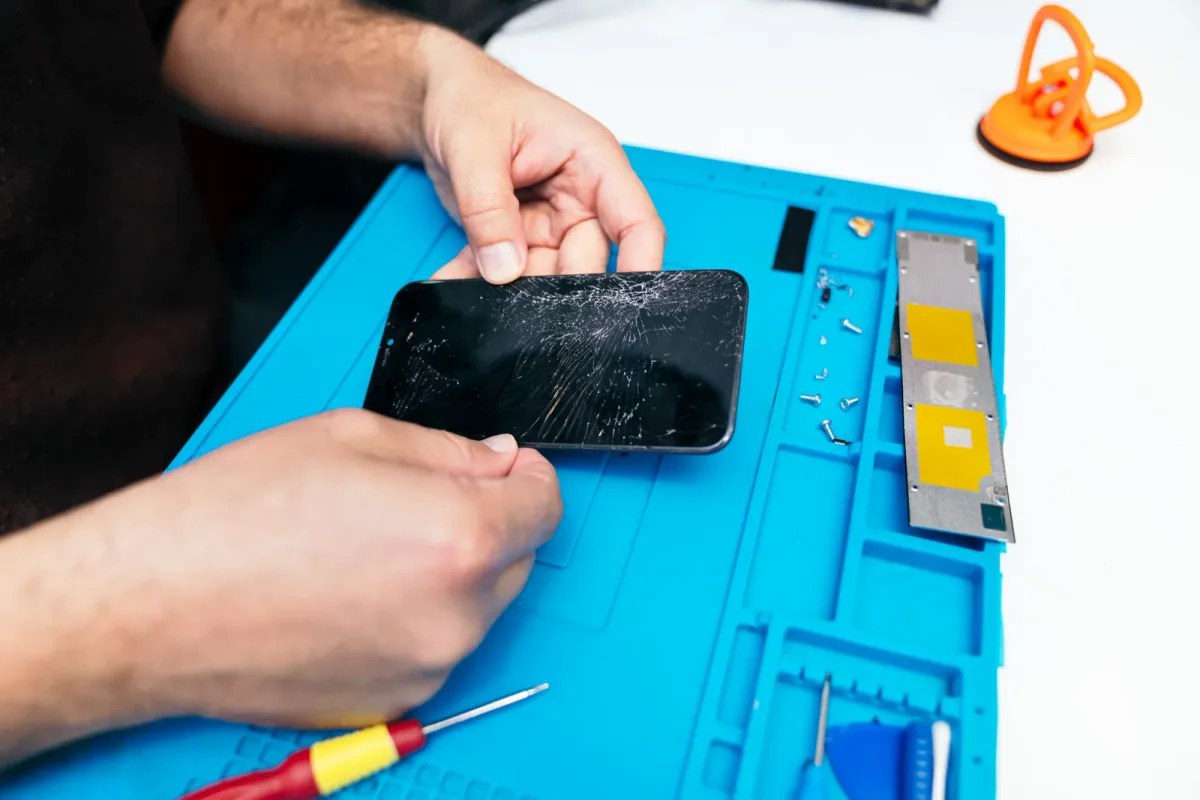
How a phone repair shop wins the cracked-screen search against franchises and mall kiosks: brand pages, map pack, ads by device, text follow-up, and cost per booked repair.
What marketing has to do for a phone repair shop
The buying trigger in phone repair is an accident. A phone slips off a car roof, a kid drops a tablet, a battery starts dying by lunch. The customer is not planning ahead. They are searching from the broken device, often one-handed, standing somewhere between two errands. That shapes everything. Your marketing has ten seconds to answer three questions: can you fix my exact phone, what will it cost, and how soon.
The decision maker is the person holding the phone, but the real comparison they run is not shop versus shop. It is you versus the carrier's insurance deductible or an AppleCare+ claim. If they have coverage, they weigh your price and speed against the deductible and a mail-in wait. If they don't have coverage, they weigh you against the mall kiosk and against buying a new phone. A shop that explains that choice on the page wins more calls than one that only lists services.
The referral channel you compete with is the carrier store. People walk into their carrier first because that is where they bought the phone. The carrier pushes an upgrade or an insurance claim. The second referral channel is word of mouth inside a household: the teenager's screen repair becomes the parent's battery swap next year. Marketing has to catch the person before they reach the carrier store, and follow-up has to keep the household coming back.
Franchises like uBreakiFix, CPR Cell Phone Repair, and Batteries Plus buy the same searches you want with bigger budgets and many locations. You will not outbid them. You can out-rank them in the map pack and out-review them in your neighborhood. That is the whole plan.
The funnel, from cracked screen to repeat household
It starts with a search on the broken phone: “iphone screen repair near me,” “samsung screen repair near me,” “phone battery replacement near me,” or a model name plus “repair.” The customer taps the map pack or the first ad, sees a price cue and a phone number, and calls or taps to get directions. The next step in this niche is a quote by device, then a walk-in or a same-day appointment. Many shops now take bookings through their repair shop software, such as RepairDesk or RepairShopr, which also runs the ticket, the parts inventory, and the invoice. The repair itself takes an hour or two for a screen or battery, longer for water damage or a charging port.
Then comes the pickup, the payment, and the moment most shops waste. The customer walks out with a working phone and no reason to remember your name. A text the next day asking how the phone feels, and a note in the ticket about the other devices in the house, turns one repair into the household's shop.
The second funnel is trade-in. Every device you repair is a device the customer will one day replace. If you buy phones or take trade-ins, the follow-up text in launch season is your reminder that you pay more than the carrier kiosk.
Speed inside the funnel matters more here than in most trades. A caller who reaches voicemail hangs up and tries the next name. Missed-call text-back is not optional. Neither is a booking link that works on a cracked screen with half the touch area dead.
The website that converts on a broken screen
Build the site for one-handed use on a damaged display. Big tap targets. A phone number and a “get a quote” button pinned to the bottom of the screen. Pages that load fast on cellular, because the customer may be on a parking lot signal. No pop-ups.
The pages that matter are brand and model pages. One page for iPhone repair, one for Samsung Galaxy, one for Google Pixel, one for iPad, and then model-level pages for the devices you fix most. Each page lists the repairs you do for that device, a price or a price range, the time it takes, and whether you use OEM or quality aftermarket parts. A shopper who searched their exact model should land on a page about their exact model, not a menu.
A price cue is the proof that matters most. Franchises hide prices behind “get a quote.” An independent shop that shows a clear starting price for a screen and a battery on each model page wins the call from the person comparing you to a deductible. Add a short line under the price about how long that repair usually takes and whether they can wait for it.
Other proof: your Google rating pulled onto the page, photos of the bench and the counter, a warranty statement in plain words, and a short note on water damage that tells people to power off and skip the rice. That note earns trust and brings in a job that is often larger than a screen.
The form should ask for device, problem, and phone number. Nothing else. Send an instant confirmation text with your address and hours.
Google Ads, Local Services Ads, and the map pack
Split ad campaigns by brand. An iPhone screen campaign, a Samsung campaign, a battery campaign, a water damage campaign. Each sends the click to the matching device page. Bid on “near me” phrases, model names plus “screen repair,” and “same day phone repair.” Leave out “diy,” “kit,” “how to,” and “tutorial,” which pull in people who want to fix it themselves. Leave out “unlock” unless you offer carrier unlocking, and know that carrier unlock and IMEI questions bring a lot of calls that never become tickets.
Local Services Ads are worth testing in markets where Google offers them for phone repair, because they show above the search ads with your rating and charge per lead rather than per click. Check that the category exists in your area before you plan around it.
The map pack is your main weapon against the franchises. Your Google Business Profile should use the mobile phone repair shop category, list every repair as a service with a price, and carry fresh photos of the shop front, the bench, and finished repairs. Post a short update each week. Reviews should mention the device: a review that says “fixed my Galaxy screen in 40 minutes” helps you rank for that phone.
Seasonality drives the budget. Raise bids in the fall when new iPhones and Galaxy phones launch and brand-new devices meet their first drop. Raise them again in back-to-school for kids' phones and tablets. In quiet months, shift budget to battery replacement, which people delay and then search for on a cold morning when the phone dies at lunch.
Follow-up, texts, and reviews after the ticket closes
The sequence between the first call and the repair is short, so make it tight. Instant text-back on a missed call with a quote link. A confirmation when the appointment is booked. A text when the phone is ready. Those three messages cover most of the drop-off.
After pickup is where the household value builds. Day one: a text asking if everything works and offering a free check if it doesn't. Day thirty: a short email on protecting the new screen, with a case offer if you sell them. Six months: a battery health reminder for the models where batteries fade. Launch season: a note that you buy old phones and repair the new ones. Keep a field in your ticket system for other devices in the home, and use it.
Ask for the review at pickup, in person, and then send the link by text within the hour. The customer is holding a working phone and feeling relief. That is the best moment you will get. Ask them to name the device and the repair, because those words help other searchers find you. Reply to every review, good or bad, within a day.
A word on tone. This is a small-ticket job for a stressed person. Short, friendly, and clear beats clever. Nobody wants a newsletter from a phone repair shop. They want to know you exist the next time something breaks.
What to measure and what a good first 90 days looks like
Measure cost per booked repair, not cost per click, and break it out by device brand. iPhone jobs and Android jobs cost different amounts to win and pay different margins. Track calls, texts, form fills, and walk-ins that mention the ad or the map listing. Watch the missed call count every week, because each missed call is a job that went to the next shop. Watch repeat rate by household over six months, and watch trade-in volume in launch season.
The monthly number to care about is booked repairs from search, split by brand, and what each one cost.
A good first 90 days: in month one the brand and model pages go live, the profile gets its services and prices, and ads run on iPhone and Samsung screens with tight negatives. Calls from ads start in the first two weeks. Missed-call text-back goes in on day one. In month two you add battery and water damage campaigns, reviews begin to mention devices, and the map ranking improves for the model names. In month three the first repeat customers come back from the follow-up texts, the fall launch or back-to-school push runs if the calendar lines up, and you can see cost per booked repair by brand well enough to move budget.
If you want one team to build this, SearchPod does it for repair shops at public prices. Google Ads management is 10% of what you spend, $600 a month at minimum, with your budget going to Google untouched. SEO pages are $50 each, ten pages a month to start. A new site is a one-time package, $1,500 to $20,000+ depending on size. There is no setup fee and no contract, and a 30-day guarantee means you don't pay if the first month disappoints. Ask for a free proposal and you will have numbers within one business day.