Insurtech SaaS Marketing Agency Turn RFP shortlists into bound, renewing carriers.
One team runs your demo pages, the Google and LinkedIn accounts, the SEO content, and your AI-search presence.
- Search and LinkedIn targeting built around the actual titles on an insurtech buying committee — Chief Underwriting Officer, actuarial lead, IT/security, and MGA program manager
- A demo page that opens with your security posture and state-filing readiness, not an appendix nobody scrolls to
- Attribution that holds up across a year-long RFP, so the CAC number in your board deck is one you can actually defend
Prefer to talk? (519) 930-8818 — a strategist, not a sales script.

-
Found your platform during RFP research
Underwriting or IT ran the search
-
Requested a demo & sandbox access
Committee review began
-
Bound as a live carrier
In-force and renewing
One team, every stage of the RFP cycle.
- Website
- Paid Acquisition
- SEO & Content
- AI Search
- Nurture Email
- Reviews
- what underwriting checks before a demo gets booked
- SOC 2 & state filings what underwriting checks before a demo gets booked Security posture, audit history, and rate-filing readiness sit on the site and in the deck from day one, instead of surfacing only after IT sends a questionnaire.
- sign off on a typical policy-admin or rating-engine deal
- 3–4 reviewers sign off on a typical policy-admin or rating-engine deal Underwriting checks fit, IT checks the API and data model, and compliance checks the audit trail — each gets its own content and its own follow-up, not one shared drip.
- running the site, the ad accounts, SEO, AIO & nurture
- One team running the site, the ad accounts, SEO, AIO & nurture The same people who built your demo pages also run the campaigns and write the follow-up, so a lead never sits in the gap between an agency and a freelance contractor.
Results vary with your platform's complexity, deal size, and how many other vendors are competing for the same RFP slot. We can't promise ad-platform approval, a specific keyword ranking, or a faster underwriting review.
Why Growth Stalls
Underwriting and IT don't shortlist software they've never heard of.
Good rating logic and clean APIs aren't enough on their own.
-
A demo request needs proof, not a feature list
Underwriting evaluators skim past marketing copy and go straight to security and compliance.
-
A rating-engine click costs real money before you know if it worked
Terms like “policy administration system” and “rating engine for MGAs” aren't cheap, and a single carrier deal can run a full year from first click through underwriting, IT, and a state-filing review before it signs.
-
A signature starts the parallel run, not the revenue
A signed carrier still has to run your platform alongside its existing policy admin core for months, across one or two lines of business, before a single cutover happens.
-
Your name never makes it onto the RFP
A Chief Underwriting Officer or IT lead usually builds a shortlist from Celent or Novarica research, G2, and AI-assistant answers weeks before procurement issues a formal RFP.
Your growth engine
One RFP, five channels pulling the same underwriting committee toward a signed carrier.
-
Website & CRO
Demo & sandbox requests
-
Paid Acquisition
Google Search & LinkedIn
-
SEO & Content
Wins RFP-research queries
-
AI Search (GEO)
Named in AI-assistant answers
-
Nurture Email
Keeps the committee in sync
More demos, more RFP invites, more bound carriers
Paid Acquisition (PPC)
Search & LinkedIn ads for policy admin and rating platforms. Get in front of the committee before the RFP is even drafted.
Campaigns built around the terms underwriting and IT actually search.
- Bids built around quote-to-bind and rating-engine terms — not a generic “insurtech software” keyword list
- Demo pages that front-load the SOC 2 and integration answers an IT reviewer needs before a first call
- Every opportunity tracked from that first click through underwriting sign-off to a bound account
Sponsored
yourinsurtechco.com
Policy Administration Built for Carriers & MGAs
Quote, rate, bind, and manage every line of business on one modern platform. Built to plug into your existing core and pass a carrier security review. Request early access to a live sandbox.
- Pricing
- Book a Demo
- API Docs
Request a demo
competitor-insurtech.com
Cloud Policy Admin Platform — See a Demo
-
Coverwise
You4.8 4.8 out of 5 stars, · 210 reviews
“We used to quote a new line of business in days — now it's minutes, and the actuaries trust the numbers.”
-
UnderwriteIQ
4.7 4.7 out of 5 stars, · 180 reviews
“Underwriters actually use the rating engine instead of routing around it in a spreadsheet.”
-
Policytrail
4.9 4.9 out of 5 stars, · 260 reviews
“We ran a full renewal cycle in parallel with our legacy core before cutting over — didn't lose a single in-force policy.”
Organic & Marketplace Visibility
Where an RFP shortlist actually gets built. Be there before procurement issues the RFP.
Underwriting and IT research policy admin and rating platforms on Google, inside Celent and Novarica coverage, and now inside whatever an AI assistant answers when someone asks what to shortlist.
- Rankings for “[legacy core] alternatives” and rating-engine comparison searches
- Line-of-business pages written to answer what an underwriting evaluator actually checks first
- A G2 profile plus a real presence in the Celent and Novarica research carriers read
High-Intent Visibility
What underwriting and IT actually type into Google before they call you.
Long before a carrier issues a formal RFP, someone on the underwriting or innovation team is already comparing rating engines, pricing out what a legacy-core replacement actually costs, and scoping a new program on their own.
Ranking above the legacy incumbents on Google & Bing
The terms an underwriting or IT lead types in while actively comparing platforms.
- best policy administration system
- insurtech software for carriers
- underwriting and rating engine software
- embedded insurance API
- insurtech platform pricing
- alternatives to [competitor]
- digital MGA platform
- insurtech software comparison
- telematics insurance software
- [competitor] vs [competitor]
- insurtech platform demo
- core system replacement for insurance carriers
Google Search · Bing Search
What ChatGPT and Gemini recommend
When a buyer asks an AI assistant which platform fits their lines of business, we're working to make sure your name comes up in the answer.
- “What's the best policy administration system for a mid-size carrier?”
- “Recommend an underwriting platform for a new MGA.”
- “What are the best alternatives to [competitor]?”
- “Which insurtech platform is easiest to integrate with a legacy core system?”
- “What's the best embedded insurance API for a fintech app?”
Google Gemini · ChatGPT · Claude (Anthropic) · Google AI Overviews · Perplexity
This list is illustrative — your real keyword and prompt set gets scoped to your specific lines of business, named competitors, and buyer titles. Both channels take months to build momentum, then keep paying off after that.
Nurture Email
The follow-up that keeps three departments moving together. Three reviewers, three different clocks — the follow-up has to run on all of them at once.
An underwriting lead, an IT/security reviewer, and a compliance officer almost never wrap up their piece of the evaluation in the same week.
- Three parallel threads on every deal — one for underwriting, one for IT/security, one for compliance
- Automatic re-engagement when a shortlist review goes quiet for a few weeks
- Go-live sequences that carry a signed carrier through its parallel run to cutover
-
Your demo recap — security posture & filing docs attached
Everything from the call, plus the sample rate filing and security documentation your evaluator asked for.
Follow-up -
How one program went from quote to bind in weeks
A short case a Chief Underwriting Officer will actually read end to end.
Nurture -
Ready to map the parallel-run schedule?
A quick call on pricing, your cutover timeline, and a realistic go-live date.
Close
Proof, not promises
Track every demo, every RFP stage, and every dollar spent.
A single dashboard ties your search, ad, and content spend to demos, bound carriers, and in-force premium.
Pipeline & Demos Every demo tagged the instant it lands, source and all
The moment a demo request or sandbox sign-up comes in, it's tagged by source and dropped straight into your CRM.
Know which search actually built the RFP
See whether a given demo started with a rating-engine search, a LinkedIn ad, or an analyst write-up.
One pipeline your underwriting team can see too
Demos and opportunities sync into HubSpot or Salesforce automatically, so the people running the deal internally are looking at the same numbers marketing is.
CAC & LTV The real, fully-loaded cost of a bound account
Every carrier that binds gets traced back to whichever campaign, page, or search first brought them in.
What a bound carrier actually costs you
Ad spend, demos, and signed contracts connect end to end, so your current cost per bound carrier.
Which channel brings carriers that stick
Google, LinkedIn, and organic get tracked separately, so you can see which one actually produces the carriers who renew year after year, not just the ones who take a first demo.
Integration & Go-Live Close the gap between signature and live premium
A signed contract doesn't start the revenue clock — it starts the parallel-run clock.
Where every signed deal actually sits
See how many carriers are mid parallel-run, in cutover, or fully bound — and which stage is where most deals get stuck.
From signature to first billed premium
Every signed deal gets followed all the way to a live, billing account, so you can tell which campaigns and which onboarding steps actually produce in-force premium, not just a signature on a contract.
Our work
Six live sample sites. Yours gets a design all its own.
Samples from other niches
-
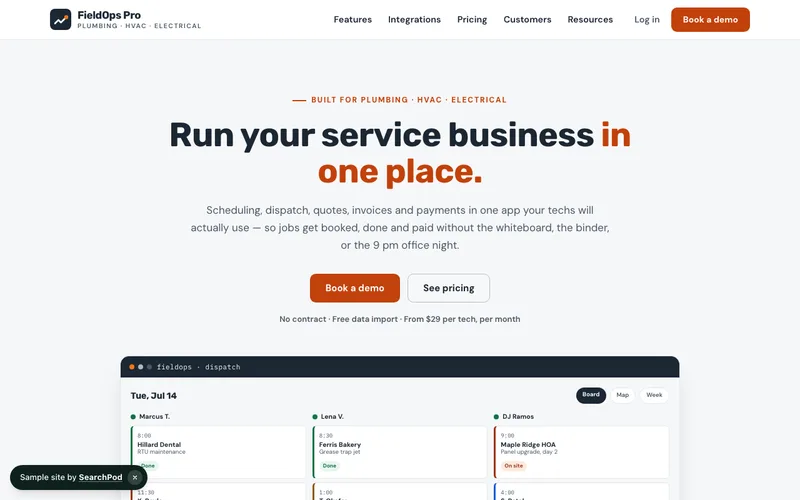
FieldOps Pro
Run your service business in one place · SaaS
Open the live demo → -
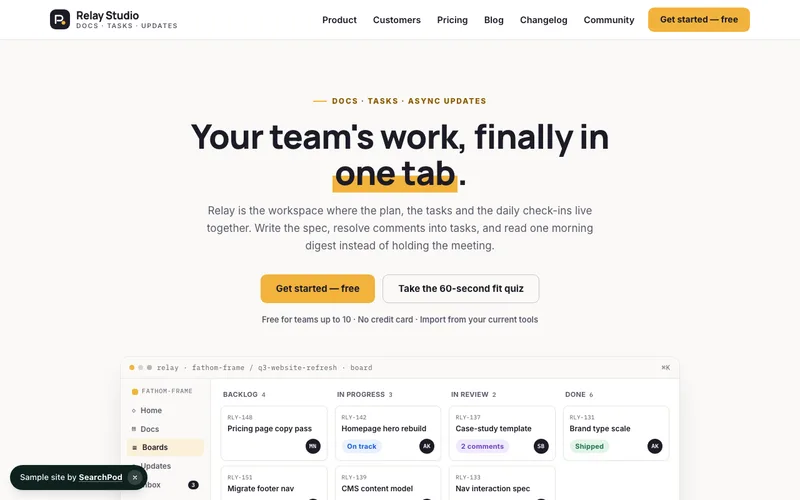
Relay Studio
Where teams ship faster · SaaS
Open the live demo → -
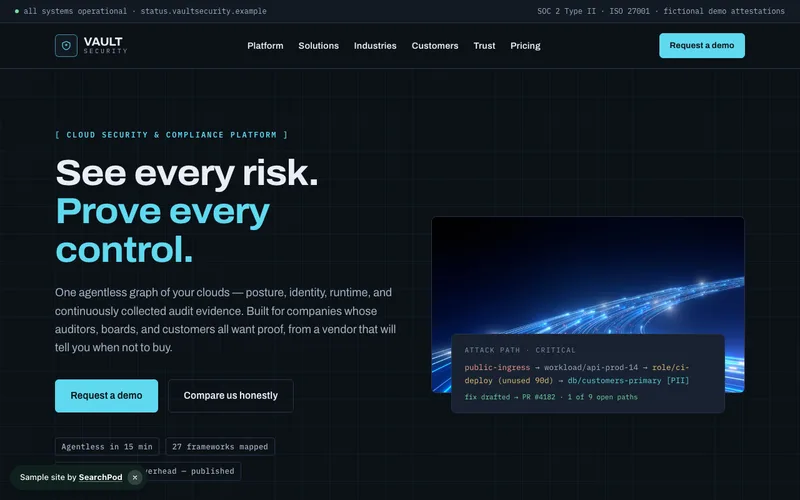
Vault Security
Enterprise-grade security, SOC 2 ready · SaaS
Open the live demo → -
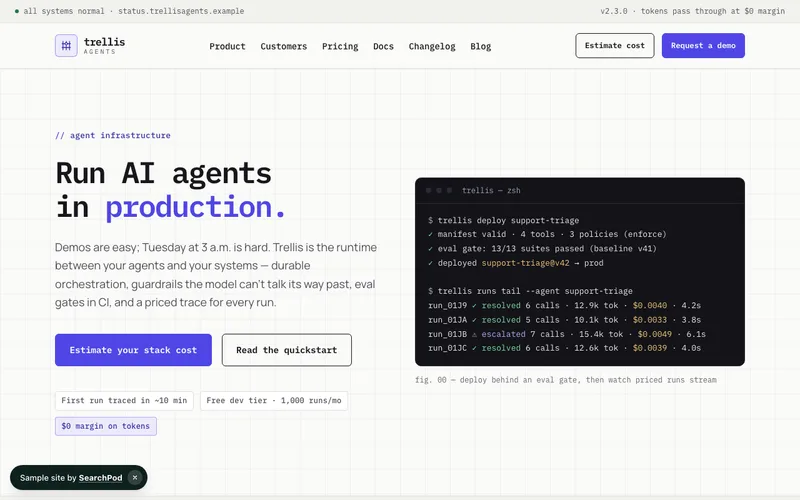
Trellis Agents
Run AI agents in production · SaaS
Open the live demo → -
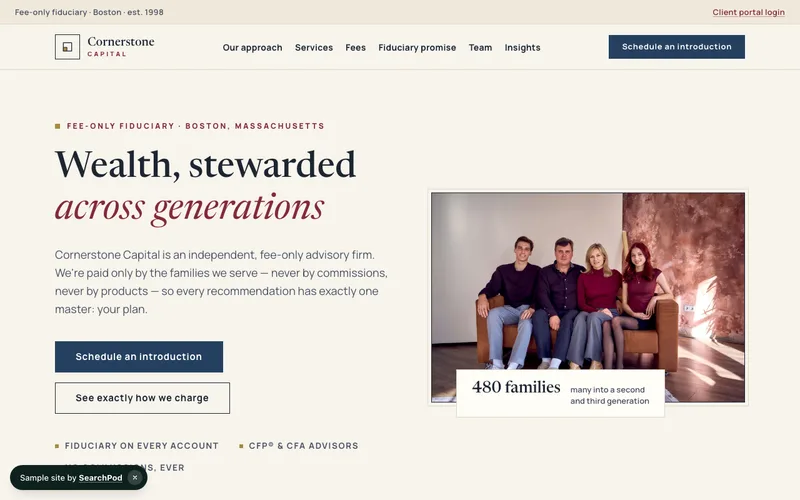
Cornerstone Capital
Fiduciary planning across generations · Finance
Open the live demo → -
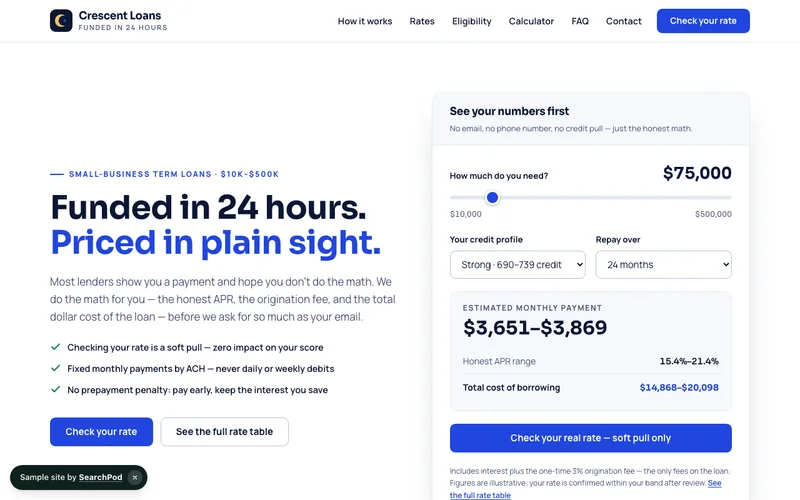
Crescent Loans
Funded in 24 hours · Finance
Open the live demo →
Straight answers
Marketing for insurtech saas, without the mystery
Nothing is quoted only after a sales call — every rate is posted at /pricing. Google Ads management is 10% of whatever you set as your monthly budget, with a $600/month floor, and we never mark up what you spend with Google. SEO runs $50 per page per month, 10-page minimum. A new site is one of eight fixed one-time packages, $1,500 to $20,000+, scoped to what your platform actually needs (see /websites). No setup fee, month-to-month contracts, and a 30-day guarantee means you owe nothing if it isn't producing results. Tell us about your product and your typical buying committee and we'll turn around a scoped, line-item proposal within one business day.
If your only pipeline right now is conference-floor handshakes and warm intros from your board, or CAC keeps drifting up on deals that already take the better part of a year to close, that's usually the sign an agency pays for itself. We take over the site, the ad accounts, and the RFP-cycle attribution, freeing your underwriting and product leads to work the deal instead of chasing campaign reports. If demos are already coming in at a healthy rate, there's no reason to add us.
Everything between a search query and a bound account. We build the demo-request pages and sandbox access flow, run the Google and LinkedIn ad accounts aimed at underwriting and IT titles, write the comparison and category content that shows up when a carrier is assembling its RFP shortlist, and keep every demo tagged from first click through to a live, renewing account.
Ask three things: do they measure qualified demos instead of raw traffic, can they trace a single deal across a year-long, multi-department RFP through to a real CAC number, and do they grasp that underwriting, IT/security, and compliance each need separate proof before any of them will sign off. And make sure your website, ad accounts, and analytics live in accounts your company owns, never the agency's.
Paid campaigns usually start producing demo requests within the first few weeks of launch. Organic is slower out of the gate — expect 3 to 4 months before category and rating-engine rankings are pulling real traffic, and 6 to 8 months before organic demos become a repeatable line on the pipeline report. Because a policy-admin or rating deal has to clear underwriting, IT, and a compliance review before it signs, expect the full pipeline to build across a renewal cycle rather than in one burst — we track every stage of it from first click to a live, billing carrier.
One roof, not five vendors — the same people building your demo pages also run the ad accounts, write the SEO content, and manage your AI-search presence, so an underwriting lead's demo request never falls through a handoff. We're judged on signed, bound carriers, not sessions or impressions, every rate we charge is public, and your site, ad accounts, and carrier data sit in accounts your company controls from the first day.
Every rate is posted at /pricing before you ever talk to us — there's no version that only appears after a call. What shifts from deal to deal is scope: how many lines of business your platform supports, how technical your buying committee is, and how long your typical RFP-to-signature cycle runs. Give us those specifics and we'll build a scoped, line-item quote within a business day.
Bound carriers, not clicks or impressions. Every page on the site exists to earn a demo request or a sandbox sign-up, and each one is tagged to the search term, ad, or page that produced it — so you can see exactly which channel is paying for itself across a sales cycle that can run a full year or longer.
Yes, though the path differs by buyer. Carrier and MGA deals run sales-led, with demo requests routed through a full committee review across underwriting, IT, and compliance. Embedded-insurance vendors selling into other software companies get a developer-facing funnel instead, built around API docs, sandbox access, and integration guides rather than a traditional demo form. Most insurtech vendors carry some blend of both buyer types, so we scope the funnel to whichever one is actually knocking on your door.
We're not your compliance or actuarial team, but we know that integration depth, data-migration support, and a clean path off a carrier's legacy core system are what an IT evaluator is actually screening for — so that information gets surfaced clearly across your site and sales materials instead of buried in a spec sheet. Any specific technical or regulatory claim still has to come from and be verified by your own product team.
Yes. Every account — the website, brand assets, ad platforms, analytics, and your policy and carrier records — lives under your company's ownership, not ours. Nothing is licensed back to you, so walking away later doesn't cost you your own site or your own data.
Yes. Demo and sandbox-request data feeds directly into whichever system your sales and underwriting teams already live in — most often HubSpot or Salesforce — so a lead's source stays attached to it all the way from that first search click to a signed, bound account.
Two to four weeks covers most insurtech builds, start to launch. What actually sets the pace is how quickly your team can turn around the product narrative, your SOC 2 and compliance documentation, and a round of review comments — we'll lay out a real, dated timeline before any work begins.
Free Proposal
Let's get an underwriting call on the calendar.
Give us the shape of your platform, your lines of business, and where the pipeline is getting stuck — we'll map out the pages, campaigns, and content it takes, with real pricing attached from the start.
- A scoped plan built off our public rate card — no black-box quote
- A free look at exactly where underwriting and IT leads are dropping out of your funnel
- A real answer from someone who actually works your account, inside one business day
Month-to-month. You own your website, your ad accounts, and your data — always. Or call (519) 930-8818.
Request your free proposal.
Give us a picture of your platform, your buyers, and where the demo pipeline is leaking. We'll come back with a scoped plan, real pricing, and a free look at your current site and funnel — inside one business day, no strings attached.