Developer Tools Marketing Agency Turn “how do I integrate” searches into signups & shipped integrations.
We manage your site, your ad accounts, your SEO, your AI-search presence, and your lifecycle email as one connected system.
- Ads that show up when a developer is already reading your pricing page or a competitor's
- A homepage that links straight to a runnable code sample, not a features list
- A dashboard that shows exactly which channel a paying account first came from
Prefer to talk? (519) 930-8818 — a strategist, not a sales script.

-
Found your docs in search
High-intent “how to integrate” query
-
Generated a sandbox API key
Started testing the integration
-
Upgraded to a paid plan
Became a customer
One team, every channel, one dashboard.
- Website
- Paid Acquisition
- Technical SEO
- AI Search
- Lifecycle Email
- Community Trust
- not signups — a real production API call
- Activation not signups — a real production API call We follow every signup from key generation to their first successful request in production, so you can see where your funnel actually loses developers, not just where it gets clicks.
- how engineers actually evaluate an API
- Docs-first how engineers actually evaluate an API Long before anyone reads your homepage, a developer is running your curl example, checking your SDK's GitHub stars, and skimming your changelog — that's the evaluation we build for.
- so your site, ads, SEO, AIO, and email actually agree with each other
- 1 partner so your site, ads, SEO, AIO, and email actually agree with each other Your site, ad account, SEO, and email all report to the same team instead of five agencies emailing each other in circles while your release calendar doesn't wait.
Every API, pricing model, and integration funnel is different — results depend on your category, your competitors, and how crowded your specific market is.
Why Growth Stalls
Why a solid API still doesn't fill your signup funnel.
A well-documented API doesn't market itself.
-
Engineers bounce off your quickstart before they ever generate a key
Your quickstart links to a features page instead of a runnable curl example or a live Postman collection.
-
Your ad spend chases keywords that never become a signed contract
Broad terms like “api platform” pull in browsers who bounce at the pricing page, while a competitor's changelog and “[you] vs [them]” page quietly wins the buyers who were already comparing you two.
-
A sandbox key gets issued and the integration never ships
Generating an API key takes thirty seconds; shipping it to production takes a sprint.
-
Your GitHub README and Stack Overflow tag are working against you
Engineers vet a tool by skimming your README, checking when the last commit landed, and searching your library name on Stack Overflow before they read a single word of your marketing site.
Your growth engine
More signups, more shipped integrations, more paying customers — from five channels reporting to one number.
-
Website & Docs CRO
Turns docs traffic into signups
-
Paid Acquisition
Google Ads + dev communities
-
Technical SEO
Owns your comparison searches
-
AI Search (GEO)
Shows up when AI tools answer
-
Lifecycle Email
Carries signups to their first paid month
More signups, more shipped integrations, more paying customers
Paid Acquisition (PPC)
Paid acquisition for developer tools. Show up while they're still comparing options.
We run Google campaigns around the specific searches a backend engineer types when they're picking an API.
- Keywords built around pricing, integration, and “vs” searches, not broad guesses
- Landing pages that lead with a code sample instead of a hero image
- A dashboard that ties every paid signup to what it actually cost you
Sponsored
yourapi.dev
The Payments API Developers Actually Ship With
Integrate in an afternoon. No credit card needed for the sandbox — read the docs, generate a key, and get a real response back in minutes.
- Docs
- Pricing
- API Reference
Grab a free API key
competitor-api.dev
Modern Payments Infrastructure — Start Free
-
Ledger Rails
You4.8 4.8 out of 5 stars, · 540 reviews
“Had a working charge in our sandbox in under ten minutes.”
-
Hooklane
4.6 4.6 out of 5 stars, · 295 reviews
“Their webhook retries saved us from building our own queue.”
-
Keyforge API
4.9 4.9 out of 5 stars, · 710 reviews
“Migrated off our old provider in a single sprint.”
Organic & Technical Visibility
Organic & technical visibility. Show up before they open a competitor's tab.
By the time a developer fills out your contact form, they've already read your docs, skimmed your GitHub repo, and typed your name into a search bar next to a competitor's.
- Rankings for the integration tutorials and “alternatives to” searches your buyers actually run
- Migration guides that catch developers moving off a competitor's SDK
- A GitHub README and Stack Overflow presence that reads like an active, maintained project
High-Intent Visibility
What a developer types before they pick an API.
Before an engineering team commits to an API, someone on that team runs a search — on Google, inside GitHub, and now often straight into an AI assistant.
First page, not the third.
Search terms with real buying intent behind them — the ones we build your docs and comparison pages around.
- best payments api for startups
- [category] api documentation
- [category] sdk for python
- best [category] api 2026
- [category] api pricing
- alternatives to [competitor]
- [competitor] vs [competitor]
- [category] api free tier
- how to integrate [category] api
- best developer tools for [use case]
- [category] webhook example
- enterprise [category] api
Google Search · Bing Search
Recommended by AI search
AI assistants increasingly get asked directly which library or API to reach for. We build the technical content that gives Gemini, ChatGPT, and similar tools a specific, accurate answer — your product's name, not a generic suggestion.
- “What's the best payments API for a startup?”
- “Recommend an SDK for sending transactional email in Python.”
- “What are good alternatives to [competitor] worth switching to?”
- “Which API is best for real-time notifications?”
- “What's the best free-tier API for a side project?”
Google Gemini · ChatGPT · Claude (Anthropic) · Google AI Overviews · Perplexity
This list is illustrative — your actual keyword set gets built around your specific category, your integrations, and the two or three competitors you're actually losing deals to. Both organic rankings and AI-search visibility build gradually and keep paying off as they age.
Lifecycle Email
Lifecycle email for developer tools. The cheapest revenue you already have.
A developer who already signed up costs you nothing more to convert — they just need a reason to finish setting up.
- A welcome sequence that ends at a working call, not just a login link
- Nudge emails that fire automatically when a key goes quiet
- Upgrade campaigns timed to when an account is about to hit a limit
-
Your sandbox key is live
Copy your key and run the quickstart — first response back in under five minutes.
Onboarding -
You generated a key but haven't made a call yet
Here's the one-line curl command to test your first request.
Activation -
You're close to your monthly request limit
Upgrade now so your integration doesn't get rate-limited mid-month.
Upgrade
Proof, not promises
See exactly where signups turn into revenue.
A single dashboard follows each channel from first click to signup to paid account, so you can tell at a glance what's actually worth scaling.
Signups & Activation From key generation to a working call
Every signup gets tagged the moment it happens.
Source-level attribution on every signup
Know whether a given signup came from a branded search, a comparison page, or a paid campaign.
Activation events wired in from day one
We set up tracking on the specific action that matters for your product.
CAC & LTV What a paying account actually costs you
We connect each paying account back to the campaign, keyword, or referral that started it, so you get a real blended CAC and payback period instead of a guess.
One number for cost per paying account
Ad spend, signups, and conversions all roll up into a single figure, tracked over time, so you can see whether your cost to acquire a customer is climbing or falling.
LTV broken out by channel
Paid, organic, and community signups are tracked as separate cohorts, so you can see which source brings in accounts that stick around and grow their usage over time.
Activation & Conversion Fewer signups going quiet after week one
The gap between a free signup and a first paid invoice is where most developer tools revenue quietly disappears.
Where signups actually drop off
See what share of signups make it to a working first call, where the rest give up, and which specific onboarding step or doc page correlates with someone sticking around.
Free-to-paid conversion, tracked end to end
Every free-tier signup gets followed through to whatever happens next, so you can tell which campaigns and which email sequences are actually producing paying customers, not just accounts that generated a key.
Community & Trust Make your happiest users visible
A well-answered Stack Overflow question or a strong GitHub star count does real work during an evaluation, and it also feeds what AI assistants recommend.
GitHub README and Stack Overflow presence
We help write the README sections, code examples, and Stack Overflow answers that make your project look active and trustworthy well before a developer ever fills out a contact form.
Every review and mention, tracked in one place
New G2 reviews, Reddit threads, and Hacker News comments about your product get surfaced in one view, so you can respond quickly instead of finding out about a bad thread a week late.
Our work
Six live sample sites. Yours gets a design all its own.
Samples from other niches
-
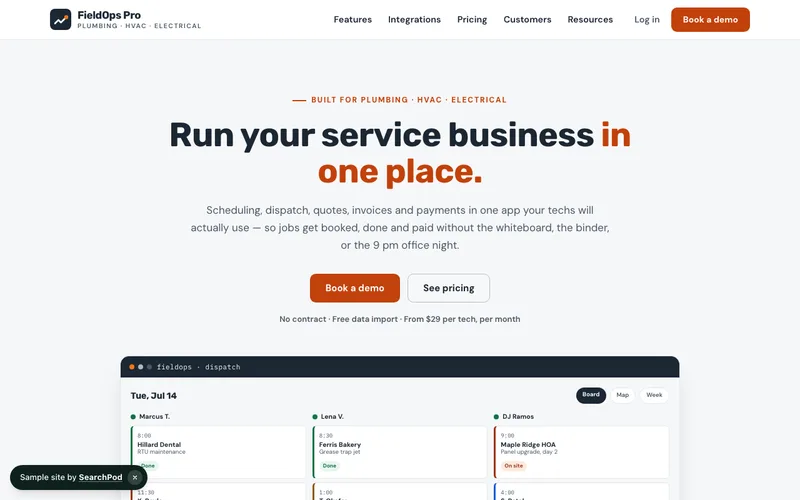
FieldOps Pro
Run your service business in one place · SaaS
Open the live demo → -
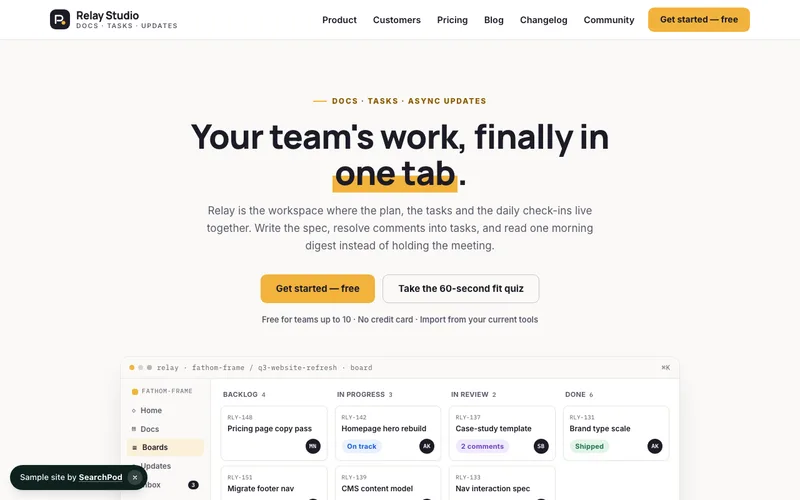
Relay Studio
Where teams ship faster · SaaS
Open the live demo → -
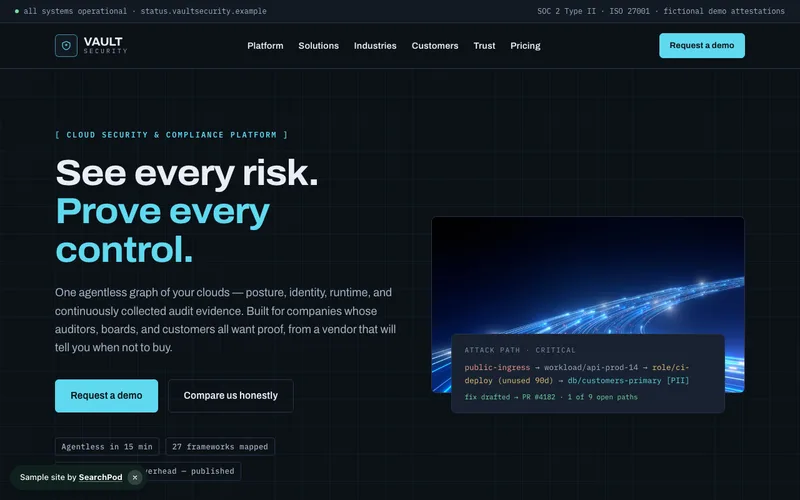
Vault Security
Enterprise-grade security, SOC 2 ready · SaaS
Open the live demo → -
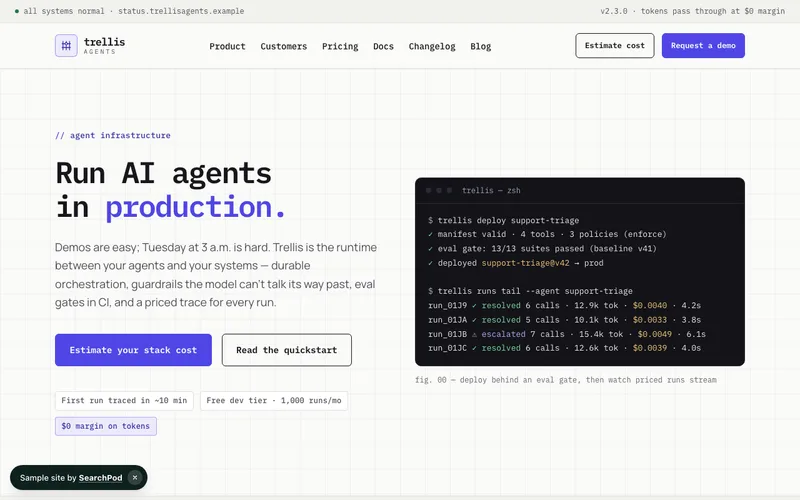
Trellis Agents
Run AI agents in production · SaaS
Open the live demo → -

Cornerstone Capital
Fiduciary planning across generations · Finance
Open the live demo → -
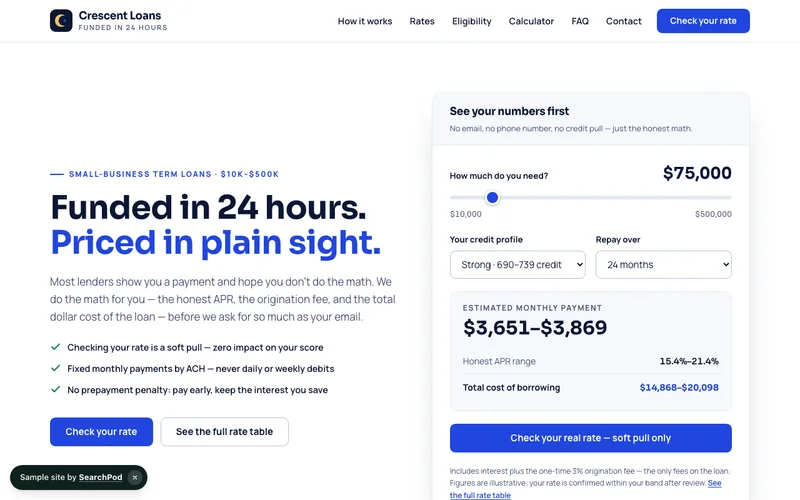
Crescent Loans
Funded in 24 hours · Finance
Open the live demo →
Straight answers
Marketing for developer tools, without the mystery
Three services, three ways we charge. Google Ads management costs 10% of what you spend on ads each month, with a $600/month floor — we don't mark up your ad spend, so every dollar above our fee goes straight into your Google account. SEO work is priced per page: $50/page/month, with a 10-page minimum to start. A new website or docs site is a one-time build, priced across eight packages that run $1,500 to $20,000+ depending on scope — the full list is on /websites. There's no setup charge, no lock-in contract, and a 30-day guarantee: if it's not working, you don't pay for that month. Send us details on your API or product and you'll have an exact number back within one business day.
Only if something specific is broken. Common signs: your quickstart gets traffic but few people ever generate a working key, you can't tell whether a signup came from a Google ad, a Hacker News post, or a Stack Overflow answer, or your onboarding emails don't exist past a single welcome message. That's the work we take on — the site, the ad accounts, the SEO, and the lifecycle emails — so your engineering team keeps shipping the product instead of writing landing pages. If none of that is broken for you, there's no reason to hire anyone.
SearchPod runs the full stack behind your signup funnel: the marketing site and docs experience, the Google Ads campaigns targeting engineers who are ready to integrate, the SEO and content that rank your tutorial and comparison pages, and the onboarding emails that carry a new signup to their first production call. One invoice, one team, and every piece reports back to the same signup and revenue numbers.
Ask them to explain your funnel back to you: can they tell the difference between a signup and an activated account, do they track a developer from ad click through to their first successful API call, and have they actually shipped a docs site before, not just a marketing homepage? Then check the fine print — you should hold the login to your own site, your own Google Ads account, and your own analytics, no matter who you hire.
Google Ads is the fastest lever — expect your first signups within two to three weeks of launch. Ranking for integration and “alternatives to” searches is slower: figure a few months before you see consistent organic traffic, and it keeps growing from there as the content ages. Onboarding email is the quickest win of all, since it starts working on your very next signup — often lifting activation before the ad and SEO numbers even settle.
Most agencies get paid on traffic or ad spend, so that's what they optimize for. We get judged on signups that actually activate, so that's what we build toward — the docs, the campaigns, and the emails all point at the same number. Our pricing is posted on the site instead of hidden behind a sales call, contracts run month-to-month, and your site, ad accounts, and developer data live in accounts you control from the first day.
There's no hidden tier — every starting price is posted on /pricing, and we scope your plan from there based on how many pages your docs need and what your ad budget looks like. Give us the shape of your product and pricing model, and you'll have real numbers in a proposal within one business day, with nothing owed just for asking.
Activated accounts, every time. Raw traffic numbers are easy to inflate and don't pay anyone's salary. We tune the docs and signup flow toward getting a developer to a working API call, then trace each of those calls back to the ad, the search result, or the email that started it — so you know your actual cost per paying account, not just your cost per click.
Yes, and the playbook differs by model. If your core product is open-source, we build the docs, README, and content that convert GitHub stars and community mentions into signups for your paid tier. If you're closed-source or enterprise-only, we run higher-intent campaigns aimed at demo requests and gated trials, since there's no public repo doing top-of-funnel work for you. Plenty of developer tools companies mix both models, and we shape the funnel around whichever one actually drives your signups.
Yes, completely. Your site, your brand assets, your Google Ads account, your analytics, and your customer data all sit in accounts registered to your company, not ours. We work month-to-month, so if you ever decide to leave, nothing gets migrated or handed over — it's already yours, and it just stays put.
Yes. We plug into whatever you're already running — Amplitude, Mixpanel, HubSpot, Salesforce, a homegrown events pipeline, whatever it is — so signup and activation events land where your team already looks for them, and you can trace a paying account back to first click without exporting a single spreadsheet.
Two to four weeks is typical for a site and docs experience, start to finish. What actually moves that number is how quickly you can hand over product specifics, working code samples, and feedback on drafts — slow turnaround on your end is the main thing that pushes a launch past a month. You'll get a specific timeline once we see the scope.
Yes. We write the launch posts, the README sections, and the comparison pages that need to hold up the moment someone actually opens your repo after seeing you on Hacker News or Product Hunt — because a good launch thread sends real traffic, and a thin README or a stale changelog is what makes that traffic bounce.
Free Proposal
Let's map out your signup funnel.
Tell us what your API or tool does and where you think growth is stalling. We'll come back with the specific pages, campaigns, and emails we'd build, with real pricing attached to each one.
- Real pricing, scoped to your product, not a generic quote
- A free look at where your current signup funnel is leaking
- A reply from an actual specialist, not a bot, within one business day
Month-to-month. You own your website, your ad accounts, and your data — always. Or call (519) 930-8818.
Request your free proposal.
Tell us what your API does and where you think signups are leaking. You'll hear back with a scoped plan, real pricing attached, and a free look at your current docs and signup funnel — no obligation, no pressure.